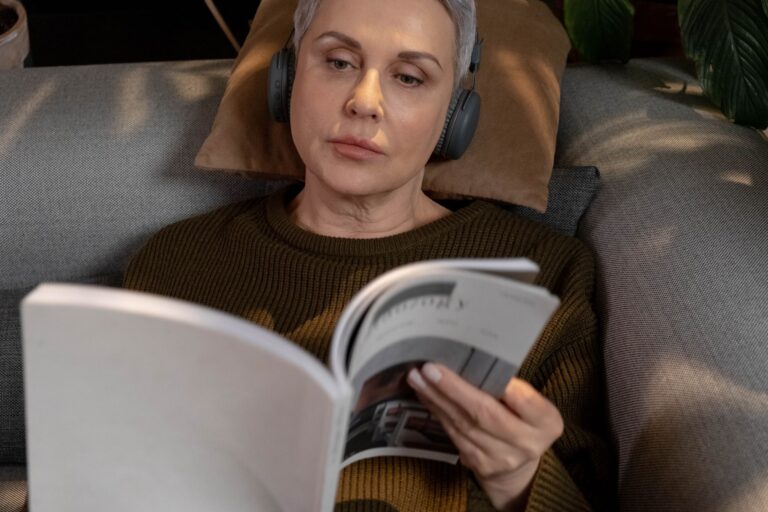
Yes, audiobooks can work for some people with moderate or advanced dementia by providing comfort, engagement, or reduced agitation. They have not been shown to restore comprehension, improve memory, or treat dementia itself. An audiobook is a recorded reading of a book or other text. Its value may come from a familiar voice, story, rhythm, or listening routine—even when following the full meaning is difficult.
Medical information disclaimer: This article is for general educational purposes only and does not provide medical advice, diagnosis, or treatment. Always consult a physician or other qualified health professional about symptoms, medications, tests, or treatment decisions.
Table of Contents
- What does "work" mean?
- What does the research show?
- Which recordings are most likely to help?
- How to try an audiobook safely
- When should you stop?
What does "work" mean?
Success should match the listener's abilities and needs. For someone who can still follow a story, success might mean sustained interest. For someone with advanced dementia, it may simply mean becoming calmer, appearing content, or connecting with a familiar passage.
The Alzheimer's Association notes that people with late-stage Alzheimer's may still connect through sound and recommends reading meaningful portions of books. This can remain possible even after speech and the ability to express needs have declined (Alzheimer's Association late-stage guidance). Do not judge the activity only by whether the person can summarize the story afterward. Look for immediate responses such as relaxed posture, attentive facial expressions, humming, smiling, or peaceful rest.
What does the research show?
A 2021 randomized trial studied personalized audiobooks delivered through headphones in 13 long-term-care facilities. Among residents with Alzheimer's disease or related dementias, audiobooks reduced agitation on three of four measured subscales (the trial abstract on PubMed). The study included 55 residents assigned to audiobooks and 103 assigned to music over eight weeks.
That makes the finding most relevant to people living in care facilities, not necessarily those living independently. The trial measured agitation rather than story comprehension, memory, overall cognition, or dementia progression. It therefore supports audiobooks as a possible activity or comfort measure—not as dementia treatment.
Which recordings are most likely to help?
As dementia progresses, processing information and communicating verbally may become harder. Alzheimer's Society guidance suggests that short articles, concise sections, short stories, and poems can be more manageable than longer writing, with audiobooks and shared reading among the available options (Alzheimer's Society reading guidance).
Choose material that places few demands on attention: For advanced dementia, the sound may matter more than the words. The Alzheimer's Association's late-stage guide says a familiar passage may soothe through the reader's tone and rhythm even when the listener does not understand its language (2024 late-stage care guide).
- A familiar story, poem, prayer, or spiritual passage
- A short chapter or self-contained scene
- A recording with a calm, clear narrator
- Material linked to the person's past interests
- A passage that can stop without leaving a confusing plot unfinished
How to try an audiobook safely
Begin with a brief, familiar selection during a relatively settled part of the day. Keep the volume comfortable, reduce competing noise, and remain nearby for the first few sessions.
Use a simple trial: Headphones were used in the care-facility trial, but they are not essential to the idea. A speaker or live reading may be a better practical choice if the person resists wearing headphones or seems reassured by another person's presence.
- Explain briefly that you are going to play a story or poem.
- Start with several minutes rather than a full chapter.
- Watch the person instead of testing what they understood.
- Continue if they appear comfortable or engaged.
- Pause or stop if tension or distress develops.
When should you stop?
Audiobooks do not help everyone, and a response can change from one day to another. Stop if the listener grimaces, becomes tense, repeatedly removes the headphones, pushes the device away, calls out more, or tries to leave. This caution matters because the 2021 trial did not find improvement on every measure.
Non-staff-directed physical agitation generally increased in the audiobook group, so caregivers should monitor behavior rather than assume a personalized recording is harmless or soothing. If distress appears, lower the volume, switch to a shorter or more familiar passage, try reading aloud without equipment, or end the activity. A calm refusal is still a refusal; the audiobook can be offered again at another time without pressure.