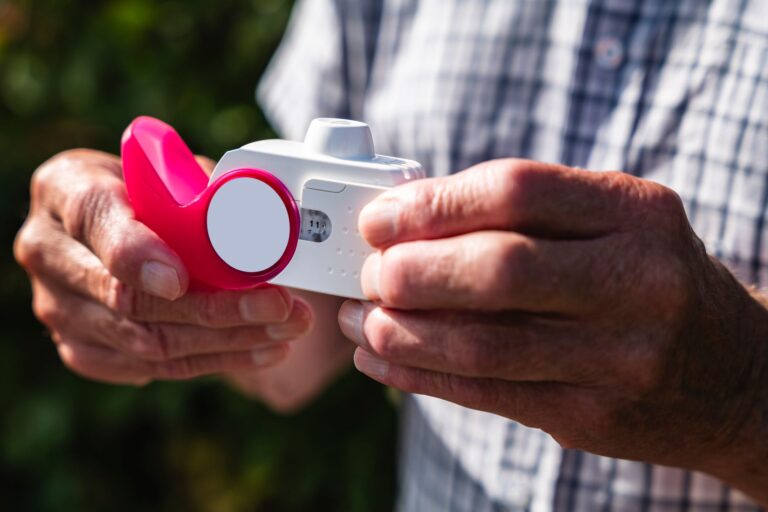
Brain stimulation therapy is emerging as a promising treatment approach for Alzheimer’s disease, with recent clinical trials demonstrating measurable benefits in slowing cognitive decline and improving daily function. Researchers have shown that targeted electrical stimulation of specific brain regions—delivered either through invasive implants or non-invasive devices—can slow memory loss by substantial margins, with some recent studies reporting cognitive decline reductions of 44% compared to untreated progression. The field has advanced significantly over the past few years, moving from preliminary experiments to human trials with carefully monitored outcomes and the potential for at-home delivery of therapy.
This article explores the latest breakthroughs in brain stimulation for Alzheimer’s, including new clinical trials at major medical centers, the different types of stimulation technology now being tested, and what these advances mean for patients and caregivers. We’ll examine how these treatments work, what the current evidence shows, and the practical considerations for those considering this option. While brain stimulation therapy is not yet a standard treatment, the trajectory of research suggests it may become an important tool in the fight against cognitive decline.
Table of Contents
- What Are the Latest Clinical Breakthroughs in Alzheimer’s Brain Stimulation?
- How Does Non-Invasive Brain Stimulation Offer a Safer Alternative to Surgery?
- What Do Recent Studies Reveal About Specific Stimulation Targets?
- What Are the Options for Patients Considering Stimulation Therapy?
- What Are the Important Limitations and Safety Considerations?
- How Is Artificial Intelligence Reshaping Personalized Brain Stimulation?
- What Does the Future Hold for Brain Stimulation in Alzheimer’s Care?
- Conclusion
What Are the Latest Clinical Breakthroughs in Alzheimer’s Brain Stimulation?
The most recent clinical advances center on two main approaches: deep brain stimulation (DBS) targeting specific brain structures, and non-invasive stimulation using electrical or sensory techniques. In January 2026, the Medical College of Georgia launched a significant trial enrolling six patients aged 65-85 with early-stage Alzheimer’s to receive deep brain stimulation of the nucleus basalis of Meynert—a brain region critical for memory and attention. The study is notable because patients will deliver 50-minute stimulation sessions daily either themselves or with caregiver assistance, meaning the treatment can be administered at home rather than requiring frequent hospital visits.
A second major breakthrough comes from Sinaptica’s Phase 2 trial results, which tested personalized non-invasive brain stimulation on mild-to-moderate Alzheimer’s patients. The findings were striking: participants receiving personalized stimulation experienced a 44% slowing of cognitive decline compared to expected progression rates, alongside improvements in behavioral symptoms and maintained daily function. This is particularly significant because the therapy does not require brain surgery, making it accessible to a much broader patient population. These results represent a meaningful step forward in terms of both efficacy and safety compared to earlier-generation stimulation protocols.
How Does Non-Invasive Brain Stimulation Offer a Safer Alternative to Surgery?
Non-invasive approaches eliminate the risks associated with surgical implantation while still delivering targeted brain stimulation through the skull. Transcranial direct current stimulation (tDCS), for example, uses electrodes placed on the scalp to deliver mild electrical currents to memory networks. In preliminary trials, repeated tDCS sessions have improved verbal learning in Alzheimer’s patients, with benefits persisting for up to eight weeks after treatment ends. Transcranial magnetic stimulation (rTMS) uses magnetic coils instead of electrodes, and high-frequency rTMS targeting the precuneus brain region has shown promise specifically for memory dysfunction in early-stage Alzheimer’s.
However, non-invasive approaches do have limitations compared to deeper brain stimulation. Because the stimulation must pass through the skull, it is less focused and typically requires higher current levels to reach specific brain structures effectively. This means that for patients who might benefit from precise stimulation of very deep brain regions—like the fornix or nucleus basalis—invasive deep brain stimulation may ultimately prove more effective, though at the cost of surgical risk. Additionally, non-invasive therapies often require sustained treatment schedules to maintain benefits, and long-term safety data beyond a few years remains limited in most studies.
What Do Recent Studies Reveal About Specific Stimulation Targets?
Different brain regions appear to offer distinct therapeutic windows for Alzheimer’s treatment. The nucleus basalis of Meynert, which contains cholinergic neurons involved in attention and memory encoding, has shown particularly promising results in recent trials—the MCG study specifically chose this target because of its role in the cognitive deficits seen in Alzheimer’s disease. Historically, researchers also tested the fornix, a major memory circuit, with data from five of six patient cohorts showing slowed cognitive decline after DBS targeting this structure.
Over a combined study population of 56 patients receiving fornix-targeting stimulation, consistent benefits in halting cognitive decline progression were documented. The nucleus basalis of Meynert appears to offer advantages over fornix stimulation in some respects. Treatment targeting this region has shown positive results in two of three patient cohorts studied, and the newer MCG trial was specifically designed to test whether remote delivery of nucleus basalis stimulation could be feasible for patient-centered care. The choice of brain target matters significantly because different regions govern different cognitive functions—memory consolidation, attention, executive function—and personalized approaches increasingly aim to match stimulation targets to a patient’s specific pattern of cognitive decline.

What Are the Options for Patients Considering Stimulation Therapy?
For patients exploring brain stimulation options, the choice generally falls between invasive deep brain stimulation and non-invasive techniques, with treatment selection depending on disease stage, cognitive decline pattern, and surgical candidacy. Deep brain stimulation requires a neurosurgical procedure to implant electrodes in targeted brain regions, making it appropriate primarily for medically stable patients with early-to-moderate Alzheimer’s disease. Once implanted, DBS offers the advantage of precise, consistent stimulation that can be adjusted without repeated procedures. The downside is irreversibility and surgical risk, including infection and device-related complications, though these complications are relatively rare in experienced centers.
Non-invasive options like tDCS or rTMS require no surgery and can be started more quickly, making them accessible to patients who may not be surgical candidates due to age, medical comorbidities, or patient preference. These approaches can often be done on an outpatient basis or even at home. The tradeoff is that non-invasive stimulation may be less precise and potentially require more frequent or prolonged treatment sessions. Emerging “hybrid” approaches that combine multiple stimulation modalities—such as visual and auditory stimulation together, as explored in the MIT 40Hz study—may offer additional benefits, though these are still largely experimental.
What Are the Important Limitations and Safety Considerations?
While recent results appear promising, it is critical to understand that brain stimulation therapy for Alzheimer’s remains largely experimental and not yet proven effective as a standard clinical treatment. The field suffers from a fundamental limitation: there is a lack of large, double-blind, placebo-controlled randomized clinical trials that would definitively establish benefit versus placebo effect. Most existing studies involve small patient numbers, varied stimulation protocols, and inconsistent outcome measures, making it difficult to compare results across trials or generalize findings broadly. This heterogeneity in study design means that reported successes cannot yet be considered definitive proof of clinical benefit.
Additionally, the 44% slowing of cognitive decline reported by Sinaptica is meaningful but important to contextualize: it means slowing the rate of decline, not reversing cognitive damage or halting decline completely. Patients on brain stimulation therapy still experience some ongoing cognitive decline over time; they simply lose cognitive function more slowly than untreated controls. For some patients, this modest benefit may be worthwhile; for others, the time and cost investment may not justify the delay in decline. Long-term safety data beyond two years is sparse for most non-invasive approaches, and longer-term follow-up of DBS patients is limited, leaving open questions about sustained benefit and potential late-emerging complications.

How Is Artificial Intelligence Reshaping Personalized Brain Stimulation?
A key trend in current research is the move toward personalized, patient-specific stimulation protocols guided by artificial intelligence and individual neuroimaging data. Rather than using standardized stimulation parameters for all patients, researchers now recognize that individuals have unique brain anatomy and neurochemistry; stimulation that works well for one person may be suboptimal for another. The Sinaptica trial explicitly employed personalization—adjusting stimulation parameters based on individual patient characteristics—which may explain why it achieved results superior to earlier non-personalized approaches. This represents a paradigm shift from one-size-fits-all protocols toward truly tailored medicine.
AI integration into brain stimulation holds further promise for the future. Machine learning algorithms can analyze neuroimaging data to predict which patients are most likely to respond to stimulation and which brain targets will be most effective for a given individual. AI could also optimize stimulation parameters in real-time based on biomarkers and clinical outcomes, essentially allowing the treatment to “learn” and adapt to each patient’s changing needs over months and years. While these capabilities remain largely research tools today, the integration of AI into clinical brain stimulation protocols is likely to be a defining feature of the next generation of Alzheimer’s treatments.
What Does the Future Hold for Brain Stimulation in Alzheimer’s Care?
The trajectory of brain stimulation research suggests an increasingly accessible and effective treatment landscape in the coming years. As invasive techniques mature and remote delivery options expand—as exemplified by the MCG trial’s approach to at-home DBS administration—patients and caregivers may have the ability to manage treatment with less frequent hospital visits. Simultaneously, non-invasive options continue to improve in effectiveness and safety, potentially lowering the barrier to entry for patients who might have previously been excluded due to surgical risk.
The convergence of multiple therapeutic approaches also represents an exciting frontier. Rather than relying on a single stimulation modality, future protocols may combine DBS with non-invasive stimulation, cognitive training, pharmaceutical interventions, and lifestyle modifications to create comprehensive, multimodal treatment packages. For patients currently managing early-stage Alzheimer’s, the expanding menu of brain stimulation options—from at-home tDCS to precision DBS targeting—means that individualized therapeutic strategies, rather than generic treatments, are becoming the new standard in research and eventually in clinical practice.
Conclusion
Brain stimulation therapy represents a meaningful advance in Alzheimer’s research, moving from theoretical promise to human clinical trials with documented cognitive benefits. Recent studies from leading medical centers—including the Medical College of Georgia’s breakthrough DBS trial and Sinaptica’s 44% slowing of cognitive decline—demonstrate that targeted electrical or magnetic stimulation of specific brain regions can measurably alter the disease course. Multiple stimulation approaches now exist, ranging from non-invasive techniques like transcranial direct current stimulation to invasive deep brain stimulation, each offering different tradeoffs between efficacy, accessibility, and risk.
For patients and families currently facing early-stage Alzheimer’s disease, understanding these options and participating in clinical trials represents a proactive step toward potentially slowing cognitive decline. However, it remains crucial to maintain realistic expectations: brain stimulation slows decline rather than reversing it, is not yet a standard clinical treatment, and requires careful discussion with a neurologist about individual candidacy and likelihood of benefit. As personalization and artificial intelligence reshape how stimulation protocols are designed and delivered, the coming years may bring substantially more effective treatments tailored to each patient’s unique neurobiology.