Blood test sits at the center of this dementia and brain health question.
Yes—a blood test measuring p-tau217 (phosphorylated tau 217) can now predict when Alzheimer’s disease symptoms will develop, typically within 3 to 4 years of detection. A groundbreaking study published February 19, 2026, in Nature Medicine showed that among 603 older individuals across two cohorts, researchers at Washington University School of Medicine in St.
Louis could use p-tau217 levels to forecast symptom onset with a precision that had never been achieved before. This represents a major shift in how we understand Alzheimer’s progression—from a disease that appears suddenly to one with a predictable biological timeline that doctors can now measure. This article explains how the blood test works, why the timing of symptom onset depends heavily on a person’s age at the time elevated p-tau217 is detected, what limitations still exist for individual patients, and how this discovery is already reshaping Alzheimer’s research and clinical trial design.
Table of Contents
- How Does the p-tau217 Blood Test Predict Alzheimer’s Symptom Onset?
- Age and Resilience: Why the Same Biomarker Means Different Timelines
- The 3-to-4-Year Prediction Window: What It Means for Early Identification
- Blood Test Accuracy Compared to Other Diagnostic Methods
- Current Limitations: Why the Test Isn’t Ready for Individual Clinical Use Yet
- P-tau217 in the Broader Context of Alzheimer’s Biomarkers
- The Road Ahead—From Research Tool to Clinical Translation
- Conclusion
How Does the p-tau217 Blood Test Predict Alzheimer’s Symptom Onset?
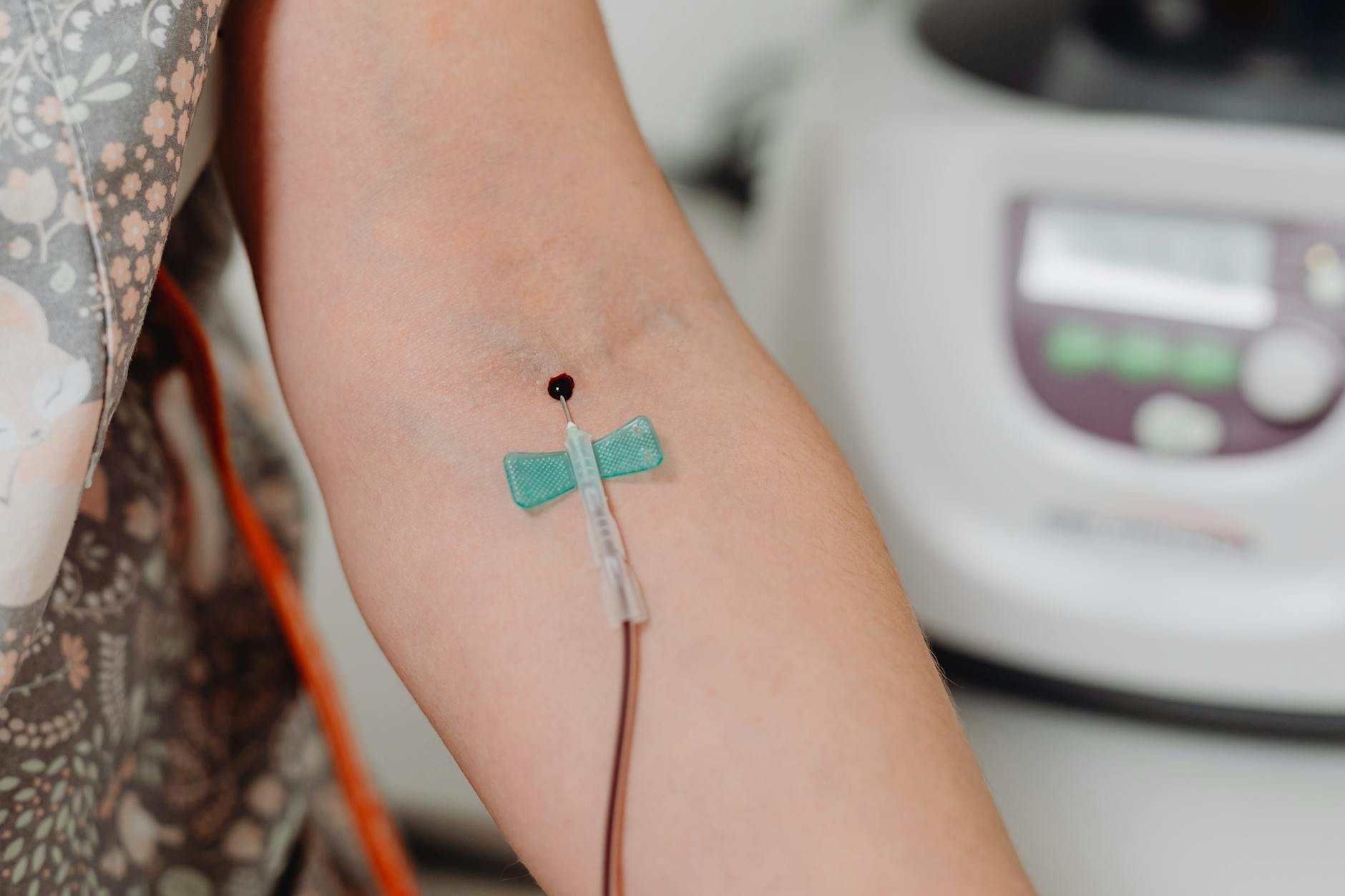
The p-tau217 protein is a modified form of tau that accumulates in the brain during Alzheimer’s disease. Until recently, detecting it required expensive imaging (PET scans) or spinal taps (CSF collection). The breakthrough is that p-tau217 now leaks into the blood in measurable quantities, making it detectable through a simple blood draw. The Washington University research team developed what they call a “clock model”—essentially a mathematical formula that uses p-tau217 levels and other biomarker data to estimate how many years remain before cognitive symptoms emerge.
The study followed participants over time, taking multiple blood tests from each person to track how p-tau217 changed. This longitudinal approach allowed researchers to calibrate their predictive model against real-world outcomes: which people actually developed symptoms, and when. The result is the first quantitative biomarker clock that can estimate the timeline to symptomatic Alzheimer’s with meaningful precision. However, this is not yet a test that tells an individual patient “you will develop symptoms in exactly 3.5 years”—the model works best at the population and trial level.
Age and Resilience: Why the Same Biomarker Means Different Timelines
A critical finding is that age dramatically affects how quickly symptoms develop after p-tau217 becomes elevated. A 60-year-old with elevated p-tau217 might not show cognitive decline for 20 years, while an 80-year-old with the same p-tau217 elevation could develop symptoms in just 11 years. This age-dependent progression reflects the brain’s declining resilience with age—younger brains appear to tolerate pathological changes longer before symptoms emerge.
This difference has profound implications for preventive treatment strategies. Identifying p-tau217 elevation in a younger person creates a much longer window for intervention, whereas the same biomarker in an older adult suggests a shorter timeline to clinical symptoms and a need for faster decision-making. The limitation here is crucial: the model cannot yet account for all the individual factors that influence resilience, such as cognitive reserve, genetic background, or comorbid health conditions. For now, age remains the strongest modifying variable, but future refinements may incorporate additional protective or risk factors.
The 3-to-4-Year Prediction Window: What It Means for Early Identification
The p-tau217 blood test’s core finding—that it predicts symptom onset within approximately 3 to 4 years—creates a defined window for clinical action. This timeframe is narrow enough to be clinically relevant (not 20 years away) but broad enough to align with the timeline of disease-modifying treatments currently in trials.
Lecanemab, for example, has shown modest slowing of cognitive decline in early symptomatic Alzheimer’s, so identifying people on the cusp of symptoms becomes strategically important. In practical terms, if a cognitively normal person receives a blood test showing elevated p-tau217, doctors can now estimate with reasonable confidence that that person will likely experience cognitive symptoms within the next few years—provided the age-dependent model applies to them. This is why the study is already transforming recruitment for Alzheimer’s clinical trials: instead of enrolling participants with symptomatic disease or waiting years for people to develop symptoms, researchers can now prospectively identify and enroll asymptomatic individuals who will transition to symptoms during the trial period.

Blood Test Accuracy Compared to Other Diagnostic Methods
Prior research published in JAMA in July 2024 established that p-tau217 blood tests achieve 88 to 92 percent accuracy in identifying Alzheimer’s disease. By contrast, specialty memory clinics using clinical assessment alone achieve 73 percent accuracy, and primary care providers without biomarker testing are correct only 61 percent of the time. The p-tau217 test is also remarkably good at predicting amyloid-beta and tau pathology on PET scans or in cerebrospinal fluid—showing 79 to 86 percent accuracy in cognitively unimpaired individuals.
This superiority to traditional diagnostic methods means that a negative p-tau217 blood test is highly reassuring: it strongly suggests the person is not on an Alzheimer’s trajectory, at least not yet. Conversely, a positive result warrants closer monitoring and consideration of clinical trials. The tradeoff is that the test is most useful in specific contexts (research, clinical trials, high-risk populations) rather than as a universal screening tool for all older adults. Running blood tests on millions of asymptomatic people would identify many with elevated p-tau217 but normal cognition, raising questions about counseling, psychological impact, and overtreatment that the field is still wrestling with.
Current Limitations: Why the Test Isn’t Ready for Individual Clinical Use Yet
The p-tau217 clock model is not yet precise enough to tell an individual patient their exact symptom-onset date or to guide treatment decisions for that specific person. The study showed group-level predictive accuracy, but individual variability remains substantial. Some people with elevated p-tau217 may develop symptoms sooner, others later, depending on factors the current model doesn’t capture.
Using the test to diagnose or treat individual patients without more validation could lead to premature treatments, unnecessary anxiety, or missed diagnoses if someone falls outside the typical progression pattern. Another limitation is that the research population consisted of older adults (generally 60+) with diverse health backgrounds, but the model’s performance in younger individuals, in racial or ethnic minorities underrepresented in the study, or in people with comorbid neurological conditions remains unclear. The Washington University team has clearly stated the model is ready for Alzheimer’s clinical trial design and research, not yet for widespread clinical implementation. Clinicians should be cautious about over-interpreting p-tau217 results as definitive timelines for individual patients until larger, more diverse validation studies are completed.

P-tau217 in the Broader Context of Alzheimer’s Biomarkers
P-tau217 is one of several phosphorylated tau variants that have emerged as biomarkers for Alzheimer’s disease. Others include p-tau181 and p-tau199, each showing slightly different patterns of elevation and diagnostic utility. P-tau217 has shown particular promise because it appears to rise early in the disease process and correlates well with tau pathology in the brain.
The advantage of a blood test over CSF biomarkers or PET imaging is accessibility and cost: a blood draw can be performed in any clinic, whereas PET scanning requires specialized equipment and high expense. This practical advantage makes p-tau217 scalable for population-level research and trial recruitment. A research team in Los Angeles might identify 200 cognitively normal participants with elevated p-tau217 via blood tests, then enroll them in a prevention trial—something that would be far more difficult using PET scans alone. The comparison highlights why this blood test represents a genuine advance: it democratizes early detection without requiring participants to travel to specialized imaging centers.
The Road Ahead—From Research Tool to Clinical Translation
The p-tau217 clock model is currently most useful for enriching Alzheimer’s clinical trials with people who are at imminent risk of symptom onset. Several trials are already using p-tau217 blood tests to identify and enroll asymptomatic participants, dramatically shortening the timeline needed to measure treatment effects. If a treatment trial enrolls only cognitively normal people destined to develop symptoms in the next 2 to 3 years (rather than waiting for spontaneous symptom emergence), the trial can reach conclusions faster and with stronger data.
Over the next 5 to 10 years, the likely evolution will involve refining the p-tau217 clock model to account for additional variables (genetics, apolipoprotein E status, brain reserve markers, comorbidities), validating it in diverse populations, and integrating it into clinical practice guidelines for high-risk individuals. Blood biomarker tests will probably become standard in memory clinics and in primary care for older adults with cognitive complaints, even if the p-tau217 clock itself remains a research tool for now. The ultimate goal is a future where p-tau217 (and related biomarkers) guide preventive treatment recommendations for asymptomatic but at-risk individuals before cognitive decline begins.
Conclusion
The p-tau217 blood test’s ability to predict Alzheimer’s symptom onset within 3 to 4 years represents a watershed moment in neurodegenerative disease research. For the first time, doctors have a quantitative, accessible biomarker that can estimate the timeline to cognitive symptoms with clinically relevant precision. The study of 603 individuals published in Nature Medicine in February 2026 firmly establishes this test’s value for identifying candidates for clinical trials and for stratifying risk in research populations.
The key takeaway is that the test is ready now for research and clinical trial design, but not yet for guiding treatment decisions in individual asymptomatic patients. As the field accumulates more data, validates the model in diverse populations, and develops disease-modifying treatments that can be started in the asymptomatic phase, p-tau217 will almost certainly become a cornerstone of Alzheimer’s prevention strategies. For now, elevated p-tau217 is a powerful signal that someone is on an Alzheimer’s trajectory—and it is changing how the field recruits, designs, and accelerates trials to find treatments that work.
You Might Also Like
- Scientists Stunned by Molecule That May Slow Alzheimer’s Disease
- Alzheimer’s Researchers and Parkinson’s Scientists Share New Lessons
- Early Alzheimer’s Detection Gets Boost From New Blood Biomarkers
For more, see Alzheimer’s Association — medical tests.