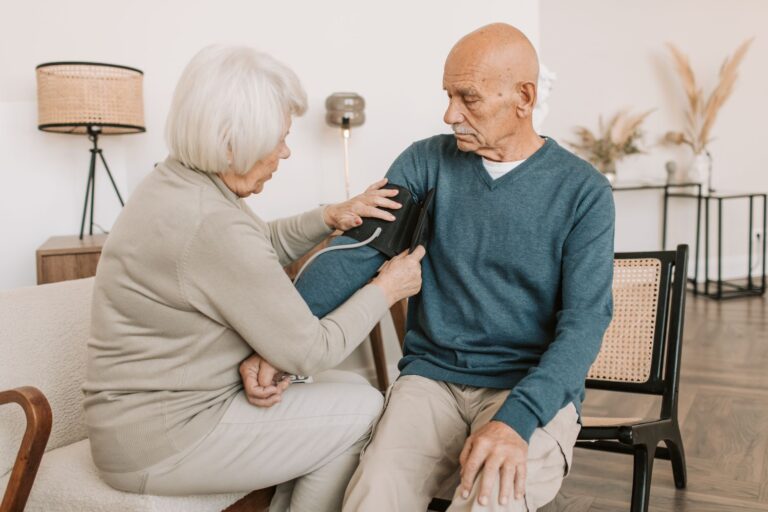
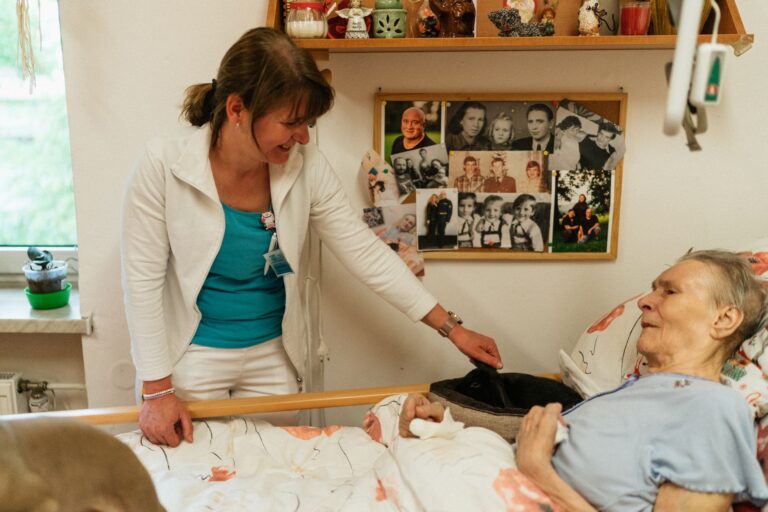
A magnetic resonance imaging scan can show the shrinkage in your mother’s hippocampus. It can measure the thickness of her cortex, reveal plaques and tangles, document the progression that explains her forgetfulness and her difficulty finding words. But a brain scan cannot tell you that she still laughs at the same jokes, that she remembers the smell of her mother’s kitchen, that she became a better listener after her diagnosis than she ever was before. Remembering the person behind the diagnosis means refusing to let the medical markers become the whole story—insisting instead that a person with dementia is not their imaging results, their cognitive scores, or the diseases their brain is experiencing. When a neurologist delivers a diagnosis of Alzheimer’s disease or another form of dementia, the conversation typically centers on what is broken: the amyloid proteins accumulating in the brain, the neurons dying, the cognitive decline projected over the next five to ten years.
These are important facts. They explain what is happening biologically. But they describe only one dimension of a complex human being whose identity, preferences, relationships, humor, and capacity for connection often remain intact long after the diagnosis is made and long after the brain scan was taken. The gap between what a scan reveals and who a person actually is represents one of the most profound challenges in dementia care. It is where the medical model meets the human reality, and it is where the most meaningful caregiving happens—or fails to happen—depending on whether we remember that a diagnosis is something a person has, not something a person is.
Table of Contents
- What Cognitive Tests and Brain Scans Cannot Measure
- How Diagnosis Can Obscure the Whole Person
- Recognition and Connection Beyond Cognitive Decline
- Creating Care That Honors the Whole Person
- The Risk of Losing the Person in the Diagnosis
- Medical Information and Personal Identity
- What Remains and What Matters
What Cognitive Tests and Brain Scans Cannot Measure
Neuropsychological testing provides precise, quantifiable data about memory, language, executive function, and processing speed. A person might score in the 8th percentile on delayed verbal recall or the 15th percentile on a timed naming task. These scores are reproducible and defensible. They become the anchor for the diagnosis. But a cognitive test cannot measure resilience, dignity, or the capacity to find meaning in a day. It cannot capture whether someone still recognizes their grandchild’s voice on the phone or remembers that they are afraid of dogs. It cannot tell you what brings that person joy or what causes them distress.
A functional magnetic resonance imaging study might show reduced activation in the default mode network or abnormal connectivity between the prefrontal cortex and the limbic system. These findings are significant for understanding the neurobiology of dementia. But they do not predict whether a person will become withdrawn or remain socially engaged, whether they will maintain their sense of humor or lose it, whether they will be able to enjoy a meal with family members or whether the experience will become distressing. Two people with identical pathology—the same volume of plaque, the same degree of atrophy, the same cognitive scores—can have dramatically different lived experiences depending entirely on their personality, their relationships, their environment, and the expectations of those around them. One of the most common mistakes in dementia care is assuming that a diagnosis predicts a person’s capacity for wellbeing. A woman with moderate Alzheimer’s disease and an MMSE score of 18 might be assumed to be in cognitive decline across all domains, but she might also spend an entire afternoon in quiet contentment, gardening with her daughter, asking the same three questions repeatedly, but genuinely happy in each moment, unburdened by the knowledge that she has already asked them. That contentment is not a lesser form of living than the cognitive engagement she had before. It is a different kind of wellbeing, and it is real.
How Diagnosis Can Obscure the Whole Person
There is a well-documented phenomenon in medicine called diagnostic overshadowing, where a physician or caregiver attributes every new symptom or complaint to the primary diagnosis. A person with dementia reports joint pain, and it is assumed to be a normal part of their condition rather than an underlying arthritic problem that needs treatment. They withdraw from activities they once enjoyed, and the withdrawal is attributed to cognitive decline rather than to depression—a treatable condition that often co-occurs with dementia but is frequently overlooked because the diagnosis itself is assumed to explain everything. The neurocognitive assessment can become a kind of filter that distorts perception. before a diagnosis, a family member might have appreciated an older relative’s storytelling, even if the stories sometimes rambled or repeated. After the diagnosis of dementia, those same stories become symptoms of cognitive impairment rather than expressions of personality. The person has not changed.
The interpretation has. And that change in interpretation can damage the relationship. Research on dementia care shows that when family members or staff view a person primarily through the lens of their deficits, communication becomes more directive, less collaborative, and the person with dementia becomes more likely to withdraw or resist care. One particularly damaging consequence of diagnosis-centered thinking is the assumption that a person with dementia cannot make decisions about their own care or express valid preferences. A neuropsychological battery that shows significant memory impairment becomes evidence that the person cannot participate in their own medical decisions, even though decision-making capacity depends on the ability to understand information about one’s condition and appreciate how it applies to oneself—abilities that may persist even when memory is impaired. A woman with moderate memory loss might forget the details of a treatment plan five minutes after hearing it, but she might still be able to express clearly that she prefers comfort and time with family to aggressive medical intervention. The scan cannot tell you that. Only conversation with the person can.
Recognition and Connection Beyond Cognitive Decline
Some of the most meaningful moments in dementia care happen in what researchers call the “here and now”—a kind of presence that is unmediated by memory of the past or anxiety about the future. A man with advanced dementia who no longer remembers his wife’s name can still recognize her voice, still reach for her hand, still show affection. A woman who cannot recall events from her own life can still respond to music, still be moved by kindness, still experience the full range of human emotion. These capacities are not diminished versions of who they were before. They are expressions of who they are now. One family’s experience illustrates this distinction clearly. Margaret was diagnosed with Alzheimer’s disease at age 71. Over the next three years, her memory declined significantly. She could no longer recall the names of her four children or the events of her own life story. Her cognitive score on standardized testing dropped from the low average range to the moderately impaired range.
But Margaret’s daughter, who became her primary caregiver, noticed that her mother’s essential personality remained remarkably intact. Margaret was still curious—asking questions about people and places even though she would forget the answers. She was still compassionate; she would see someone sad and ask what was wrong. She was still the woman who had raised four children and made a home. The diagnosis was accurate. The cognitive decline was real. But it had not erased Margaret. The most damaging assumption that diagnosis can create is that a person with dementia is no longer themselves—that they have been fundamentally altered by the disease. Family members sometimes describe this experience as grief, as if they are mourning a person who is still alive. This grief is understandable, but it often leads to a kind of withdrawal or emotional distancing that changes the relationship in ways that make the person with dementia’s experience worse. Research on institutional dementia care shows that residents whose family members visit regularly and engage with them directly—even when there is no cognitive recognition—have lower rates of depression, lower rates of behavioral symptoms, and better overall quality of life than residents whose families have withdrawn due to the belief that “they don’t know us anymore anyway.”.
Creating Care That Honors the Whole Person
Person-centered care in dementia requires shifting from a model based on correction and compensation for deficits to a model based on connection and respect for the person’s remaining capacities and preferences. This shift is not primarily a medical intervention. It is a relational one. It means asking not “What is wrong with this person?” but “Who is this person and what matters to them?” It means paying attention to how someone responds to different approaches, different environments, different people, rather than assuming that cognitive decline has made response and preference irrelevant. The practical implementation of this shift looks quite different from disease-centered care. Instead of organizing the day around medical needs and deficits—medications, cognitive stimulation, safety precautions—a person-centered approach organizes the day around activities and relationships that matter to the individual. For one person, that might mean spending the morning in the garden, even though gardening offers no cognitive benefit and no medical advantage.
For another, it might mean sitting with a particular family member, engaging in a familiar ritual, or working with their hands on a task that feels purposeful. A man who loves animals might spend hours with a dog, engaging in a kind of pure presence and connection that no cognitive intervention could replicate. A woman who was a reader might page through magazines or illustrated books, not because she can comprehend the text but because the visual experience and the sensory memory of books matter to her. One significant limitation of person-centered care in institutional settings is that it requires time, flexibility, and staff who are trained to observe and respond to individual preferences rather than following standardized protocols. This is a resource problem, not a knowledge problem. Most caregiving environments do not have sufficient staffing to provide truly individualized care to every resident. When a care facility has one staff member for every eight or ten residents, person-centered approaches become difficult to sustain consistently. This is a real constraint, and acknowledging it is more honest than presenting person-centered care as universally achievable without addressing the systemic issues that prevent it.
The Risk of Losing the Person in the Diagnosis
There is a documented phenomenon in dementia care called “infantilization,” where caregivers or family members begin treating a person with dementia as though they were a young child rather than an adult. This happens gradually and usually with good intentions. Because someone cannot remember something, caregivers simplify language and assume simplification is always necessary. Because someone needs help with a task, caregivers do the entire task rather than supporting the person to do what they can do. Because someone might forget or get confused, caregivers make decisions without consulting them. Over time, the person with dementia experiences less choice, less voice, less autonomy—and behavioral problems often increase as a result of this loss of agency. Another common risk is what might be called “pre-grieving”—the family member or professional who begins treating the person with dementia as though they are already gone, even though they are still alive and present.
This can show up as conversations about the person that happen in their presence as if they cannot hear or understand, decision-making that does not include them, or emotional withdrawal based on the belief that “they won’t remember anyway.” But people with dementia do understand more than we often assume. They understand tone, emotion, and whether they are being included or excluded from the conversation about their own life. A man with moderate Alzheimer’s disease might not remember a conversation that happened yesterday, but he will feel the difference between being spoken to respectfully and being spoken about as if he is not in the room. A particularly troubling manifestation of diagnosis-centered care is the impulse to narrate someone’s decline as a form of preparation for loss. “Expect her to lose her language in the next year or two,” a neurologist might say, and that statement becomes a kind of prophecy. The family member begins to prepare for a future loss, to see the current person as already partially gone, to interpret any preserved ability as a temporary reprieve rather than a real part of who that person is now. This expectation can become self-fulfilling. When people are expected to decline, when conversation is simplified, when opportunities to use language are removed, language abilities often do decline more rapidly than they would in an environment where the person is consistently spoken to as an adult and engaged in meaningful conversation.
Medical Information and Personal Identity
Neurological diagnosis provides essential information. Understanding that someone has Alzheimer’s disease rather than frontotemporal dementia tells us something important about the likely pattern of progression, the symptoms that are most likely to emerge, the medical complications to watch for. This information matters. Family members and professionals need accurate diagnosis to make good decisions about care and treatment. But diagnosis should inform care without replacing the intimate, observational knowledge that comes from spending time with a particular person and learning their specific patterns, preferences, needs, and capacities.
A woman’s diagnosis of vascular dementia tells us that her cognitive decline is related to small strokes in her cerebral blood vessels. This is important information. But it does not tell us whether she will become agitated or calm, whether she will retain her sense of humor or lose it, whether she will be able to enjoy music or food or the presence of people she loves. Two people with identical vascular dementia can have completely different lived experiences. The diagnosis is part of the picture, but it is not the whole picture, and letting it become the whole picture means missing the actual person inside the diagnosis.
What Remains and What Matters
In advanced dementia, when cognitive losses are profound and functional abilities have declined significantly, the person is still there. This is perhaps the most important insight for anyone involved in dementia care. Neuroimaging might show severe atrophy. Neuropsychological testing might yield scores below measurable range. But a person’s capacity to experience comfort and discomfort, to recognize a familiar voice, to respond to touch and kindness, to feel loved or neglected—these remain. They matter more than cognitive test scores, more than imaging findings, more than diagnostic labels. A family that has learned to see and connect with the person beyond the diagnosis often reports that they have come to know that relative in a different way—stripped of the social performances and defenses that characterize earlier relationships, present more directly and with greater emotional authenticity.
This is not a consolation prize for cognitive decline. It is a genuine shift in the quality of relationship that some people describe as profound. A daughter caring for a mother with advanced dementia remarked, “I feel like I actually know her now in a way I never did before. All the busyness is gone. All the pretense is gone. It’s just her, and it’s just me.” That quality of presence, that depth of connection, is not something the diagnosis or the brain scan can predict or measure. But it is real, and it is what makes the difference between a life that feels diminished and a life that, despite everything, feels worthwhile.
- —