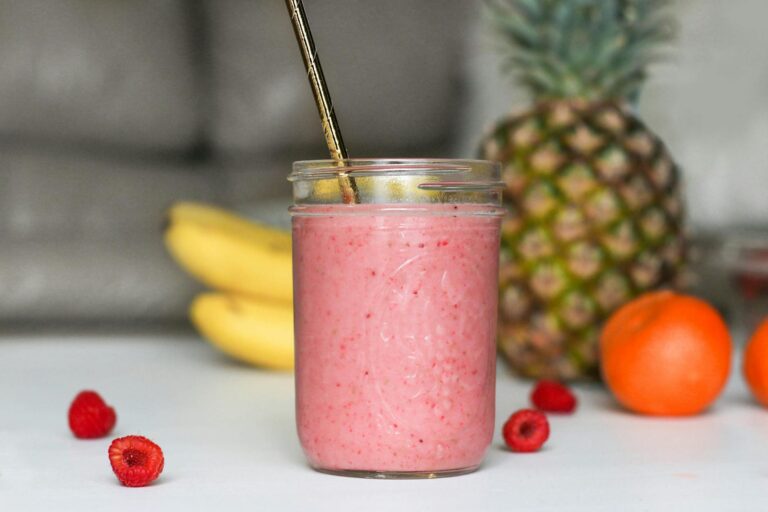
The best brain-boosting smoothies combine blueberries, omega-3-rich seeds, leafy greens, and targeted additions like turmeric or matcha — ingredients with genuine clinical evidence behind them, not just wellness marketing. A simple blend of wild blueberries, spinach, walnuts, and chia seeds in unsweetened almond milk, for instance, delivers anthocyanins shown to restore processing speed in older adults, omega-3 fatty acids linked to a 35–40% lower risk of early-onset dementia, and folate critical for neurotransmitter synthesis. These are not fringe claims. They come from randomized controlled trials, large-scale epidemiological studies, and systematic reviews published in peer-reviewed journals. That said, no single smoothie is going to reverse cognitive decline or prevent dementia on its own.
What the research does support is that consistent, daily intake of specific nutrients — anthocyanins from berries, DHA and EPA from omega-3 sources, curcumin from turmeric, flavanols from cocoa, and L-theanine from green tea — can meaningfully support memory, attention, and processing speed over time. The key word is consistency. Most of the studies showing significant results involved daily supplementation for weeks or months, not a one-off breakfast drink. This article breaks down the strongest evidence behind each ingredient, offers three complete smoothie recipes built around the research, explains important limitations like curcumin’s bioavailability problem, and addresses practical questions about dosing and combinations. Whether you are a caregiver looking for dietary strategies or someone concerned about your own cognitive health, these recipes give you a concrete, evidence-based starting point.
Table of Contents
- What Makes a Smoothie Genuinely Brain-Boosting According to Research?
- The Science Behind Turmeric and Cocoa in Smoothies — and Their Limitations
- Leafy Greens and Green Tea — The Underrated Smoothie Ingredients for Brain Health
- Three Complete Brain-Boosting Smoothie Recipes You Can Make Today
- Common Mistakes That Reduce the Brain Benefits of Your Smoothie
- Can You Get Enough Omega-3s From Smoothie Ingredients Alone?
- Where the Research Is Heading
- Conclusion
- Frequently Asked Questions
What Makes a Smoothie Genuinely Brain-Boosting According to Research?
The difference between a brain-boosting smoothie and a regular fruit smoothie comes down to specific compounds that have been tested in clinical settings. Blueberries are the most studied smoothie ingredient for cognition. A 2022 double-blind, placebo-controlled randomized trial with 86 participants found that six months of daily wild blueberry consumption restored speed of processing to the level of cognitively healthy participants, with the strongest effects observed in adults aged 75 to 80 (PubMed, PMID: 36066009). A separate systematic review of 12 studies confirmed that 8 out of 12 reported blueberry supplementation improved short-term, long-term, and spatial memory across children, young adults, and older adults (PubMed, PMID: 30941401). The active compounds responsible are anthocyanins, a class of flavonoids that a 2024 meta-analysis in Scientific Reports confirmed have neuroprotective effects on neurodegenerative diseases. Omega-3 fatty acids are the second pillar.
Walnuts, chia seeds, and flaxseeds all provide alpha-linolenic acid, which the body partially converts to EPA and DHA. A dose-response meta-analysis of 58 studies found that 2,000 mg per day of omega-3 supplementation significantly improved attention and perceptual speed (Nature/Scientific Reports, 2025). A study of more than 217,000 adults found that higher omega-3 blood levels were linked to a 35–40% lower risk of early-onset dementia, regardless of genetic predisposition. In cognitively healthy individuals, 3.36 grams of EPA and DHA daily slowed cognitive aging by an estimated 2.5 years. The critical distinction here is between ingredients that sound healthy and ingredients with replicated evidence. Açaí, goji berries, and maca powder are popular smoothie additions, but their cognitive evidence is thin compared to blueberries, omega-3 sources, and the other ingredients discussed below. If your goal is brain health specifically, prioritize ingredients with multiple supporting studies over those with appealing marketing.
The Science Behind Turmeric and Cocoa in Smoothies — and Their Limitations
Turmeric has earned attention for its active compound curcumin, and the clinical data is encouraging within specific limits. A UCLA study published in the American Journal of Geriatric Psychiatry found that daily curcumin supplementation improved memory by 28% and also improved mood in people with mild age-related memory loss over 18 months. Across four clinical trials involving 318 patients, curcumin showed statistically significant improvements in cognitive performance in healthy, non-demented adults (PMC, 2024). A 2025 systematic review in Frontiers in Nutrition confirmed curcumin’s greatest benefits appear in working memory and cognitive speed. However, curcumin has a well-documented bioavailability problem. The body absorbs very little of it on its own, and most of what is absorbed gets metabolized quickly. This is why the 2025 systematic review flagged limited bioavailability as an ongoing challenge.
Adding black pepper (which contains piperine) to your turmeric smoothie can increase absorption by up to 2,000% according to earlier pharmacokinetic research. Pairing turmeric with a fat source — coconut oil, avocado, or full-fat yogurt — also improves absorption because curcumin is fat-soluble. Without these steps, you may be getting far less benefit than the clinical trials suggest, since many of those trials used specially formulated curcumin supplements designed for enhanced absorption. Cocoa flavanols present a more straightforward case. A 2024 randomized controlled trial with 88 participants aged 40 to 65 found that eating five pieces of 72% dark chocolate daily for four weeks resulted in less fatigue, improved executive functioning, better memory, and increased gray matter volume (Georgia State University). A separate study found that 720 mg of cocoa flavanols showed acute improvements in visual-spatial working memory and reaction time in 30 healthy adults (PMC). Cross-sectional data from 2,031 older adults also showed positive associations between habitual chocolate intake and cognitive performance. Adding a tablespoon of unsweetened cocoa powder to a smoothie is a practical way to get flavanols without the sugar load of eating chocolate bars daily.
Leafy Greens and Green Tea — The Underrated Smoothie Ingredients for Brain Health
Spinach and kale may not be glamorous smoothie ingredients, but their nutritional profile is directly relevant to cognitive function. Leafy greens are rich in vitamin K, folate, and beta-carotene — nutrients linked to slowing cognitive decline. Folate is particularly important because it is involved in the synthesis of neurotransmitters including serotonin and dopamine, both of which play roles in mood regulation and cognitive processing. B vitamins found in greens, including B6, B9 (folate), and B12, are also essential for reducing homocysteine, a compound associated with cognitive decline and increased dementia risk. A practical example: one cup of raw spinach blended into a berry smoothie adds roughly 58 micrograms of folate (about 15% of the daily recommended intake) and a meaningful dose of vitamin K, with minimal impact on flavor.
Kale offers a similar nutrient profile but with a stronger taste that pairs better with banana and nut butter than with delicate berry combinations. For people who find the taste of greens off-putting, spinach is the easier starting point because its mild flavor nearly disappears behind blueberries and banana. Green tea, specifically matcha powder, brings L-theanine to the mix. L-theanine makes up roughly 50% of the free amino acids in green tea and has been shown to reduce reaction time on attention tasks and improve working memory, with fewer omission errors and more correct answers in clinical trials (PMC, 2021). A double-blind randomized controlled trial in 91 patients with mild cognitive impairment found that green tea extract combined with L-theanine taken for 16 weeks produced significant memory and attention improvements, particularly in those with more severe baseline impairment. One teaspoon of ceremonial-grade matcha in a smoothie provides both L-theanine and a moderate caffeine boost, making it a practical option for a morning brain-health drink.

Three Complete Brain-Boosting Smoothie Recipes You Can Make Today
The following three recipes are built directly around the research discussed above. Each targets a slightly different combination of evidence-backed compounds, so rotating between them across the week provides broader nutrient coverage than sticking with a single recipe. The Berry Brain Boost combines one cup of wild blueberries (frozen works well and is typically cheaper), one cup of fresh spinach, a quarter cup of walnuts, one tablespoon of chia seeds, and one cup of unsweetened almond milk. This recipe delivers anthocyanins from the blueberries, omega-3 fatty acids from both the walnuts and chia seeds, and folate and vitamin K from the spinach. It has a mild, berry-forward flavor and blends smoothly in most standard blenders. If you want to increase the omega-3 content further, swap the chia seeds for ground flaxseed, which offers a slightly higher ALA concentration per tablespoon. The Golden Focus smoothie takes a different approach: one banana, one teaspoon of turmeric powder, a pinch of black pepper, one tablespoon of unsweetened cocoa powder, one tablespoon of ground flaxseed, and one cup of oat milk.
This combines curcumin (with piperine for absorption) and cocoa flavanols in a creamy, chocolate-adjacent flavor profile. The banana provides natural sweetness and potassium. The tradeoff here is that plant-based omega-3 from flaxseed converts to DHA and EPA at a low rate — roughly 5–10% — so this recipe is not a substitute for direct DHA sources if omega-3 intake is your primary concern. The Green Clarity smoothie uses one teaspoon of matcha green tea powder, one cup of kale, half an avocado, a quarter cup of walnuts, and one banana. This delivers L-theanine and moderate caffeine from matcha, healthy fats and potassium from avocado, omega-3s from walnuts, and B vitamins from kale. The avocado also provides the fat needed to support absorption of fat-soluble nutrients. This recipe is the most filling of the three, making it a better option as a meal replacement compared to the Berry Brain Boost, which is lighter.
Common Mistakes That Reduce the Brain Benefits of Your Smoothie
The most common mistake is adding too much sugar. Fruit juice bases, flavored yogurts, honey, and agave can turn a brain-boosting smoothie into something closer to a dessert. High sugar intake has been linked to worse cognitive outcomes in multiple studies, so drowning your blueberries in apple juice undermines the purpose. Use unsweetened plant milks, water, or plain Greek yogurt as your liquid base instead. A second issue is inconsistency. The studies showing cognitive benefits from blueberries, omega-3s, and curcumin involved daily intake over periods ranging from four weeks to 18 months. A smoothie once or twice a week is unlikely to replicate the effects observed in clinical trials.
If daily smoothie preparation feels unsustainable, consider prepping smoothie packs — pre-measured bags of frozen ingredients that you dump into a blender with liquid. This cuts preparation time to under two minutes and makes daily consumption realistic. Third, be cautious about interactions with medications. Turmeric can interact with blood thinners including warfarin, and high doses of omega-3 fatty acids may also increase bleeding risk. Vitamin K in leafy greens can directly interfere with warfarin’s mechanism of action. Green tea contains vitamin K as well and has interactions with certain blood pressure medications. For anyone on prescription medications, especially anticoagulants, consult a physician before making these smoothies a daily habit. This is particularly important for older adults and dementia patients who are often on multiple medications simultaneously.

Can You Get Enough Omega-3s From Smoothie Ingredients Alone?
This is worth addressing directly because the clinical evidence for omega-3s and brain health involves doses that are difficult to reach through smoothie ingredients alone. The meta-analysis showing significant improvements in attention and perceptual speed used 2,000 mg per day. The study showing slowed cognitive aging used 3.36 grams of EPA and DHA daily.
One tablespoon of ground flaxseed provides roughly 1.6 grams of ALA, but the body converts only about 5–10% of ALA to EPA and even less to DHA. A quarter cup of walnuts provides about 2.7 grams of ALA, again with low conversion rates. For people serious about omega-3 intake for brain health, the smoothie ingredients serve as a helpful baseline, but a dedicated algae-based DHA supplement (for those avoiding fish oil) or a high-quality fish oil supplement may be necessary to reach the doses used in clinical research. Adding the smoothie ingredients is still worthwhile — the 217,000-person study found that even moderately higher omega-3 blood levels were associated with 35–40% lower early-onset dementia risk — but tempering expectations about what food sources alone can deliver is important.
Where the Research Is Heading
The next frontier in brain-boosting nutrition research involves personalized approaches. Emerging studies are examining how individual gut microbiome composition affects the absorption and metabolism of compounds like anthocyanins and curcumin, which could explain why some people respond dramatically to dietary interventions while others see minimal benefit. The DHA study that found improved episodic memory in young women and improved working memory reaction times in men (using 1.16 grams daily for six months) already hints at sex-specific responses that future research will need to untangle.
For now, the practical takeaway is that the evidence base for several common smoothie ingredients is stronger than many people realize. These are not superfoods in the marketing sense. They are foods with documented, replicated effects on specific cognitive measures in controlled studies. Building a daily smoothie habit around blueberries, omega-3 sources, leafy greens, and one or two targeted additions like turmeric or matcha is one of the more accessible dietary strategies available for long-term brain health.
Conclusion
The best brain-boosting smoothies are not complicated. They combine a handful of ingredients with genuine clinical backing: wild blueberries for anthocyanins that support processing speed and memory, omega-3-rich seeds and walnuts for attention and dementia risk reduction, leafy greens for essential B vitamins and folate, and targeted additions like turmeric (with black pepper for absorption) or matcha for working memory and focus. The three recipes outlined — Berry Brain Boost, Golden Focus, and Green Clarity — each approach brain nutrition from a slightly different angle, and rotating between them provides the broadest coverage.
The most important factor is consistency. Nearly every positive study discussed here involved daily intake sustained over weeks to months. A single smoothie will not meaningfully change your cognitive trajectory, but a daily habit built around these evidence-backed ingredients is a practical, low-risk strategy worth adopting — with the caveat that anyone on blood thinners or other medications should consult their doctor first. Start with whichever recipe appeals to you most, commit to it for at least a month, and adjust from there.
Frequently Asked Questions
How many blueberries should I put in a brain-boosting smoothie?
Most studies used roughly one cup of wild blueberries daily, which is the equivalent of about 150 grams. Frozen wild blueberries are typically more affordable than fresh and may actually have slightly higher anthocyanin concentrations due to the freezing process breaking down cell walls. Conventional blueberries work too, but wild varieties tend to be smaller with a higher skin-to-flesh ratio, meaning more anthocyanins per cup.
Does it matter whether I use fresh or frozen ingredients?
For most smoothie ingredients, frozen works as well as or better than fresh. Frozen blueberries, spinach, and kale retain their nutrient profiles well and often cost less. The main exception is avocado, which does not freeze gracefully for smoothie purposes unless pre-blended, though some people do freeze avocado halves with acceptable results.
Can children drink brain-boosting smoothies?
Yes. The systematic review on blueberries included studies in children showing memory improvements, and none of the core ingredients pose risks for children. Avoid adding matcha or green tea for young children due to caffeine content. Reduce serving sizes proportionally and skip turmeric if a child finds the flavor objectionable, as forcing an unpleasant food association is counterproductive to building a long-term habit.
How soon will I notice cognitive benefits from drinking these smoothies daily?
The shortest study showing measurable results was the dark chocolate trial at four weeks. Most studies on blueberries and curcumin ran for three to six months before detecting significant changes. You are unlikely to feel a dramatic difference after a few days, and anyone claiming otherwise is selling something. Cognitive benefits from dietary changes are gradual and cumulative.
Is there a best time of day to drink a brain-boosting smoothie?
There is no strong evidence favoring a specific time. However, if your smoothie contains matcha or green tea, morning or early afternoon consumption makes sense to avoid caffeine interfering with sleep. The Golden Focus recipe (without caffeine) works well as an afternoon or evening option. Consistency of timing matters less than consistency of daily intake.
Can these smoothies replace dementia medication?
No. These smoothies are a dietary strategy for supporting brain health, not a medical treatment. No food or supplement has been shown to replace FDA-approved medications for Alzheimer’s disease or other dementias. Anyone currently on dementia medication should continue their prescribed treatment and discuss dietary changes with their neurologist.