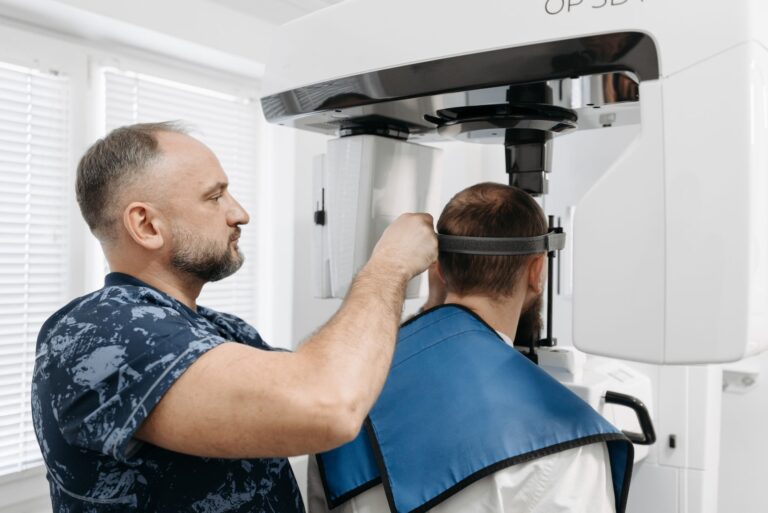
A head CT scan, which uses X-rays to show gross brain structure, helps rule out other causes of memory loss before an Alzheimer's diagnosis. It cannot prove Alzheimer's alone because it lacks detail on plaques, tangles, and early change.
The Alzheimer's Association reports physicians using history, exams, cognitive testing plus MRI or CT can diagnose Alzheimer's with over 90% accuracy Alzheimer's Association diagnosis information. The National Institute on Aging lists CT, MRI or PET to support diagnosis or rule out treatable, possibly reversible causes. Families who know these two roles can ask sharper questions before scheduling.
Medical information disclaimer: This article is for general educational purposes only and does not provide medical advice, diagnosis, or treatment. Always consult a physician or other qualified health professional about symptoms, medications, tests, or treatment decisions.
Table of Contents
- What a Head CT Can Show
- What a Head CT Cannot Prove
- Is CT or MRI Better for First Imaging?
- How to Prepare and Limit Radiation
What a Head CT Can Show
The Alzheimer's Association says head CT helps by revealing alternative explanations for cognitive change. Those findings guide next steps toward treatment or dementia care.
The National Institute on Aging notes some detected conditions are treatable and possibly reversible. Ruling them out can change care plans quickly.
- tumors
- small or large strokes or bleeds
- severe head-trauma damage
- fluid buildup in the brain
What a Head CT Cannot Prove
RadiologyInfo explains CT shows gross structure, not amyloid plaques or tau tangles. It can miss early atrophy in Alzheimer's disease.
Atrophy also overlaps normal aging after age 40. CT alone therefore cannot definitively diagnose Alzheimer's.
Is CT or MRI Better for First Imaging?
The American College of Radiology rates CT head without contrast as Usually Appropriate for initial imaging of mild cognitive impairment and typical Alzheimer presentation American College of Radiology dementia criteria. It rates CT with intravenous contrast as Usually Not Appropriate for dementia workup, so noncontrast is the CT technique when CT is chosen.
RadiologyInfo notes MRI is generally preferred because it gives more detailed images without ionizing radiation. CT is favored when MRI is unavailable, contraindicated, or speed and tolerance matter.
How to Prepare and Limit Radiation
RadiologyInfo explains a head CT uses ionizing X-rays at about 2 millisieverts, within the American College of Radiology 1-10 mSv band RadiologyInfo head CT safety information. Patients should confirm the scan is indicated and avoid unnecessary repeat scans.
Confirm the scan is indicated for current symptoms. Ask whether the order is noncontrast. Ask why CT was chosen instead of MRI for this case.