Diagnosis rates sits at the center of this dementia and brain health question.
Yes, diagnosis rates and accuracy for Alzheimer’s disease are improving significantly with combined blood tests. When patients undergo screening that uses multiple biomarkers together—particularly p-tau217 combined with other markers like eMTBR-tau243—the accuracy rate jumps to approximately 80%, with a dramatic reduction in false positives from 43% down to just 16%.
This represents a substantial leap forward from relying on clinical evaluation alone, which achieves only around 75% accuracy. For the first time, many patients no longer need to undergo invasive spinal taps or expensive brain imaging to get a definitive diagnosis—a simple blood test can now provide answers. This article explores how combined blood tests are revolutionizing Alzheimer’s diagnosis, the specific tests now available, their proven accuracy rates, and what this means for patients and caregivers navigating the diagnosis journey.
Table of Contents
- How Do Combined Blood Biomarkers Improve Alzheimer’s Diagnosis?
- What Are the Real-World Accuracy Numbers?
- From Specialty Clinics to Your Primary Care Doctor
- Can Blood Tests Predict When Symptoms Will Start?
- Understanding False Positives and Test Limitations
- FDA-Approved Tests Available Now
- What’s Next for Blood Biomarker Testing?
- Conclusion
How Do Combined Blood Biomarkers Improve Alzheimer’s Diagnosis?
The power of combined biomarker testing lies in what researchers call the “dual-marker approach.” By measuring two or more proteins in a single blood sample—such as p-tau217 and eMTBR-tau243, or p-tau217 and β-amyloid 1-42—doctors can cross-reference the results to arrive at a much more confident diagnosis. This combination method is significantly more reliable than measuring a single biomarker alone because it accounts for the biological complexity of Alzheimer’s disease. Think of it like a detective checking multiple pieces of evidence: one clue might be circumstantial, but when three clues all point in the same direction, the case becomes much clearer.
The FDA-cleared Lumipulse G test, for example, measures both p-tau217 and β-amyloid 1-42 simultaneously from a single plasma sample. This combination achieves over 90% accuracy at detecting Alzheimer’s-related brain changes, even in the early stages before symptoms become severe. When these dual markers are incorporated into a clinical evaluation—combining blood test results with cognitive assessments and patient history—the overall diagnostic accuracy reaches 94.5%, compared to just 75.5% with clinical evaluation alone. This 19-percentage-point improvement represents a fundamental shift in how confidently physicians can diagnose the disease.
What Are the Real-World Accuracy Numbers?
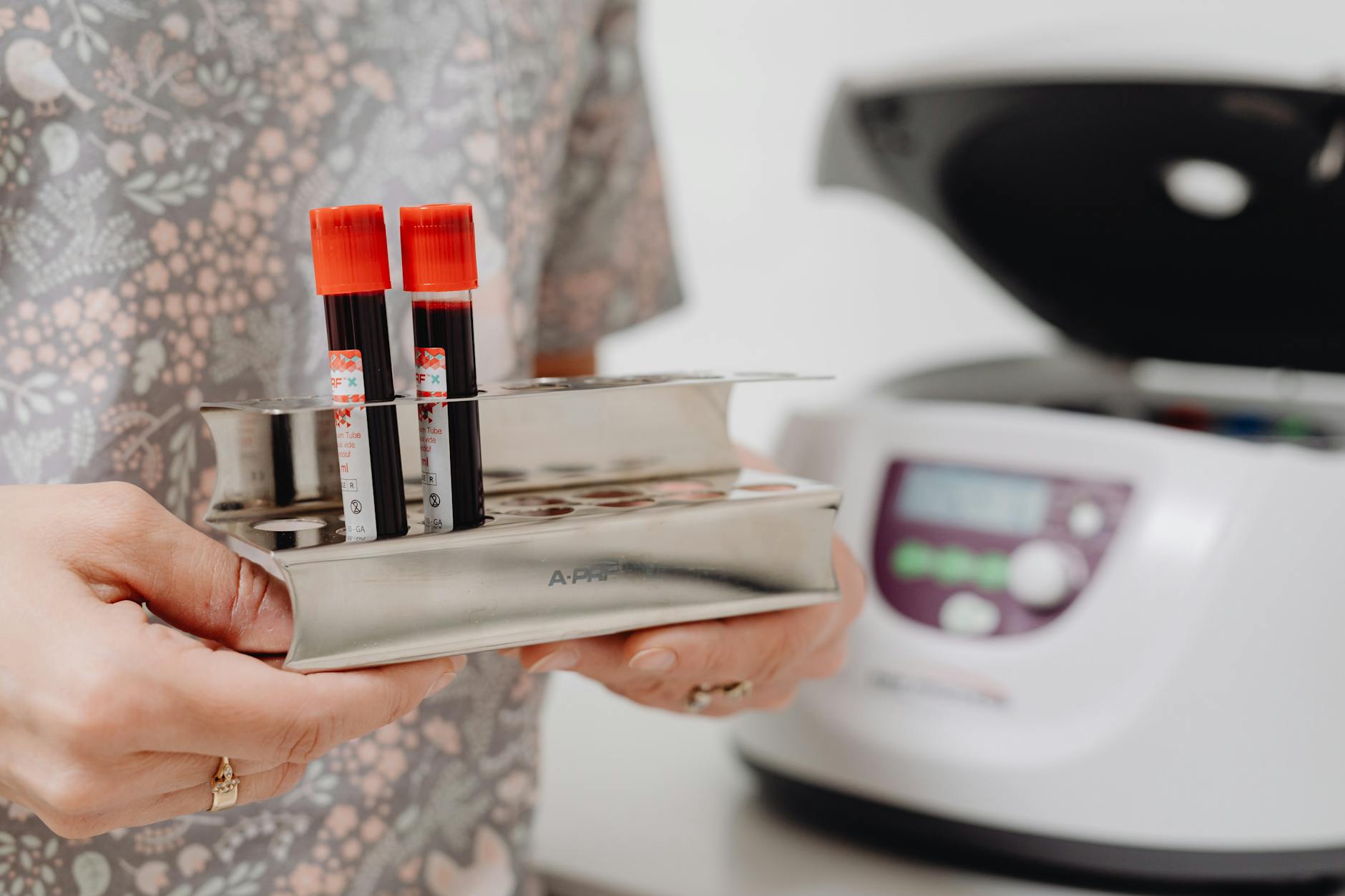
blood tests alone demonstrate impressive accuracy on their own, ranging from 88% to 92% when identifying Alzheimer’s-related brain pathology. However, the real breakthrough comes when these tests are used alongside standard clinical evaluation. In specialty memory clinics, where neurologists have extensive experience with cognitive assessment, blood biomarkers improve diagnostic accuracy from 73% to significantly higher levels. The contrast is even more dramatic in primary care settings, where baseline accuracy without biomarker testing drops to just 61%—meaning more than one in three diagnoses based on clinical judgment alone might be incorrect.
It’s important to note that these accuracy figures apply to symptomatic patients or those with cognitive decline. The tests are not intended as screening tools for asymptomatic people in the general population, which would produce a high rate of false positives and unnecessary worry. If you’re in the early stages of cognitive symptoms—such as memory lapses affecting daily function, difficulty with familiar tasks, or language problems—the combined approach of blood biomarkers plus clinical assessment can definitively confirm or rule out Alzheimer’s disease with near-certainty. However, if you’re experiencing normal age-related memory changes (like occasionally forgetting names or where you put your keys), a blood test would be premature and potentially misleading.
From Specialty Clinics to Your Primary Care Doctor
One of the most significant practical improvements brought by these blood tests is accessibility. Before FDA approval of the Elecsys pTau-181 test and the Lumipulse G test, diagnosis required either a lumbar puncture (spinal tap) to analyze cerebrospinal fluid, or expensive pet or MRI brain imaging. Both options created barriers: they were uncomfortable, costly, and required specialized medical facilities. Now, with Labcorp having launched the first FDA-cleared blood test for primary care assessment, a patient can discuss cognitive concerns with their regular family medicine physician, have a simple blood draw at any standard lab, and receive reliable diagnostic information within days.
This shift democratizes Alzheimer’s diagnosis across different healthcare settings. In a rural area where access to neurologists or specialized memory clinics may require driving hours, a patient can now get tested at their local hospital lab or clinic. The Elecsys pTau-181 test, in particular, was specifically designed for primary care implementation, making it feasible for non-specialist physicians to order and interpret the results. However, this doesn’t replace the value of seeing a neurologist or dementia specialist—rather, it gives primary care doctors a powerful tool to identify patients who genuinely need specialist evaluation, reducing unnecessary referrals for those whose symptoms have other causes.

Can Blood Tests Predict When Symptoms Will Start?
Beyond diagnosing Alzheimer’s disease in people already showing symptoms, blood biomarkers are proving valuable in predicting when cognitive decline might begin for those with asymptomatic brain pathology. Research shows that p-tau217 levels measured in blood can predict symptom onset within approximately 3 to 4 years. This represents a major advance in understanding the disease’s progression and offers potential windows for intervention.
If scientists can identify people destined to develop symptoms years in advance, preventive therapies—such as anti-amyloid or anti-tau drugs—might be started earlier, potentially slowing the disease before noticeable cognitive damage occurs. For individuals with a family history of Alzheimer’s or those who’ve had subtle cognitive changes detected, this predictive capability changes the conversation with their physician. Instead of wondering, “Will I develop dementia?” patients and doctors can now frame it as, “Based on your biomarkers, we estimate symptom onset around 2024, so let’s discuss monitoring and potential preventive treatments now.” This 3 to 4-year window provides time for family planning, lifestyle adjustments, and participation in clinical trials testing new therapies. The limitation, of course, is that not everyone with abnormal biomarkers will follow the predicted timeline—some remain cognitively stable longer than expected—so these predictions offer probability, not certainty.
Understanding False Positives and Test Limitations
While combined blood biomarkers represent a major advance, they’re not perfect. The biggest challenge in Alzheimer’s diagnosis is distinguishing Alzheimer’s pathology from other causes of cognitive decline—such as frontotemporal dementia, Lewy body disease, or vascular dementia. A blood test positive for Alzheimer’s biomarkers tells you that the person has amyloid and tau accumulation in the brain, but it doesn’t definitively prove that these proteins are causing the observed cognitive symptoms.
Some cognitively normal older adults have Alzheimer’s pathology yet remain mentally sharp, a phenomenon called “preclinical Alzheimer’s disease.” This is why the reduction in false positives from 43% to 16% when using the combined p-tau217 and eMTBR-tau243 approach is so significant. The dual-marker method filters out many of those cases where a single biomarker might wrongly suggest Alzheimer’s when another disease is responsible. However, limitations remain: if someone shows cognitive symptoms but has atypical biomarker patterns, or if they have multiple pathologies (Alzheimer’s plus vascular changes, for example), the blood test alone may not provide the complete picture. This is why combining blood tests with clinical evaluation, and sometimes with advanced imaging or cognitive testing, remains the gold standard approach.

FDA-Approved Tests Available Now
Two major blood tests have earned FDA clearance for Alzheimer’s diagnosis. The Lumipulse G pTau217/ß-Amyloid 1-42 Plasma Ratio test measures two critical biomarkers—phosphorylated tau at position 217 and β-amyloid 1-42—and evaluates their relationship to identify Alzheimer’s disease pathology. This test has been cleared specifically for diagnosing Alzheimer’s disease in symptomatic patients and demonstrates over 90% accuracy.
The Elecsys pTau-181 test, launched nationwide through Labcorp, focuses on phosphorylated tau at position 181. It was the first blood test approved for primary care assessment of Alzheimer’s and is specifically designed to be implemented by non-specialists. Both tests can be ordered by physicians and processed through standard laboratory networks, making them accessible to most patients in the United States. When choosing which test your doctor might order, ask whether your healthcare provider plans to use the results alongside cognitive assessment and clinical evaluation, as this combined approach yields the highest accuracy.
What’s Next for Blood Biomarker Testing?
The field is moving rapidly toward even more sophisticated multi-marker panels. Researchers are exploring whether combining three, four, or even more biomarkers in a single blood test could improve accuracy further and help differentiate between different types of dementia. Additionally, the development of blood tests for other dementia types—such as frontotemporal dementia and Lewy body disease—is underway, which would allow physicians to narrow down the diagnosis more precisely from the start.
Looking forward, blood biomarkers may also become tools for monitoring disease progression and treatment response. As new Alzheimer’s drugs like aducanumab and lecanemab demonstrate modest but meaningful benefits for early-stage disease, the ability to track biomarker changes could help doctors determine whether a patient is responding to therapy. The combination of improved diagnostics, predictive testing, and therapeutic monitoring through blood tests is poised to transform how Alzheimer’s disease is managed over the next decade.
Conclusion
Combined blood tests are fundamentally changing Alzheimer’s diagnosis by delivering accuracy rates above 94% when integrated with clinical evaluation—far exceeding the 75% accuracy of clinical assessment alone. The FDA-cleared Lumipulse G and Elecsys pTau-181 tests are now available through standard laboratory networks, making diagnosis accessible in primary care settings without the need for invasive spinal taps or expensive brain imaging. Beyond diagnosis, these biomarkers can predict symptom onset 3 to 4 years in advance, opening possibilities for early intervention.
If you or a loved one is experiencing cognitive changes, discuss blood biomarker testing with your physician. A simple blood test, combined with a thorough clinical evaluation, can provide the clarity needed to confirm an Alzheimer’s diagnosis, rule out other conditions, or quantify the risk of future cognitive decline. The era of guesswork in Alzheimer’s diagnosis is ending; precision medicine is arriving.
You Might Also Like
- Novel Blood Marker Reduces Risk of False Alzheimer’s Diagnosis
- Meat Consumption May Lower Alzheimer’s Risk in Those With Genetic Predisposition
- Sigma Gamma Rho Partners With Alzheimer’s Association for Brain Health Equity
For more, see National Institute on Aging.