When knitting loses appeal, practical home alternatives include music, art, baking, gardening, reminiscence, gentle movement and simple tablet games. The right choice depends on current preferences, strengths and dementia stage, not habit.
Home care here means day-to-day support at home for a person living with dementia. Interest often shifts because attention, dexterity, energy and communication change. A fresh match can restore calm engagement without pressure to perform.
Medical information disclaimer: This article is for general educational purposes only and does not provide medical advice, diagnosis, or treatment. Always consult a physician or other qualified health professional about symptoms, medications, tests, or treatment decisions.
Table of Contents
- Start with preference, then tailor the task
- Which creative swaps replace handwork?
- What about movement, screens and going out?
- How to adapt when memory and mood shift?
Start with preference, then tailor the task
Ask what sounds pleasant today, then shape it to ability and mood. Offer one clear step at a time and keep sessions short. Stop while it still feels good, and try again later if needed.
Generic crafts often fail when steps are long, tools frustrate, or timing is wrong. Keep the social part even when skill fades. Change materials, length, or setting before dropping the idea.
Which creative swaps replace handwork?
Use simple materials with quick payoff. Pick one low-pressure swap and set it up in advance. NICE lists exercise, aromatherapy, art, gardening, baking, reminiscence, music therapy, mindfulness and animal-assisted therapy as wellbeing options in its wellbeing activities guidance.
The Alzheimer's Association states music and art enrich lives by enabling self-expression and engagement even after dementia progresses in its art and music resource. Studies cited there link music with less agitation in middle stages. Try a short playlist, humming along, or sorting fabric by color.
- paint, crayons or clay for color and texture
- familiar baking tasks such as stirring, tearing herbs or decorating
- light gardening such as watering, potting or sniffing herbs
What about movement, screens and going out?
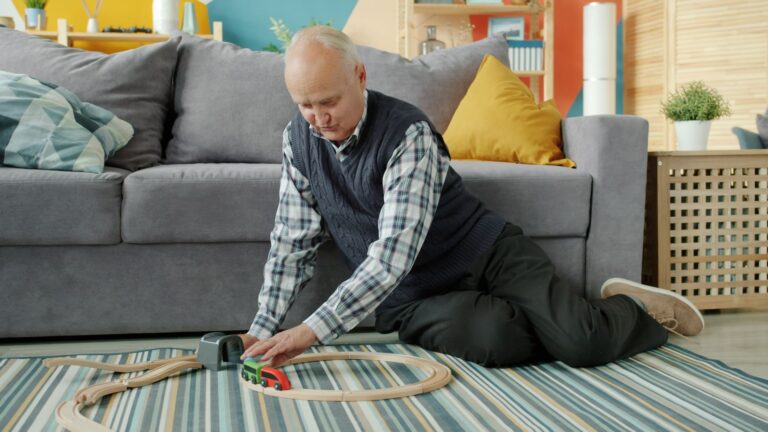
NHS guidance points to tablets for games, puzzles, dementia apps, Zoom and YouTube in its dementia activities guidance. Pair a short video call with a shared song or photo look-through.
For change of scene, the same guidance lists memory cafes, Singing for the Brain groups, sensory gardens and dementia-friendly cinema. For walks, the Alzheimer Society of Canada warns people may get lost even in familiar places or walk without resting in its guidance on suitable activities. Walk together, choose comfortable difficult-to-remove shoes and label belongings.
How to adapt when memory and mood shift?
When words fade, objects can carry the activity. The Alzheimer Society of Canada notes people often recall the distant past better, so handling memory-box objects can work better than pictures alone. Share memories together rather than quiz with factual questions.
Match energy: offer active options in bright moments and calm sensory options when tired. Swap tasks quickly if frustration rises. Save one playlist, one art box and one walk route for easy repeat.