Alternatives to no-cook meals in one-on-one dementia care are supervised cooking, bite-sized finger foods, and small frequent meals with stronger flavours and calm support. One-on-one care means one caregiver supports one person through preparation and eating. Interest often shifts toward sweet, spicy, sour, or salty tastes. Familiar textures may lose appeal, and long meals may feel too hard to finish.
Medical information disclaimer: This article is for general educational purposes only and does not provide medical advice, diagnosis, or treatment. Always consult a physician or other qualified health professional about symptoms, medications, tests, or treatment decisions.
Table of Contents
- Keep self-feeding going with finger foods
- Cook with the person, not just for them
- Match new tastes and shorter meals
- When texture needs professional review
Keep self-feeding going with finger foods
When utensils confuse, switch the format rather than taking over feeding. The Alzheimer's Association advises bite-sized finger foods to preserve self-feeding, as explained in its guide to food and eating. Useful options include chicken nuggets, fish sticks, tuna sandwiches, orange segments, and steamed broccoli.
Cut food small and soft so it is easy to pick up and chew. Avoid tricky foods like spaghetti. Use colour contrast, such as blue plates, to make food stand out. If food is held in the mouth, vary flavour or temperature to prompt swallowing.
Cook with the person, not just for them
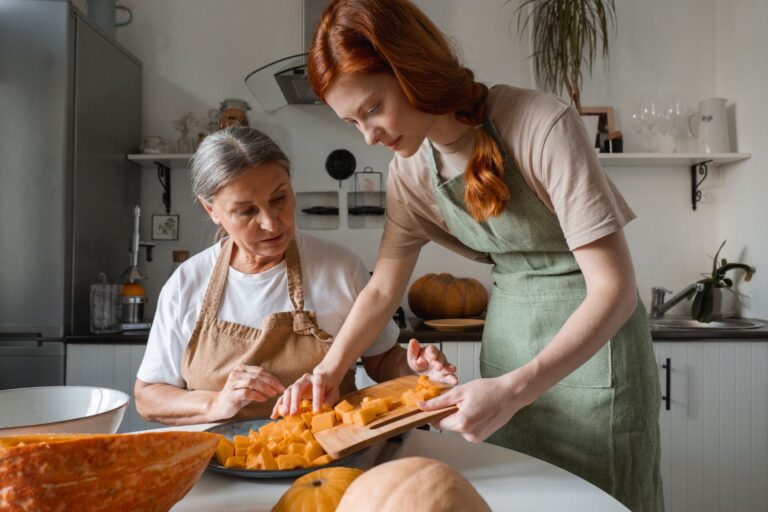
Instead of no-cook only, involve the person in supervised cooking matched to present ability. The National Institute on Aging describes this shared approach in its guide to adapting activities. The person can gather materials, measure, mix, pour, or direct a recipe.
Pick one short task per session and stay close throughout. Let the person do what feels manageable while you handle heat, knives, and timing. Stop or simplify the task if focus fades.
Match new tastes and shorter meals
Tastes often shift to sweet, spicy, sour, or salty foods, and liked textures may be rejected. The NHS Cornwall and Isles of Scilly ICB notes this pattern in its eating well with dementia guide. Offer familiar favourites alongside stronger flavours and fruit or sweet sauces. If sitting through meals is hard, replace three large plates with small frequent meals.
Use portable nutrient-dense snacks and finger foods for pacing or easy tiredness. Keep portions small so a finish feels possible. Make the table calm and predictable during one-on-one support. Reduce noise and clutter, simplify tableware, eat together, and prompt gently.
- Clear the table to one plate, one cup, and one utensil.
- Offer a loaded spoon when starting feels hard.
- Use hand-over-hand guidance only as needed.
When texture needs professional review
As dementia advances, chewing and swallowing can deteriorate into dysphagia. Food texture must then match assessed safety needs, not preference alone. Sirona care and health warns about this limit in its nutrition and dementia leaflet.
Watch for coughing, pocketing food, wet voice, or repeated throat clearing. Do not simply soften food further without advice. Ask the GP for a speech and language therapy referral before changing textures, including IDDSI guidance.