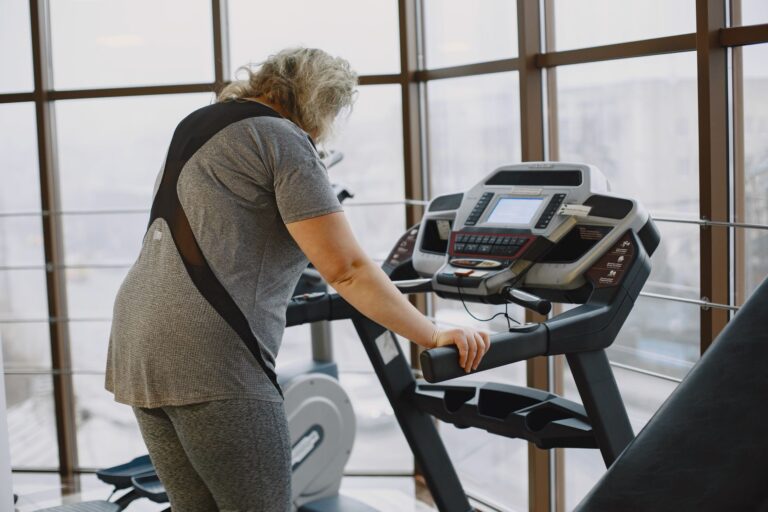
Aerobic exercise in midlife — brisk walking, jogging, cycling, swimming, or any sustained activity that raises your heart rate — lowers the risk of developing dementia later in life. People in the highest midlife physical-activity category in the Framingham Offspring Study had about 41% lower risk of all-cause dementia than the least-active group, according to Marino and colleagues in JAMA Network Open.
The protective effect does not require elite fitness or marathon training. It shows up at ordinary activity levels, scales with how fit or active a person stays, and appears strongest when the activity happens during the 45-to-64 age range rather than earlier in adulthood. What follows covers how large the effect is, how much activity it takes, who it applies to, and where the evidence runs out.
Medical information disclaimer: This article is for general educational purposes only and does not provide medical advice, diagnosis, or treatment. Always consult a physician or other qualified health professional about symptoms, medications, tests, or treatment decisions.
Table of Contents
- How Strong Is the Link Between Midlife Exercise and Lower Dementia Risk?
- How Many Steps a Day Make a Difference?
- Does the Benefit Hold Up for People With Higher Genetic Risk?
- How Big a Role Does Inactivity Play in Dementia Overall?
- What Are the Limits of This Evidence?
How Strong Is the Link Between Midlife Exercise and Lower Dementia Risk?
The Framingham analysis followed 4,290 adults for decades and compared self-reported activity levels across three life stages. Midlife activity (ages 45–64) in the highest category carried about 41% lower all-cause dementia risk than the lowest category, and high activity in late life was linked to about 45% lower risk, according to Marino et al. Activity level in early adulthood showed no significant association with later dementia risk, which points to midlife and beyond as the window where exercise matters most. A separate, longer-running Swedish study measured the effect with an objective test rather than a questionnaire. Researchers tested cardiovascular fitness directly in 191 women at midlife (ages 38–60) in 1968 and tracked them for 44 years.
Women with high fitness had an adjusted hazard ratio of just 0.12 for all-cause dementia compared with medium fitness, while women with low fitness had a hazard ratio of 1.41, according to Hörder and colleagues in Neurology. Fitness didn't just change whether these women developed dementia — it changed when. Among women who stayed highly fit and eventually developed dementia, onset came about 11 years later on average than in medium-fitness women who developed it, roughly age 90 versus age 79. That gap suggests cardiovascular fitness in midlife delays dementia onset even in cases where it doesn't prevent it outright.
How Many Steps a Day Make a Difference?
A UK Biobank study tracked daily step counts with wrist accelerometers in 78,430 adults aged 40–79 and followed them for about seven years. Dementia incidence fell steadily as step count rose, reaching its lowest point near 9,826 steps a day, a hazard ratio of 0.49 compared with minimal stepping, according to del Pozo Cruz and colleagues in JAMA Neurology. Notably, roughly half of that benefit — about 25% lower risk — was already achieved at around 3,800 steps a day, well short of the commonly cited 10,000-step target.
Pace mattered as much as volume. The same study found that a peak 30-minute walking cadence of about 112 steps per minute — brisk enough to count as aerobic — showed the strongest association with lower dementia risk, a hazard ratio of 0.38. That suggests a shorter, faster-paced walk may do more for brain health than a longer, slower one covering the same distance. For a midlife reader without a fitness tracker, this translates into two practical targets: work toward roughly 10,000 steps a day over time, and build in at least one stretch of brisk walking — fast enough that holding a conversation takes some effort — rather than treating all steps as equal.
Does the Benefit Hold Up for People With Higher Genetic Risk?
Dementia risk isn't distributed evenly. The APOE ε4 gene variant is a well-established genetic risk factor for Alzheimer's disease, and some people assume genetic risk overrides lifestyle choices. The Framingham analysis checked this directly.
Midlife and late-life physical activity still appeared protective even among people carrying the APOE ε4 variant, according to commentary on the Marino study's findings. In other words, exercise's association with lower dementia risk did not disappear in the subgroup with the strongest known genetic predisposition. This finding comes from a subgroup analysis and needs confirmation in larger samples before it can be treated as settled, but it argues against the idea that genetic risk makes exercise pointless.
How Big a Role Does Inactivity Play in Dementia Overall?
Physical inactivity isn't a minor factor among dementia risks — it's one of the larger modifiable ones identified so far. A systematic review and meta-analysis published in The Lancet Healthy Longevity estimated that inactivity carries a weighted population attributable fraction of about 7.3% for dementia worldwide, with a confidence interval of 3.9% to 11.2%. That figure represents the share of dementia cases across a population that could theoretically be avoided if inactivity were eliminated, not a personal risk estimate for any one individual.
This scale is why aerobic activity shows up consistently in dementia-prevention guidance rather than being treated as a minor lifestyle tip. The World Health Organization's 2020 physical activity guidelines recommend 150 to 300 minutes of moderate-intensity aerobic activity — brisk walking is the standard example — or 75 to 150 minutes of vigorous activity per week. That range is the benchmark most midlife dementia-prevention guidance is built around, and it lines up with the step-count and fitness thresholds seen in the cohort studies above.
What Are the Limits of This Evidence?
Every human study cited here is observational: researchers tracked what people already did and measured outcomes, rather than randomly assigning some people to exercise and others not to. That design shows association, not proof that exercise directly causes the risk reduction. The clearest limitation is reverse causation. Early, undiagnosed cognitive decline can itself reduce how active a person is, years before a dementia diagnosis is made — meaning some of the "inactive, higher-risk" group may have already been declining for reasons unrelated to lack of exercise.
Both the Hörder and Marino research teams flag this risk explicitly. Some cohorts, including Framingham, also relied on self-reported activity levels, which are less precise than the accelerometer data used in the UK Biobank and the directly tested fitness levels in the Swedish cohort. None of this erases the consistency across study designs: a self-reported midlife activity cohort, a directly measured fitness cohort followed for 44 years, and an accelerometer-based step-count cohort all point the same direction, with effect sizes large enough — hazard ratios as low as 0.12 to 0.49 — that chance alone is an unlikely explanation. What the evidence can't yet establish is the exact biological mechanism or guarantee an individual outcome, only that higher aerobic activity in midlife tracks with meaningfully lower dementia risk across every population studied so far.