Sudden power sits at the center of this dementia and brain health question.
Iran’s sudden power shift following Supreme Leader Ali Khamenei’s death on February 28, 2026, represents one of the most consequential transitions in modern Middle Eastern history—and its implications for global stability are profound. The killing of Khamenei during active military conflict with the U.S. and Israel triggered an immediate succession crisis that exposed cracks already forming throughout Iran’s political system. Within days, the Assembly of Experts elected Mojtaba Khamenei, Ali’s son, as the third supreme leader since the 1979 revolution. This is not simply a change of guard; it signals a potential unraveling of the institutional controls that have held Iran’s authoritarian system together for nearly five decades.
The power shift collides with a cascading internal crisis. Since late December 2025, Iran has faced nationwide protests spanning all 31 provinces, driven by economic collapse, currency depreciation, and mass shortages. Simultaneously, the regime has lost critical regional allies—Syria’s Bashar al-Assad fell in 2024, while Hezbollah and Hamas have been decimated by Israeli military operations. Iran’s air defenses and nuclear capabilities have been substantially weakened by targeted strikes. These compounding pressures have created a moment of genuine structural instability: a new, untested leader inheriting an economically fractured state, an angry population, and a diminished regional position. This article examines what triggered Iran’s power shift, the internal and regional forces destabilizing the regime, and why analysts and Western officials are asking whether this moment could reshape Middle Eastern security architecture for years to come.
Table of Contents
- What Triggered Iran’s Sudden Succession Crisis?
- The Exploding Crisis Within Iran’s Borders
- The Hollow Victory—Iran’s Collapsing Regional Position
- Who Is Mojtaba Khamenei, and Does It Matter?
- The Regime’s Legitimacy Crisis—Deep and Possibly Irreversible
- What Secretary of State Rubio Really Meant—Deep Uncertainty About Iran’s Future
- The Broader Implications—Oil Markets, Nuclear Negotiations, and Regional War
- Conclusion
What Triggered Iran’s Sudden Succession Crisis?
On February 28, 2026, an airstrike killed supreme leader Ali Khamenei, ending 37 years of his absolute control over Iran’s armed forces, judiciary, and state media. Khamenei had consolidated power carefully after the 1989 death of Ayatollah Khomeini, the revolution’s founder. His death during an escalating military conflict—not from old age or illness—meant there was no orderly transition plan and no clear consensus on succession. The Assembly of Experts, the clerical body theoretically empowered to elect the supreme leader, had to act quickly to prevent a power vacuum that could invite either internal rebellion or external intervention.
The Assembly’s election on March 3-8, 2026, produced its own shock: they chose Mojtaba Khamenei, Ali’s 55-year-old son. This represented both a break and a continuity. A dynastic succession was unusual in Iran’s revolutionary tradition—the office had always been presented as earned through religious scholarship and revolutionary credentials, not birthright. Mojtaba’s election on March 9, 2026, signaled that the regime prioritized keeping power within the Khamenei family over maintaining the pretense of open competition. It was a choice made under pressure, with no guarantee it would be accepted by rival factions within Iran’s fragmented elite.
The Exploding Crisis Within Iran’s Borders
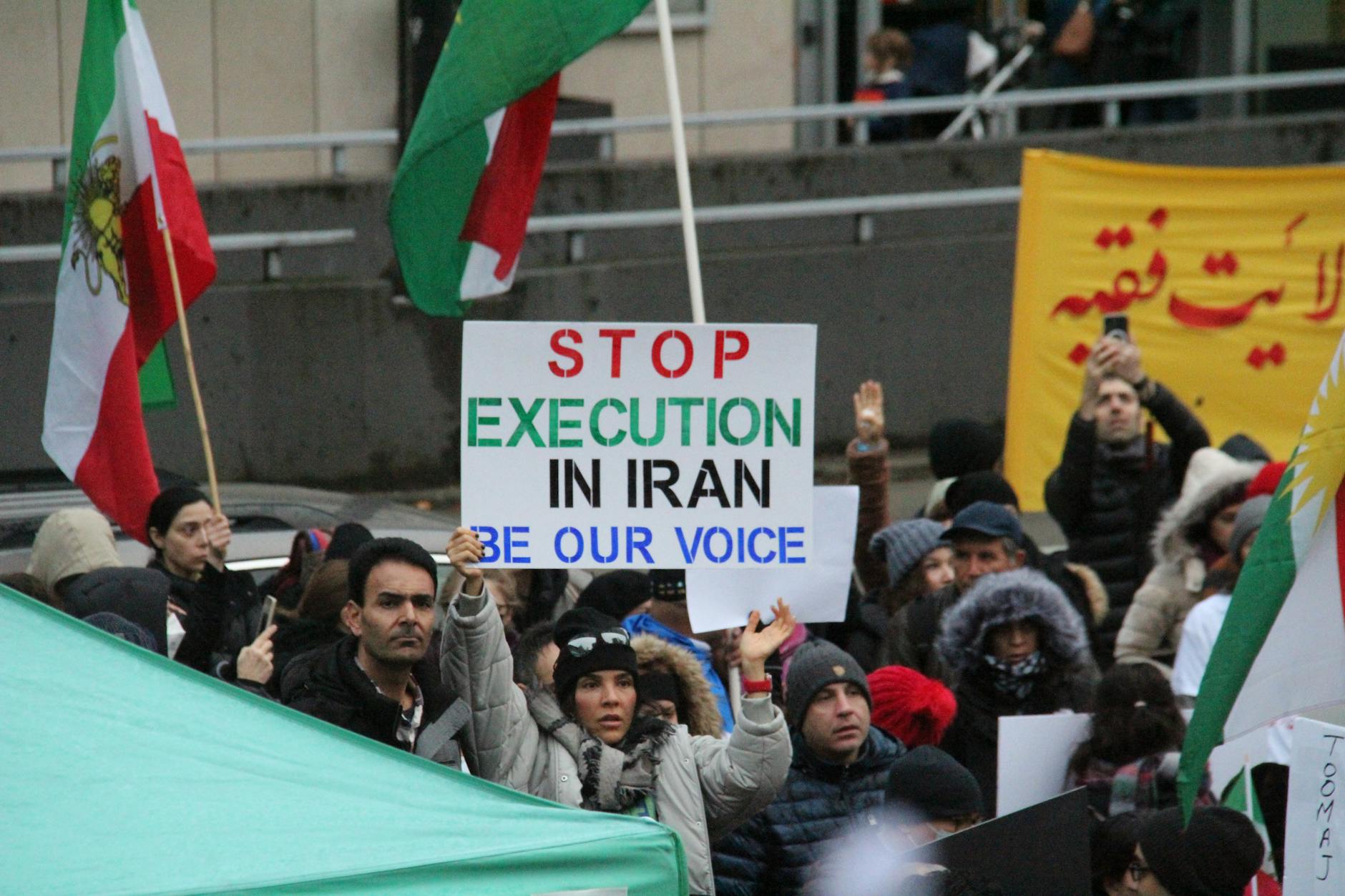
Iran’s internal collapse provided the backdrop—and the reason—why Khamenei’s death could trigger such destabilization. Starting December 28, 2025, Iran erupted in nationwide protests. These were not localized demonstrations but a coordinated uprising spanning all 31 provinces, driven by tangible desperation. The Iranian rial had collapsed in value, inflation had soared, and basic goods were in short supply. Citizens were experiencing a genuine economic catastrophe, not abstract political discontent. Protesters chanted “Death to the Dictator” and openly expressed loss of faith in President Pezeshkian, who had been elected in 2024 with promises of economic reform.
The regime’s response was brutal. Security forces cracked down with force described by analysts as “among the largest massacres in modern Iranian history.” The scale of the crackdown—and its failure to suppress the uprising—revealed a critical weakness: the regime could use violence to maintain control of the streets, but it could not restore economic stability or public legitimacy. A new supreme leader inheriting this situation faced a population that had already rejected the system’s authority. Unlike Khamenei, who had decades to build networks and fear-based loyalty, Mojtaba was arriving into a country that had just been brutally suppressing its own people. However, if the regime successfully manages to project continuity of security control, it may buy time to address economic grievances. But this strategy carries severe limits: security crackdowns without economic improvement eventually exhaust a government’s coercive capacity.
The Hollow Victory—Iran’s Collapsing Regional Position
Even before Khamenei’s death, Iran’s regional power had been crumbling. In 2024, Bashar al-Assad, Iran’s closest regional ally and host to Iranian military bases in Syria, was overthrown. This was not a minor setback; Syria had been the lynchpin of Iran’s “resistance axis” connecting Tehran to Lebanon’s Hezbollah and Palestinian armed groups. Losing Assad meant losing a forward base for projecting power into the Levant and the Mediterranean. Israel and the United States, meanwhile, have systematically degraded Iran’s military capacity.
Targeted airstrikes have weakened Iran’s nuclear program facilities and devastated its air defense systems. Hezbollah in Lebanon and Hamas in Gaza—both central to Iran’s regional strategy—have suffered catastrophic losses in recent years. These are not theoretical reverses but tangible losses of military allies and infrastructure. The new supreme leader inherited an Iran that was more militarily vulnerable than it had been in decades, precisely when a regime transition typically invites external pressure. The implications are stark: Iran can no longer count on Syria as a protected rear base, cannot effectively challenge Israeli air superiority, and has lost critical non-state military partners. If regional adversaries sense weakness during this succession moment, they may test Iran’s red lines—potentially in the Persian Gulf, where Iran controls strategic chokepoints but lacks the air defense capacity to defend them effectively.
Who Is Mojtaba Khamenei, and Does It Matter?
Mojtaba Khamenei is his father’s son in name and, theoretically, in inherited authority. But he is not his father. The elder Khamenei had decades to cultivate networks, intimidate rivals, and establish his personal authority as a religious and military figure. Mojtaba was known primarily as a trusted aide and fixer—competent at managing his father’s interests but not tested in a crisis of this magnitude. His election was a stabilizing choice insofar as it kept power within the family, but it was also a gamble: would hard-liners accept a less-tested leader? Would moderate reformers see an opportunity to push back against hard-line dominance? Early signs suggest internal strain.
Reporting indicates visible “factional rupture” and “structural disintegration” among ruling officials themselves. Different branches of Iran’s security apparatus, the clerical establishment, and the Revolutionary Guard may have competing visions for how to respond to the simultaneous crises of succession, economic collapse, and regional weakness. Mojtaba’s challenge is to establish authority quickly while managing centrifugal forces that could pull the regime apart. A specific example of this tension: Iran’s security forces have the power to suppress street protests, but they cannot compel the currency to stabilize or restore shortages. If Mojtaba is perceived as unable to deliver on basic governance, factions within the security services or the clerical establishment may move to constrain or replace him, creating further instability.
The Regime’s Legitimacy Crisis—Deep and Possibly Irreversible
Authoritarian regimes typically rest on three foundations: coercive power (security forces), nationalist legitimacy (defending the nation), and ideological legitimacy (the system represents something meaningful). Iran’s regime is losing on all three counts. The security forces can still suppress protests, but nationalism rings hollow when the regime is presiding over economic collapse and military loss. Ideological legitimacy has evaporated; the revolution’s promise of dignity and self-sufficiency has become a historical joke to millions of Iranians experiencing poverty and isolation. This is the core danger: even a successfully executed succession that maintains family control and regime continuity does not address why the population rejected the system. Mojtaba inherits an Islamic Republic that has lost what social scientists call “moral authority.” Citizens no longer believe the regime’s narrative about Islam, resistance, or national pride.
They see a corrupt elite managing decline. A regime can rule through fear for a time, but fear alone, without any countervailing legitimacy, eventually corrodes from within as security force loyalty breaks down or defectors emerge. A limitation worth noting: the regime does maintain sophisticated intelligence and security apparatus, including the Revolutionary Guard and the Quds Force. These institutions have survived internal power struggles before. It is entirely possible that the regime muddles through the current crisis—suppresses major protests, manages elite factions, and stabilizes itself under Mojtaba. If this happens, global stability may improve simply because the crisis did not metastasize. But if it does, the consequences for regional conflict, refugee flows, and energy markets could be severe.

What Secretary of State Rubio Really Meant—Deep Uncertainty About Iran’s Future
In January 2026, before Khamenei’s death, Secretary of State Marco Rubio made a telling statement about Iran’s trajectory: “an open question…no one knows what would take over” after Khamenei. This was not casual language. Rubio was articulating what U.S. intelligence agencies have concluded: Iran’s future is genuinely unpredictable. A supreme leader might stabilize the system. A factional collapse could produce a multipolar Iran with different regions or power centers acting independently. A military coup could install a secular government. A popular uprising could produce democratic change, or simple state collapse and civil conflict.
This uncertainty is profoundly destabilizing for global peace. Adversaries of Iran—Israel, Gulf Arab states, and the United States—typically prefer a weakened but predictable Iran to an Iran in the throes of regime change. During transitions, miscalculation becomes likely. An untested Iranian leader might overreach militarily to prove strength. A collapsing regime might lash out desperately. Conversely, predatory neighbors might see opportunity to advance territorial or geopolitical claims. The possibility of Kurdish or Baloch separatist movements gaining space in a weakened Iran could destabilize neighboring states and create refugee crises. Rubio’s statement was a coded warning: the American government has no clear read on what happens next.
The Broader Implications—Oil Markets, Nuclear Negotiations, and Regional War
Iran’s power shift reverberates through three critical global systems. First, oil markets: Iran is a significant oil producer, and instability there can spike global energy prices, rippling through economies worldwide. A destabilized Iran—unable to produce, or producing erratically—could tighten energy supplies and raise inflation across importing nations. Second, nuclear negotiations: Iran’s nuclear program has been the subject of international diplomacy for decades.
A succession crisis throws the status of any negotiated agreements into doubt. Will Mojtaba honor the nuclear deal framework, or will hard-liners see a succession moment as the time to advance the program? Will the U.S. and European powers view a weakened Iran as an opportunity to impose new restrictions, or as a moment demanding restraint to avoid catastrophic escalation? Third, regional conflict: The Middle East could see renewed Israeli military action, Gulf Arab states making bold moves against Iranian interests, or proxy conflicts in Yemen, Syria, and Iraq intensifying. Each of these scenarios has the potential to drag major powers into a larger war—something that becomes more likely if Iran’s leadership is perceived as weak or unpredictable. The Carnegie Endowment and other think tanks have flagged these risks as among the most serious geopolitical challenges of 2026.
Conclusion
Iran’s sudden power shift—triggered by Khamenei’s death and cemented by Mojtaba’s election as supreme leader—exposes a regime in advanced structural crisis. Economically, the state is collapsing, with currency depreciation and shortages driving nationwide protests and regime brutality. Regionally, Iran has lost its Syrian ally, suffered military losses to Israel and the United States, and seen its non-state allies (Hezbollah, Hamas) decimated. Internally, the regime’s legitimacy has evaporated; millions of Iranians no longer believe in its narrative or accept its authority.
What happens next remains deeply uncertain. The new supreme leader may stabilize the system through skillful management and security force loyalty, buying time for economic recovery. Alternatively, the cascading crises could accelerate regime collapse, producing factional conflict, military intervention by neighbors, or popular uprising that remakes the political system entirely. From the perspective of global stability, this uncertainty itself is the primary risk: investors, policymakers, and military planners cannot plan for an Iran whose future is radically open-ended. This is the real meaning of Khamenei’s death and Mojtaba’s succession—not a stable transition, but the opening of a period of profound geopolitical instability that will shape Middle Eastern security, energy markets, and international relations for years to come.
You Might Also Like
- Florida Power Shift Sparks Debate After Democrats Win in Trump Stronghold
- Iran Power Struggle Deepens as Revolutionary Guards Take Control
- How Did Hong Kong Just Give Police the Power to Demand Your Phone Password?
For more, see Alzheimer’s Association — medical tests.