
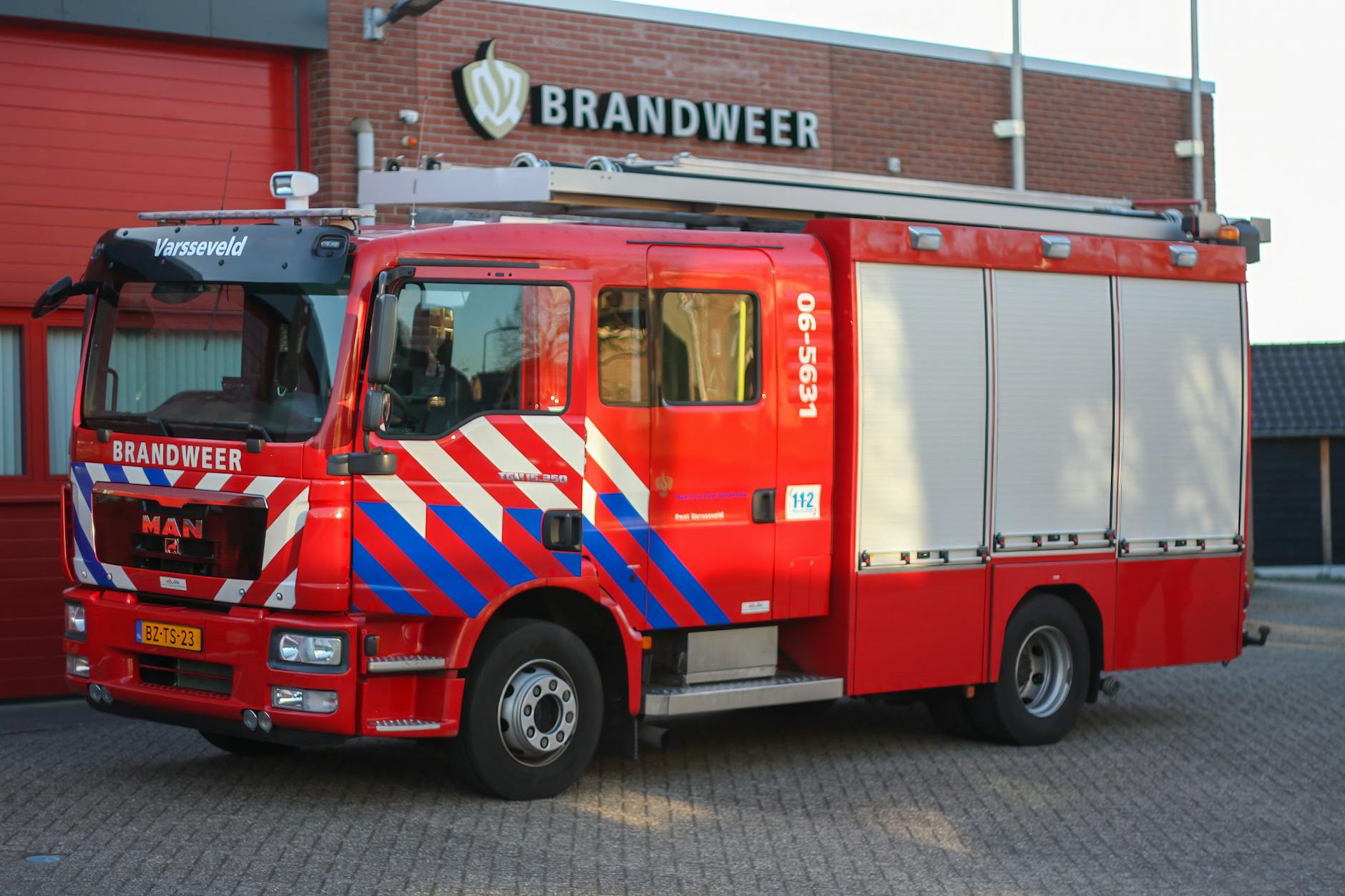
Fire truck sits at the center of this dementia and brain health question.
On the evening of March 22-23, 2026, a catastrophic sequence of events unfolded at LaGuardia Airport that revealed how even the most carefully designed safety systems can fail when communication breaks down under pressure. A fire truck responding to an emergency situation on one aircraft ended up crossing an active runway at the exact moment that an Air Canada Express regional jet was touching down, resulting in a collision that killed two pilots and hospitalized 41 people. The fire truck had been authorized by air traffic control to cross the runway—but in the crucial moments between that authorization and the landing aircraft’s approach, the communication systems that should have prevented this tragedy began to crumble. This article examines what happened that night, how a controlled emergency response transformed into a disaster, and what the incident reveals about human communication and decision-making under extreme stress.
The incident occurred at approximately 11:38 to 11:45 p.m., when Air Canada Express Flight 8646—a Bombardier CRJ 900 regional jet carrying 39 passengers and crew—was making its final approach from Montreal. At the same time, a Port Authority Aircraft Rescue and Firefighting truck was actively crossing the runway, having been cleared to do so by air traffic control. The two vehicles collided in a moment of horrifying consequence, crushing the nose of the jet and leaving both the aircraft crew and fire truck personnel fighting for survival. This article explores the chain of events that led to this collision, the breakdown in coordination that made it possible, and what investigators discovered in the aftermath.
Table of Contents
- How Did a Fire Truck Get Authorization to Cross an Active Landing Runway?
- The Breakdown in Communication That Made the Collision Possible
- The Collision and Its Immediate Consequences
- Airport Closure and the Investigation Period
- The Role of Human Factors and System Redundancy
- What the Investigation and Black Boxes Revealed
- Lessons and the Future of Airport Safety
- Conclusion
How Did a Fire Truck Get Authorization to Cross an Active Landing Runway?
The fire truck was not randomly on the runway. Approximately 10-15 minutes before the collision, a United Airlines aircraft had aborted its takeoff due to a concerning odor detected on board. The flight crew made the decision to return to the gate rather than continue, and as part of standard emergency protocols, LaGuardia’s Air Traffic Control tower authorized the Port Authority’s aircraft rescue and firefighting unit to cross the runway to attend to the United aircraft and investigate the situation. This was a legitimate emergency response to a potential safety threat.
The fire truck was performing exactly the role it was created for—responding rapidly to aircraft emergencies. The critical problem was that while the fire truck had been cleared to cross the runway, the authorization had been given under the assumption that LaGuardia’s airspace was clear for the necessary few minutes. Air traffic control maintains a delicate choreography, managing multiple arriving and departing aircraft simultaneously while coordinating ground operations. The controller had authorized the crossing based on the information available at that moment, but in the fast-moving environment of a busy airport during evening operations, the situation changed rapidly. An incoming aircraft was making its descent, and the window of safe passage for the fire truck was closing—but the communication systems that should have alerted everyone to this conflict failed to do so effectively.
The Breakdown in Communication That Made the Collision Possible
Audio recordings from the control tower later revealed that the air traffic controller had attempted to prevent the disaster by issuing directives to both the fire truck and the incoming Air Canada aircraft. The controller instructed the fire truck to clear the runway and directed the incoming flight to divert or abort its approach. However, these instructions either did not arrive in time, were not fully understood, or could not be executed quickly enough given the physics of the situation. A regional jet traveling at landing speed cannot simply stop or dramatically alter its descent path—the aircraft was committed to its approach trajectory.
The fire truck operators, meanwhile, may not have received the final warning clearly, or the complexity of maneuvering a large emergency vehicle off an active runway in seconds may have exceeded what was physically possible. This scenario illustrates a fundamental challenge in aviation safety: when multiple critical systems need to coordinate under time pressure, every link in the communication chain must function perfectly. A delay in transmission, a moment of confusion, a split-second misunderstanding about runway positions or aircraft speed—any of these could create the exact conditions that were present that night. The investigation into the collision would focus heavily on these communication logs and the question of why the warnings did not prevent the tragedy.
The Collision and Its Immediate Consequences
When the Bombardier CRJ 900 struck the fire truck on the runway, the impact was sudden and devastating. The jet’s nose was crushed and tilted dramatically upward, with debris hanging from the mangled cockpit. The two pilots in the aircraft were killed instantly in the impact. The 39 passengers aboard experienced the violent collision and the immediate uncertainty of whether their aircraft would catch fire or sustain further damage. Two Port Authority Aircraft Rescue and Firefighting officers in the fire truck suffered broken bones but survived the impact, a testament to the structural integrity of their vehicle and their own fortune in the positioning of the collision.
Emergency response protocols immediately kicked into action. Additional fire rescue units, medical personnel, and police converged on the runway. The passengers were evacuated from the aircraft, and the 39 survivors were transported to hospitals for treatment, joining the two firefighters who had also been injured. The full scope of injuries was 41 people hospitalized, a reminder that even when an accident is over in seconds, its consequences extend across dozens of lives and families. Both black boxes from the aircraft were recovered, preserving the technical data that would help investigators understand exactly what happened in the final moments before and during the collision.

Airport Closure and the Investigation Period
The collision forced LaGuardia Airport to close entirely. The runway where the accident occurred was rendered unusable, and the broader airport operations were halted as emergency personnel secured the scene, collected evidence, and began the painstaking process of reconstruction and investigation. The runway remained closed until Friday morning, while the rest of the airport reopened the following afternoon on March 24, 2026.
This operational shutdown affected thousands of passengers, with flights diverted and schedules disrupted across the entire Northeast. For investigators, the closure provided an opportunity to meticulously examine the runway, the aircraft wreckage, and the fire truck to understand the exact positions and speeds involved in the collision. The black boxes would be analyzed to reveal the cockpit voice and flight data—critical information about what the pilots were doing, what instruments they were reading, and what communications they heard or did not hear. For air traffic control investigators, the focus would be on reviewing the control tower recordings, the clearances that were issued, and whether the systems that were supposed to prevent exactly this kind of disaster had functioned as designed.
The Role of Human Factors and System Redundancy
This collision occurred in one of the world’s busiest and most regulated aviation systems, where multiple layers of safety protocols exist specifically to prevent ground vehicles and aircraft from occupying the same space at the same time. Radar systems track aircraft positions, radio communications should provide clear coordination, and trained personnel follow procedures developed over decades. Yet despite all of this, two major moving objects collided on a runway.
This reality confronts aviation safety professionals with a humbling truth: redundancy and systems can fail when human decision-making, communication, and the ability to process information under extreme time pressure reach their limits. The incident also raises questions about how much time operators have to react when conditions change rapidly. The air traffic controller had to recognize that the aircraft approach and the fire truck crossing were on a collision course, make the decision to issue warnings, transmit those warnings clearly, have those warnings received and understood, and then have the pilots and vehicle operators execute avoidance maneuvers—all within seconds. This compressed timeline is an inherent challenge of aviation operations, and while training and procedures help, they cannot eliminate the fundamental constraint of physics and human reaction time.

What the Investigation and Black Boxes Revealed
The recovery of both black boxes from the Air Canada aircraft was essential for the investigation. These devices, which record technical flight data and cockpit voice communications, preserve critical information about the final minutes of the flight. Investigators would be able to hear the pilots’ communications, the warnings they received (or did not receive), and what information they had about their position and descent rate.
The flight data would show the aircraft’s speed, altitude, heading, and other parameters at the moment of impact. For air traffic control, investigators also obtained the radar data and control tower recordings that would show exactly when the aircraft became visible on radar approaching the runway, when the fire truck was cleared to cross, when the controller attempted to issue warnings, and what the timing sequence actually was. This technical evidence would help answer the central question: given the speeds and distances involved, was there any realistic scenario in which the collision could have been prevented, or was the window simply too narrow once the fire truck had been cleared to cross?.
Lessons and the Future of Airport Safety
This collision will likely lead to detailed reviews of LaGuardia’s procedures for authorizing ground vehicles to cross active runways during complex traffic situations. Whether the procedures need to be changed, whether additional communication systems need to be implemented, or whether the fundamental challenge is one of situational awareness and decision-making under pressure will be central to the investigation. Other airports will watch this incident closely to see whether the lessons learned might apply to their own operations.
The incident also stands as a stark reminder that aviation safety is not a destination but an ongoing process of learning from failures and near-misses. The system worked perfectly in countless ways—the pilots recognized a threat on the United aircraft and acted appropriately, the fire rescue team responded rapidly to the emergency, the emergency services mobilized effectively, and the passengers and crew who survived did so because of the safety features built into the aircraft and the professionalism of the emergency response. Yet one failure in communication or coordination was enough to create a tragedy. Moving forward, the focus will be on understanding precisely where that failure occurred and what could be adjusted to reduce the likelihood of such a collision happening again.
Conclusion
The fire truck ended up on a runway at LaGuardia Airport on March 22-23, 2026, because it had been authorized by air traffic control to cross while responding to an emergency with a United Airlines aircraft. That authorization was appropriate for the conditions at the moment it was given, but in the fast-moving environment of a busy airport, the situation changed within minutes. The Air Canada Express regional jet was making its final approach, and despite attempts by the air traffic controller to divert both the aircraft and the fire truck, the two vehicles collided. The tragic result was two pilots killed and 41 people hospitalized, along with a temporary closure of one of New York’s major airports.
The investigation into this collision will provide critical information about how emergency response systems, air traffic control communication, and the coordination between multiple parties can be strengthened. What remains clear is that this was not a collision caused by negligence or recklessness, but rather a breakdown in the communication and coordination systems that exist to prevent exactly this kind of event. Every person involved—the air traffic controllers, the pilots, the fire truck operators—was attempting to do their job correctly under circumstances that changed with remarkable speed. The collision is a sobering reminder that even well-designed systems can fail when the demands of the moment exceed the capacity of the people operating them, and that preventing tragedies often requires not only better procedures and technology, but also a deeper understanding of how humans make decisions and communicate under extreme time pressure.
You Might Also Like
- What’s the Best Cushion for Dementia Patients With Poor Hip Alignment?
- What’s the Best Seating Option for Alzheimer’s Patients Who Slide Backward?
- What’s the Best Chair Cushion for Dementia Patients Who Sit on the Edge of Chairs?
For more, see National Institute on Aging.




