Most disc injuries improve naturally over time because your body is equipped with remarkable biological mechanisms to heal damaged spinal discs. When a disc herniates or bulges, the gel-like interior doesn’t stay damaged forever—inflammatory responses gradually reabsorb the extruded material, and the surrounding tissue stabilizes itself through natural healing processes. For example, a 35-year-old office worker with a herniated lumbar disc that causes radiating leg pain today may experience significant improvement within weeks or months simply from rest, reduced inflammation, and controlled movement, without requiring surgery.
This article explores why disc injuries so often resolve themselves, what factors speed up or slow down recovery, which types of injuries respond best to conservative care, and when you should seek professional guidance to ensure healing happens properly. The encouraging news from medical research is that 80-90% of disc injuries improve substantially within 3-6 months using conservative management alone. The body doesn’t simply wait passively during this time—it actively reabsorbs herniated disc material, reduces swelling around affected nerves, and strengthens the muscles that stabilize the spine. Understanding this natural healing process helps patients maintain realistic expectations and avoid unnecessary interventions.
Table of Contents
- How Does Your Body Heal a Damaged Intervertebral Disc?
- What Affects the Timeline and Speed of Disc Injury Recovery?
- Do All Types of Disc Injuries Improve at the Same Rate?
- What Role Does Conservative Treatment Play in Disc Recovery?
- When Do Disc Injuries Not Improve and What Are the Warning Signs?
- Which Lifestyle Factors Speed Up Disc Healing?
- How Do You Know If You’re Experiencing True Disc Injury Recovery Versus Other Issues?
- Conclusion
- Frequently Asked Questions
How Does Your Body Heal a Damaged Intervertebral Disc?
When a disc herniates or protrudes, the gel-like nucleus pulposus (the inner core) leaks out and can press on nearby nerves or the spinal cord. Your immune system responds by flooding the area with inflammatory cells and enzymes called phagocytes, which gradually break down the displaced disc material and reabsorb it back into your body. This process typically takes weeks to months, but it’s happening at a cellular level the entire time you’re waiting for symptoms to improve.
Think of it like a small cut on your skin that seems to heal overnight—your body is performing complex biological work that you can’t see but can absolutely feel when the pain decreases. Additionally, scar tissue forms around the damaged area and helps stabilize the disc, preventing future ruptures in the same location. The surrounding spinal ligaments and muscles strengthen through normal use and healing, creating a more stable spinal structure even if the disc itself never returns to its original shape. This is why people often recover full function despite permanent changes visible on imaging—the disc doesn’t have to be “perfect” to stop causing symptoms.
What Affects the Timeline and Speed of Disc Injury Recovery?
Several factors determine how quickly your disc injury improves. Age matters: younger bodies generally reabsorb herniated material faster because they have more robust inflammatory and healing responses. Smoking significantly delays recovery by reducing blood flow to the spine and impairing the body’s repair mechanisms. However, even a 60-year-old smoker can still experience meaningful improvement with proper conservative care—it may just take longer.
Staying sedentary actually slows healing because your discs receive nutrition through movement and loading, while gentle activity encourages circulation and reabsorption of inflammatory material. The location of the disc injury also influences recovery timeline. Cervical discs (neck) often heal faster than lumbar discs (lower back), partly because they experience different mechanical stresses during daily activities. A small central disc bulge that doesn’t significantly compress nerve roots may resolve in 4-6 weeks, while a large extrusion pressing directly on a nerve might take 3-4 months even with proper management. The severity of initial inflammation matters too—someone with severe leg weakness or bowel/bladder dysfunction requires closer monitoring, though even these cases frequently improve without surgery when treated promptly.
Do All Types of Disc Injuries Improve at the Same Rate?
Different disc injuries have different healing trajectories. A disc bulge—where the disc remains mostly intact but the outer fibers protrude—typically responds better to conservative care than a full extrusion, where nuclear material completely escapes the disc space. Yet even many extrusions improve substantially or resolve completely because the leaked material often gets reabsorbed rather than remaining permanently lodged against the nerve.
A patient with an extruded disc causing foot pain might improve within 8-12 weeks even though structural imaging would still show the extrusion months later. Contained herniations (where the outer disc fibers still hold the material somewhat in place) respond particularly well to conservative treatment, with improvement rates exceeding 90% over 3-6 months. Uncontained herniations, where material completely escapes the disc, have lower spontaneous improvement rates but still show meaningful recovery in the majority of cases. Degenerative disc disease—where discs gradually deteriorate over years—follows a different pattern entirely, with fluctuating symptoms that sometimes improve and sometimes worsen, but the underlying degeneration itself doesn’t reverse.
What Role Does Conservative Treatment Play in Disc Recovery?
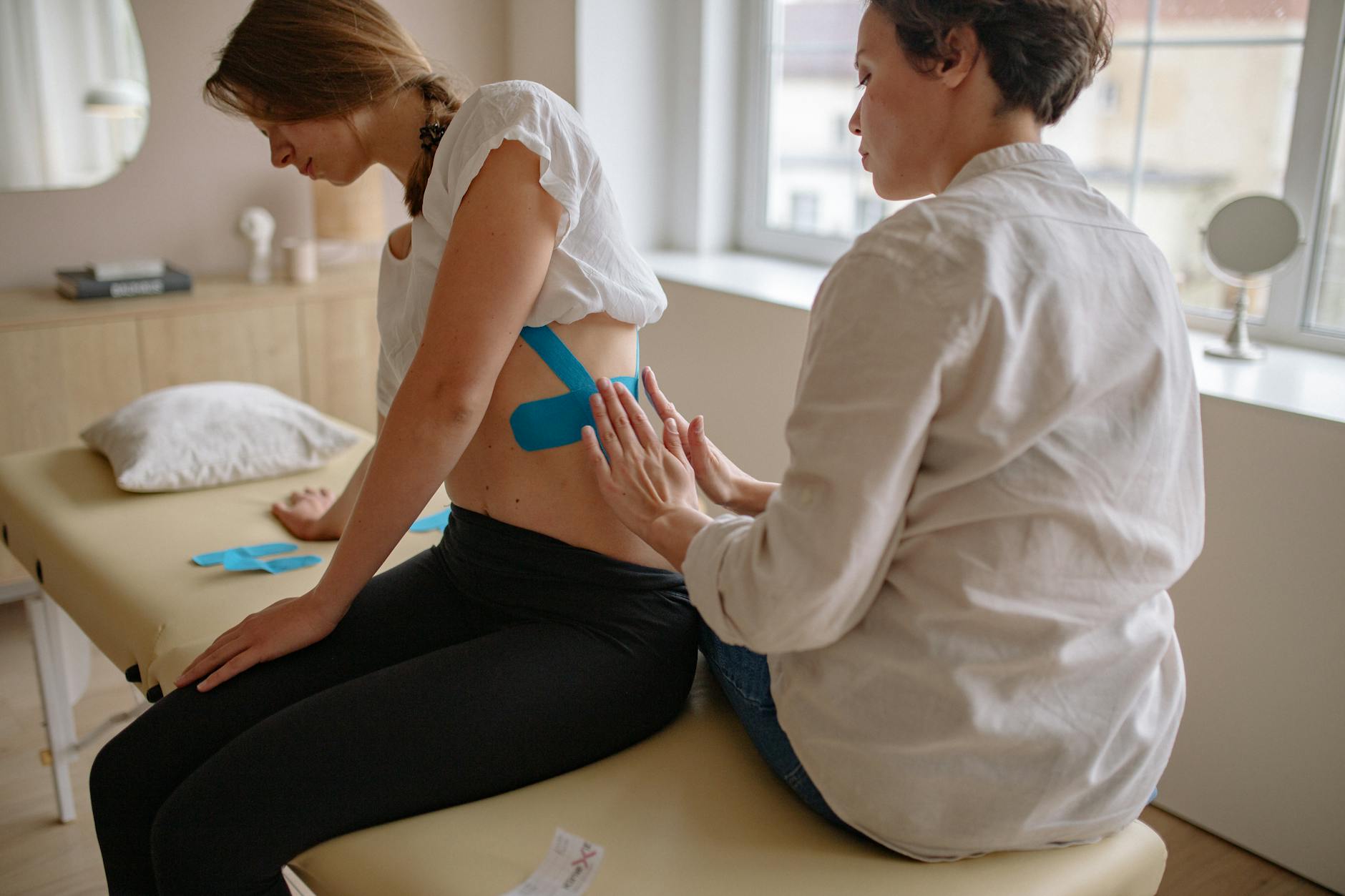
Conservative treatment doesn’t typically “fix” your disc, but it creates optimal conditions for your body to heal itself. Physical therapy focuses on stabilizing your spine through core strengthening, improving movement patterns that reduce mechanical stress on the damaged disc, and gradually restoring function. Anti-inflammatory medications or injections reduce swelling that amplifies pain signals, allowing you to move better and support the healing process through activity rather than remaining immobilized. Compared to immediate surgical intervention, conservative care takes longer but avoids surgical risks and maintains your spinal anatomy more completely.
Rest in the acute phase (first 3-7 days of severe pain) does help by reducing mechanical stress on the injured disc. However, prolonged bed rest beyond this period actually slows recovery because discs need movement and loading to receive nutrients. This is the critical tradeoff many people misunderstand—a few days of relative rest helps, but weeks of immobilization delays healing by 30-50% compared to moving as tolerated. The most effective conservative approach typically combines brief initial rest, controlled progressive activity, physical therapy, and modification of aggravating movements or positions.
When Do Disc Injuries Not Improve and What Are the Warning Signs?
While most disc injuries improve, a significant minority require more advanced intervention. If you have rapidly progressive weakness (your leg becomes noticeably weaker day by day rather than fluctuating), loss of bowel or bladder control, complete loss of sensation in the genital area, or severe pain that doesn’t improve after 8-12 weeks of proper conservative treatment, these are signals that your body isn’t resolving the issue adequately. In these cases, epidural steroid injections or surgical options like microdiscectomy become more appropriate, and delaying further testing actually worsens outcomes.
Additionally, if your disc injury causes compression of multiple nerve roots (creating weakness in multiple leg areas) or cauda equina syndrome (a medical emergency), surgery offers faster symptom relief than waiting for spontaneous healing. Some individuals also discover through imaging that their herniated disc sits in an anatomical position (like pressing directly on the spinal cord from behind) where conservative care alone struggles to reduce symptoms enough to restore function within a reasonable timeframe. Age also influences this: someone experiencing persistent severe symptoms at 70 may benefit from earlier intervention than someone at 35 with similar imaging findings, because their body’s healing capacity is lower.

Which Lifestyle Factors Speed Up Disc Healing?
Quitting smoking if applicable represents perhaps the single most impactful lifestyle change, improving healing rate by 40-60% by restoring blood flow and reducing inflammatory burden. Maintaining good sleep quality supports healing because growth hormone and tissue repair processes peak during deep sleep—getting 7-9 hours nightly substantially accelerates recovery compared to chronic sleep deprivation. Nutrition matters too: adequate protein intake, vitamin D levels, and omega-3 fatty acids all support tissue repair, while anti-inflammatory diets reduce systemic inflammation that can slow local healing. Specific movement patterns matter as well.
Repetitive flexion (bending forward repeatedly) often aggravates disc injuries and delays recovery, so temporarily avoiding heavy lifting or frequent forward bending helps. Walking, swimming, or controlled stretching maintain disc nutrition through gentle loading without aggravating inflammation. Stress reduction through meditation, yoga, or simply addressing underlying anxiety helps because chronic stress elevates cortisol, which impairs healing. The combination of these lifestyle factors can compress a potential 6-month recovery into 8-12 weeks.
How Do You Know If You’re Experiencing True Disc Injury Recovery Versus Other Issues?
True improvement from a disc injury usually follows a predictable pattern: pain severity decreases before pain frequency decreases, and function gradually improves even if some residual pain remains. A person recovering from a lumbar disc herniation might still have occasional mild back discomfort but regain the ability to walk without leg pain, bend and lift, and return to work. This is complete functional recovery even if the disc itself hasn’t returned to pre-injury appearance on MRI.
Distinguishing this from other conditions matters because true disc recovery allows you to eventually return to normal activity, while conditions like facet joint arthritis or muscle spasms require ongoing management. Understanding the natural history of disc injuries helps you maintain appropriate expectations during recovery. If your symptoms began 3 weeks ago with significant leg pain from a confirmed disc herniation, you’re statistically in the phase where rapid improvement is most likely but hasn’t fully occurred yet—waiting another 6-8 weeks with proper conservative care is evidence-based. If your symptoms began 6 months ago and remain completely unchanged despite 4 months of physical therapy and activity modification, that’s the appropriate time to pursue imaging or specialist evaluation to ensure nothing else is causing your symptoms.
Conclusion
Disc injuries improve over time primarily because your body has evolved sophisticated mechanisms to reabsorb herniated material, reduce inflammation, and stabilize the damaged disc through natural biological processes. Most people experience meaningful improvement within 3-6 months using conservative management that includes relative initial rest, progressive physical activity, core strengthening, and addressing factors like smoking or poor sleep that slow healing. Understanding this timeline prevents unnecessary interventions and unnecessary alarm, allowing you to actively participate in your recovery rather than passively waiting.
Your role in recovery involves creating optimal conditions for healing—physical therapy, maintaining movement, avoiding aggravating activities, and addressing lifestyle factors that either support or impede the process. If your symptoms follow the expected trajectory of gradual improvement, patience combined with appropriate activity represents the evidence-based approach. If symptoms progress, worsen, or fail to improve significantly after 8-12 weeks of proper conservative care, specialist evaluation ensures you get appropriate advanced options. Most people with disc injuries move past this episode completely and return to their normal lives with full function.
Frequently Asked Questions
How long does it take for a herniated disc to reabsorb completely?
Reabsorption usually occurs over 3-6 months, though 15-20% of herniated material may be permanently removed through this process while the remaining material either stabilizes or migrates away from nerve roots. Complete reabsorption isn’t necessary for symptom resolution—pain usually improves as the material no longer irritates the nerve, regardless of how much actually gets reabsorbed.
Is surgery ever necessary for disc injuries that would have improved on their own?
Yes, sometimes surgery is chosen earlier than waiting would require—for example, if someone can’t work or function adequately despite conservative care, a surgical approach may restore function faster even though the disc would eventually improve without it. Surgery becomes medically necessary (not optional) if you have progressive neurological symptoms, cauda equina syndrome, or after many months of failed conservative treatment with persistent severe symptoms.
Can I exercise while a disc injury is healing?
Gentle, controlled exercise actually supports healing by maintaining disc nutrition and preventing muscle atrophy. However, high-impact activities, heavy lifting, and repeated forward bending typically aggravate disc injuries during the acute healing phase. Physical therapy progression gradually returns you to more intensive activities as symptoms improve, usually within 6-12 weeks.
Will my disc ever be completely normal again?
Functionally, yes—most people recover full function despite permanent changes on imaging. The disc itself may show permanent structural changes, scarring, or slight permanent extrusion, but these usually don’t cause symptoms or limit activity. Complete anatomical normality often doesn’t return, but complete functional recovery is the norm.
Why does my pain sometimes get worse before it gets better?
Inflammatory flare-ups can occur as your body reabsorbs material and healing progresses, and increased activity during recovery can temporarily increase symptoms before the underlying condition improves. Distinguishing this from setback requires monitoring overall trend—if good days outnumber bad days and the trajectory remains generally upward, occasional flare-ups are normal. Sharp worsening or loss of function warrants medical evaluation.
Should I get an MRI to confirm my disc injury is healing?
MRI doesn’t need to be repeated during the healing phase unless symptoms worsen or don’t follow expected improvement patterns. Imaging at 0-3 months of conservative treatment correlates poorly with symptom improvement, and many discs show structural abnormalities that don’t correlate with function. Functional improvement and symptom resolution are better indicators of healing than imaging findings.