Exercises physical sits at the center of this dementia and brain health question.
Physical therapists recommend eight core exercises to build spine stability: the bird dog, dead bug, planks, bridge holds, quadruped shoulder taps, pallof presses, side planks, and superman holds. These movements target the deep stabilizing muscles along your spine and core—the same muscles that prevent falls, reduce back pain, and maintain the upright posture necessary for balance and mobility. For anyone managing cognitive decline or concerned about fall risk (both common in aging and dementia), spine stability becomes even more critical because your core acts as the foundation for safe movement.
When your spine muscles are weak, everyday tasks like standing from a chair, walking, or turning your head become harder and more dangerous. This article walks through each exercise in detail, explains why spine stability matters for your brain health, covers modifications for different ability levels, and provides guidance on when and how often to practice. Whether you’re recovering from an injury, managing chronic back pain, or looking to maintain mobility as you age, understanding these eight foundational movements can significantly improve your quality of life and reduce fall-related injuries.
Table of Contents
- Why Do Physical Therapists Focus on Spine Stability?
- What Makes These Eight Exercises Essential for Core Stability?
- Understanding Each Exercise and Its Specific Benefits
- How to Progress These Exercises Safely and Effectively
- Common Mistakes and Warning Signs to Watch For
- The Connection Between Spine Stability and Fall Prevention
- Making Spine Stability a Long-Term Practice
- Conclusion
- Frequently Asked Questions
Why Do Physical Therapists Focus on Spine Stability?
Your spine isn’t just a support beam—it’s part of an integrated system that includes dozens of small stabilizing muscles, not just the large muscles you can feel on your back. Physical therapists emphasize spine stability because these deep muscles (particularly the transverse abdominis, multifidus, and erector spinae) protect your vertebrae, distribute forces evenly during movement, and prevent compensation injuries where weak areas force other muscles to work overtime. A person with poor spine stability might develop shoulder pain, hip problems, or knee issues even though the root problem is a weak core.
Research shows that targeted spine stability exercises reduce chronic back pain more effectively than generic strengthening, and they’re particularly important for maintaining balance and preventing falls. For people with cognitive changes or dementia, stable spinal movement is essential because it reduces the physical stress on your brain’s balance and coordination systems. When your core is strong, your brain doesn’t have to work as hard to maintain balance, which means less cognitive load during movement and fewer falls. People who start declining cognitively often lose the fine motor control and balance awareness that keep them safe—strengthening the spine’s support system is one way to partially offset that decline.
What Makes These Eight Exercises Essential for Core Stability?
These eight exercises were selected because they target stability in multiple planes of motion—forward and backward, side to side, and rotational. A plank holds your spine stable while lying flat. A bird dog adds instability by lifting opposite limbs, forcing your deep abdominals to engage more intensely. A pallof press challenges your ability to resist rotation, which matters when you’re turning to look behind you or reaching across your body.
Together, they address all the functional patterns you use in daily life. However, if you have significant back pain, disc problems, or have been told you have spinal stenosis, some of these exercises may aggravate your symptoms initially. A physical therapist should assess your specific condition before you start, as modifications or different progressions may be necessary. For instance, someone with disc herniation might need to start with dead bugs instead of bird dogs, or avoid full planks in favor of wall planks. The progression and intensity matter just as much as the exercise itself.
Understanding Each Exercise and Its Specific Benefits
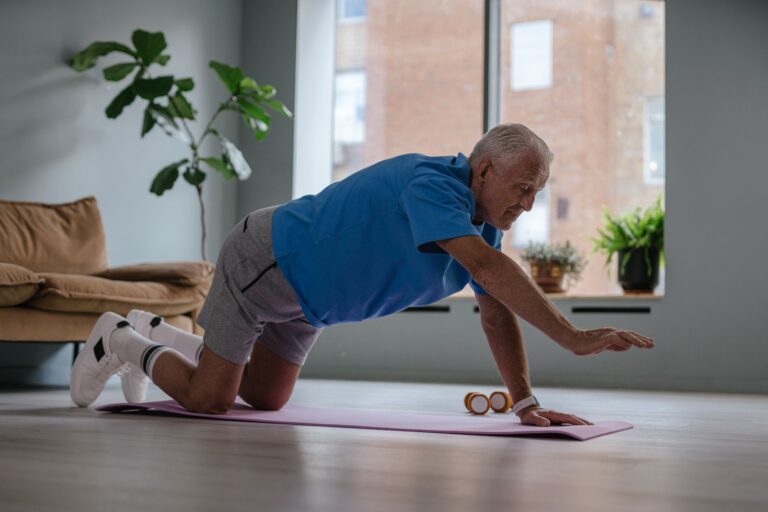
The bird dog exercise (moving opposite arm and leg while on hands and knees) builds coordination and teaches your nervous system to stabilize your spine while moving multiple limbs. The dead bug (lying on your back, moving opposite arm and leg while keeping your lower back pressed to the floor) is often easier to learn and is a better starting point for people with significant weakness or mobility loss. Planks—whether full planks or modified wall or knee planks—build isometric strength (the ability to hold a position), which translates directly to better posture and spinal support during standing and sitting. Planks are particularly valuable because they’re simple to understand and you can feel whether you’re doing them correctly.
Bridge holds target the gluteal muscles and lower back extensors, which is important because weak glutes force your lower back to compensate, leading to pain and reduced stability. Superman holds strengthen the entire posterior chain and are one of the few exercises that targets the extensors evenly. Quadruped shoulder taps (tapping your shoulder while on hands and knees) build stability in a functional, dynamic way. Pallof presses (pressing a resistance band away from your chest while resisting rotation) are specialized but invaluable for rotational stability, which matters when you’re reaching for objects or turning.

How to Progress These Exercises Safely and Effectively
Most people should start with easier versions: wall planks instead of floor planks, dead bugs instead of bird dogs, and exercises without added resistance. You should be able to perform each exercise with proper form for at least 15-30 seconds (or 10-15 repetitions) before progressing. Progression happens in stages: increase the duration you hold the position, reduce the modification level (moving from wall plank to knee plank to full plank), add dynamic movement (like shoulder taps during a plank), or add light resistance (like holding weights during bridge holds).
The comparison between slow progressions and rapid progressions is stark—people who progress too quickly often develop compensation patterns (using their neck instead of their core, for example) that lead to new injuries. A sustainable approach is to practice these exercises 3-5 times per week for 10-15 minutes per session, rather than one intense session per week. Consistency matters far more than intensity. If you’re new to these movements, working with a physical therapist for 3-4 sessions to learn proper form is a worthwhile investment; the pattern of movement you establish early will either protect you long-term or create problems later.
Common Mistakes and Warning Signs to Watch For
One of the most common mistakes is holding your breath during stability exercises. Your core actually works better when you breathe steadily—exhale during the hardest part of the movement, and your abdominal muscles will engage more effectively. Another mistake is moving your spine instead of holding it stable (for example, letting your low back sag during a plank instead of keeping it perfectly neutral). This actually trains your body to move incorrectly, defeating the purpose of the exercise.
If an exercise causes sharp pain (different from muscle fatigue), numbness, tingling, or radiating pain down your leg, stop immediately and consult a physical therapist. Be cautious with exercises like supermans and full back extensions if you have osteoporosis or have had spinal fractures—these can create excessive compression forces. Similarly, if you’ve had spinal surgery, some exercises may be contraindicated during your recovery period. A key warning: stability exercises shouldn’t make your back feel worse the next day. Muscle soreness is normal, but pain that gets worse with exercise or doesn’t resolve within a day or two suggests something isn’t right with your form or the exercise isn’t appropriate for your condition yet.

The Connection Between Spine Stability and Fall Prevention
Falls are one of the leading causes of injury-related death in people over 65, and they’re even more concerning for people managing cognitive changes. A significant portion of falls happens because people lose their balance during transitions (standing up, turning) or when their foot catches slightly—situations where a strong, stable spine is the difference between catching yourself and falling. Core strength directly improves your ability to execute emergency balance corrections.
Research shows that people who perform regular spine stability exercises have fewer falls and less severe fall injuries, partly because they’re stronger and partly because they have better proprioception (awareness of their body in space). For people with dementia or mild cognitive impairment, spine stability becomes even more important because these individuals may not have the cognitive resources to consciously balance themselves as effectively as younger people. The exercises essentially train your body to maintain stability automatically, reducing the cognitive demand during movement.
Making Spine Stability a Long-Term Practice
The benefit of these exercises only persists if you keep doing them. People who perform spine stability exercises consistently for three months often feel better and stronger, but if they stop, the benefits gradually fade over weeks to months. The goal is to integrate these exercises into a sustainable routine—many people find success by doing them during morning stretching, after warming up during cardio, or in a dedicated 15-minute evening session.
Some people benefit from virtual physical therapy sessions or exercise apps that provide reminders and form feedback. Looking ahead, as understanding of cognitive aging improves, the role of physical stability in supporting brain health and preventing cognitive decline is becoming clearer. Spine stability isn’t just about reducing back pain or preventing falls—it’s increasingly recognized as part of a comprehensive approach to maintaining mobility, independence, and safety as you age.
Conclusion
The eight exercises recommended by physical therapists—bird dog, dead bug, planks, bridge holds, quadruped shoulder taps, pallof presses, side planks, and superman holds—provide a complete foundation for spine stability. These movements address stability in all directions of motion and can be modified to suit nearly any ability level, from people recovering from injury to athletes looking to prevent it. Starting with proper form, progressing gradually, and maintaining consistency are the keys to success.
If you’re interested in improving your spine stability, begin by consulting with a physical therapist or your primary care doctor to ensure these exercises are appropriate for your specific situation. Even 10-15 minutes of practice three times per week can lead to noticeable improvements in posture, pain reduction, balance, and mobility within a few weeks. For people managing cognitive changes or concerned about fall risk, spine stability work is an investment in maintaining independence and safety.
Frequently Asked Questions
How long does it take to see results from spine stability exercises?
Most people notice improvements in posture and mild reduction in back pain within 2-3 weeks of consistent practice. More significant changes in strength and balance typically take 6-8 weeks. This timeline assumes you’re practicing at least 3 times per week with good form.
Can I do these exercises every day?
You can practice them daily, but you don’t need to. Three to five times per week is sufficient for building strength and maintaining stability. If you do them daily, keep the duration shorter (8-10 minutes) rather than longer to avoid overuse.
Are these exercises helpful if I already have back pain?
Often yes, but it depends on the cause of your pain. These exercises are particularly helpful for mechanical back pain (pain related to weak muscles, poor posture, or movement patterns). If your pain is caused by a herniated disc, severe stenosis, or fracture, modifications are necessary. Always check with your doctor first.
What’s the difference between stability exercises and general strength training?
Stability exercises focus on the deep muscles that support your spine and joints, often involving longer holds or subtle movements. Traditional strength training targets larger muscles and usually involves more weight and faster movement. Both are valuable; stability work provides the foundation.
Do I need equipment for these exercises?
No. Most of the eight core exercises can be done with just your body weight. A resistance band adds value for pallof presses, and light dumbbells or water bottles can eventually be used for bridge holds or other movements, but they’re optional.
Is spine stability important for people with dementia?
Yes, it’s particularly important. Maintaining core strength helps preserve balance and reduces fall risk, which is critical for people managing cognitive changes. A stable spine also means less cognitive demand during movement, allowing the brain to focus on other tasks.
You Might Also Like
- 10 Exercises Physical Therapists Recommend for Lumbar Stability
- 9 Exercises Used in Physical Therapy to Improve Core Stability
- 9 Exercises Doctors Recommend for Back Strength and Stability
For more, see National Institute on Aging.