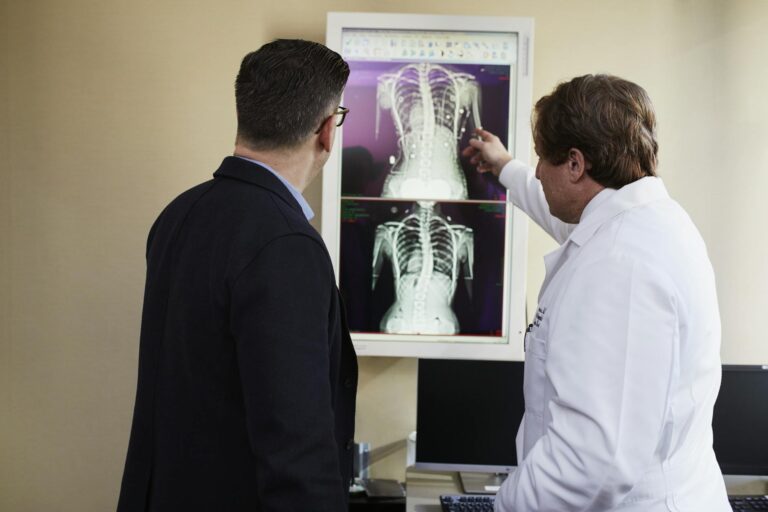
Your core muscles are essential for protecting your spine, and when they weaken, your body sends unmistakable signals. The most common warning sign is lower back pain, often the first indication that your deep abdominal and stabilizing muscles aren’t doing their job properly. Other telltale signs include balance difficulties, poor posture, trouble rising from chairs, and reduced control during everyday movements.
If you’re experiencing any of these symptoms, your core may be too weak to adequately stabilize and protect your vertebrae and intervertebral discs from excessive stress and potential injury. For those in dementia care settings or aging populations, core weakness becomes even more significant. A weakened core not only increases pain and discomfort but also dramatically raises the risk of falls—a serious concern for cognitive decline and overall health independence. This article explores eight key signs that suggest your core stability may need attention, explains why core strength matters for spine protection, and discusses what research shows about improving this crucial aspect of physical health.
Table of Contents
- Lower Back Pain and the Weakened Core’s Impact on Spinal Protection
- Balance Difficulties and Why Your Deep Core Muscles Control Stability
- Poor Posture—The Visible Sign of Core Inadequacy
- Difficulty Rising from Chairs, Beds, and Car Seats
- Reduced Movement Control During Lifting and Physical Activities
- Fatigue and Difficulty Maintaining Positions During Daily Activities
- Increased Vulnerability to Injury and Spinal Stress
- Difficulty with Rotational Movement and Complex Transitions
- Conclusion
Lower Back Pain and the Weakened Core’s Impact on Spinal Protection
Lower back pain is often the first and most obvious sign that your core muscles have weakened. This occurs because your abdominal and deep stabilizing muscles are no longer maintaining the segmental stability your spine needs. When the core fails to function properly, the stress that should be distributed across multiple structures concentrates on your lumbar vertebrae and intervertebral discs, creating inflammation and pain. A person might feel a dull ache after sitting for an hour, sharp pain when bending forward, or stiffness upon waking that gradually improves throughout the day. It’s important to understand that while weak core muscles contribute to back pain, research suggests the relationship is more complex than once believed.
Studies have found that core activation levels may not differ significantly between people with and without back pain, meaning that weakness alone isn’t always the culprit. However, when core strength is demonstrably low, combined with poor endurance or inconsistent activation patterns, the risk of back pain and spine vulnerability increases substantially. The distinction matters: it’s not just about muscle presence, but about consistent, functional stability. Core stabilization exercises have shown significant improvement in pain and function for patients with chronic low back pain in clinical trials. This evidence underscores an important point: if you’re experiencing lower back pain alongside other signs of core weakness, addressing the underlying stability issue can often resolve or substantially improve the pain without resorting to more invasive interventions.

Balance Difficulties and Why Your Deep Core Muscles Control Stability
Balance problems are a direct result of weak core muscles, particularly your deep stabilizers that maintain equilibrium throughout daily movement. If you find yourself unable to stand on one leg, struggling to navigate uneven ground, or catching yourself stumbling over minor obstacles, your core may be inadequately controlling your center of gravity. These deep core muscles are essential not just for posture, but for the neuromuscular coordination that keeps you upright and prevents falls. For aging individuals or those in dementia care environments, balance difficulties are especially concerning because falls represent a gateway to serious injury, reduced independence, and accelerated functional decline.
A person with weakened core stability might grab the wall when walking down a hallway, need the bannister on stairs, or feel unsteady simply standing in the shower—situations that seem routine but reveal underlying instability. The connection is direct: without proper core engagement, your proprioceptive system (your sense of where your body is in space) becomes less reliable. However, balance problems can also stem from vestibular issues, neurological conditions, medications, or vision changes, particularly in aging populations. If balance difficulties appear suddenly or are accompanied by dizziness, vertigo, or hearing changes, these may indicate something other than core weakness and warrant medical evaluation. Core weakness typically produces balance issues that develop gradually and improve with targeted strengthening, whereas neurological balance disorders follow different patterns.
Poor Posture—The Visible Sign of Core Inadequacy
Poor posture—slouching when sitting or slumping when standing—is one of the most visible signs of weak core strength. When your stabilizing muscles lack the endurance to hold your spine upright, your body defaults to using ligaments and passive structures for support, leading to that characteristic rounded-shouldered, forward-head posture. You might notice yourself sinking deeper into your chair as the day progresses, or needing to consciously pull your shoulders back repeatedly because they keep rounding forward. The significance of postural decline extends beyond appearance. Slouching and slumping create abnormal stress distribution along the spine, accelerate degenerative changes in the discs, and reduce the efficiency of your breathing and core engagement.
A person with weak core muscles and poor posture becomes trapped in a cycle: the weakness causes slouching, the slouching further weakens the core by failing to engage it, and the postural strain compounds structural spinal stress. Interestingly, simply telling someone to “sit up straight” rarely resolves chronic poor posture when core weakness is present. Temporary postural correction requires conscious effort and muscle engagement that feels uncomfortable because those muscles are deconditioned. This is actually an important warning sign in itself—if maintaining good posture feels exhaustingly difficult rather than naturally automatic, it indicates your core stability needs work. Sustainable postural improvement comes from building the actual muscular endurance to support upright positions without constant conscious attention.

Difficulty Rising from Chairs, Beds, and Car Seats
One of the most practical signs of weak core stability is needing to use your arms extensively to push yourself up from chairs, pull yourself out of bed, or lever yourself out of a car seat. Functional movements that healthy core muscles perform almost without thinking become laborious challenges. You might find yourself scooting to the edge of the chair, gripping the armrests tightly, or even needing assistance to stand up—not because your legs are necessarily weak, but because your core isn’t stabilizing your trunk well enough for your legs to generate efficient upward movement. This particular sign becomes critical in dementia care settings where independence in activities of daily living directly impacts quality of life and safety.
A person struggling to rise from sitting positions independently becomes dependent on caregivers for assistance, which can accelerate functional decline and reduce opportunities for beneficial physical activity. Additionally, the compensatory movement patterns people develop when core strength is inadequate—twisting the spine, jerking upward, using momentum—increase injury risk and spinal strain. The interesting challenge here is that improving this specific function requires not just general core strength but functional, integrated stability. A person might perform standard core exercises in a controlled environment but still struggle with sit-to-stand movements because the core isn’t coordinating properly with the legs and hip muscles during this specific, real-world demand. This is why targeted functional strengthening—practicing the actual movements causing difficulty—often works better than isolated core exercises alone.
Reduced Movement Control During Lifting and Physical Activities
Weak core muscles manifest clearly when performing lifting activities, carrying objects, or engaging in any movement requiring trunk stability. If reaching across your body to pick up an object feels unstable, if carrying groceries causes your lower back to ache quickly, or if simple yard work leaves you sore and stiff the next day, your core isn’t adequately controlling movement through your trunk. The reduced movement control stems from insufficient activation and endurance in your stabilizing muscles, forcing other structures to compensate and often resulting in pain. This sign is particularly important because it directly affects a person’s ability to maintain independence and engage in meaningful physical activity.
In dementia care contexts, reduced movement control can lead to further deconditioning, increased fall risk, and loss of confidence in physical capabilities. Someone might avoid activities they previously enjoyed because they’ve experienced pain or instability during those activities, creating a downward spiral of reduced activity, further weakening, and increased vulnerability. What’s often missed is that pain from weak core stability during activity doesn’t necessarily mean you’ve injured yourself—it often simply means your stabilizing muscles are being overwhelmed by demands they can’t handle. This distinction matters because it indicates the problem is preventable and reversible through targeted strengthening, rather than requiring rest or medical intervention. However, if pain during movement is sharp, localized, or accompanied by neurological symptoms like numbness or tingling, these could indicate actual structural injury and warrant professional evaluation.

Fatigue and Difficulty Maintaining Positions During Daily Activities
Core weakness often manifests as rapid fatigue during activities that require sustained trunk stability. You might notice you can only stand at the sink doing dishes for a limited time before your lower back begins aching and you feel an overwhelming need to sit down. Or during a conversation standing up, you find yourself shifting weight, leaning against walls, or crossing one leg to take weight off your back. These patterns indicate your stabilizing muscles are fatiguing rather than maintaining steady engagement.
This sign becomes especially significant in aging and dementia care populations because sustained activity and engagement is essential for maintaining cognitive and physical function. A person who tires quickly during standing activities may reduce their overall daily movement, which accelerates deconditioning and potentially worsens cognitive outcomes. The fatigue pattern is distinctive: it’s not the whole-body fatigue of cardiovascular exertion, but localized spinal/core fatigue that makes sustained positions uncomfortable or impossible. The practical implication is important: if your core was stronger and more stable, many activities you now avoid or modify would become comfortably sustainable. Clinical research has demonstrated that core stabilization exercise groups showed significantly more improvement than standard training groups after just four weeks of intervention, suggesting this is one of the more responsive signs to treatment.
Increased Vulnerability to Injury and Spinal Stress
When your core muscles are weak, your spine becomes increasingly vulnerable to injury from movements that healthy cores would handle without issue. A sudden laugh that triggers sharp back pain, bending to pick something light off the floor that causes muscle guarding, or a minor twist that results in significant pain—these disproportionate responses suggest your spine isn’t adequately protected by the muscular stabilization it needs. Your core muscles are meant to maintain segmental stability and protect your vertebrae and intervertebral discs, reducing stress on these structures during movement. This vulnerability compounds over time because each inadequately-stabilized movement contributes to cumulative stress on spinal structures.
In dementia care settings, where fall risk is already elevated, weak core stability adds another layer of concern: even minor falls or stumbles are more likely to result in spinal injury when the core isn’t providing protective stability. This has serious implications for independence and recovery. The research is clear: when core muscles function properly, they dramatically reduce the stress concentrated on lumbar vertebrae and intervertebral discs. Conversely, when they’re weak, these structures bear excessive load. This means that addressing core weakness isn’t just about pain relief or comfort—it’s about protecting the structural integrity of your spine and preventing degenerative changes that accumulate over years.
Difficulty with Rotational Movement and Complex Transitions
Weak core muscles particularly struggle with rotational movements and complex transitions between positions. Twisting to look over your shoulder, rotating to reach something to the side, or moving from sitting to standing while reaching for something all require sophisticated core engagement that inadequate stabilizing muscles cannot provide. You might feel a catching sensation, compensatory muscle tightness, or sharp pain during these movements. These complex movements are especially common in daily life—reaching into a backseat while driving, reaching to shelves while standing, turning to converse with someone beside you.
When core muscles are weak, all of these routine movements become unstable or painful, and people often begin avoiding rotational movements altogether. This avoidance further reinforces weakness and reduces functional ability. In dementia care settings, reduced rotational control increases fall risk during balance corrections and movement transitions. The encouraging aspect is that rotational control is one of the more responsive abilities to targeted core strengthening. Unlike lower back pain, which can involve complex tissue issues, rotational difficulty typically stems directly from weak stabilizers—meaning improvement comes relatively quickly with consistent, appropriate exercise.
Conclusion
Weak core stability manifests through multiple clear signs: lower back pain, balance difficulties, poor posture, trouble with functional movements like rising from chairs, reduced movement control during activities, fatigue during sustained positions, increased injury vulnerability, and difficulty with rotational movements. These aren’t isolated problems but rather interconnected symptoms of the same underlying issue—muscles essential for spinal protection aren’t functioning adequately. For aging populations and those in dementia care, where fall risk and functional independence are critical concerns, identifying and addressing core weakness early becomes especially important.
The positive news from clinical research is that core stability is highly improvable through targeted exercise and functional training. Studies show that core stabilization exercises produce significant improvements in pain and function within just a few weeks, and that properly functioning core muscles demonstrably reduce stress on spinal structures and improve overall movement control. If you recognize any of these eight signs in yourself or someone in your care, consulting with a healthcare provider or physical therapist for proper assessment and a tailored strengthening program can make a substantial difference in pain, function, independence, and long-term spinal health.