Spine degeneration announces itself through a predictable set of warning signs, and recognizing them early can mean the difference between manageable discomfort and a serious mobility problem down the road. The nine most common signs include chronic back or neck pain, radiating pain into the limbs, numbness and tingling, muscle weakness, pain that worsens with sitting, pain triggered by bending or lifting, muscle spasms, reduced flexibility, and a destabilizing sensation that the spine can no longer fully support the body. Consider someone like a 55-year-old office worker who notices that her lower back aches after a few hours at her desk, her left foot occasionally tingles, and she struggles to touch her toes in the morning. She might dismiss each symptom individually, but taken together, they paint a clear clinical picture. What makes spine degeneration so tricky to pin down is just how common it is.
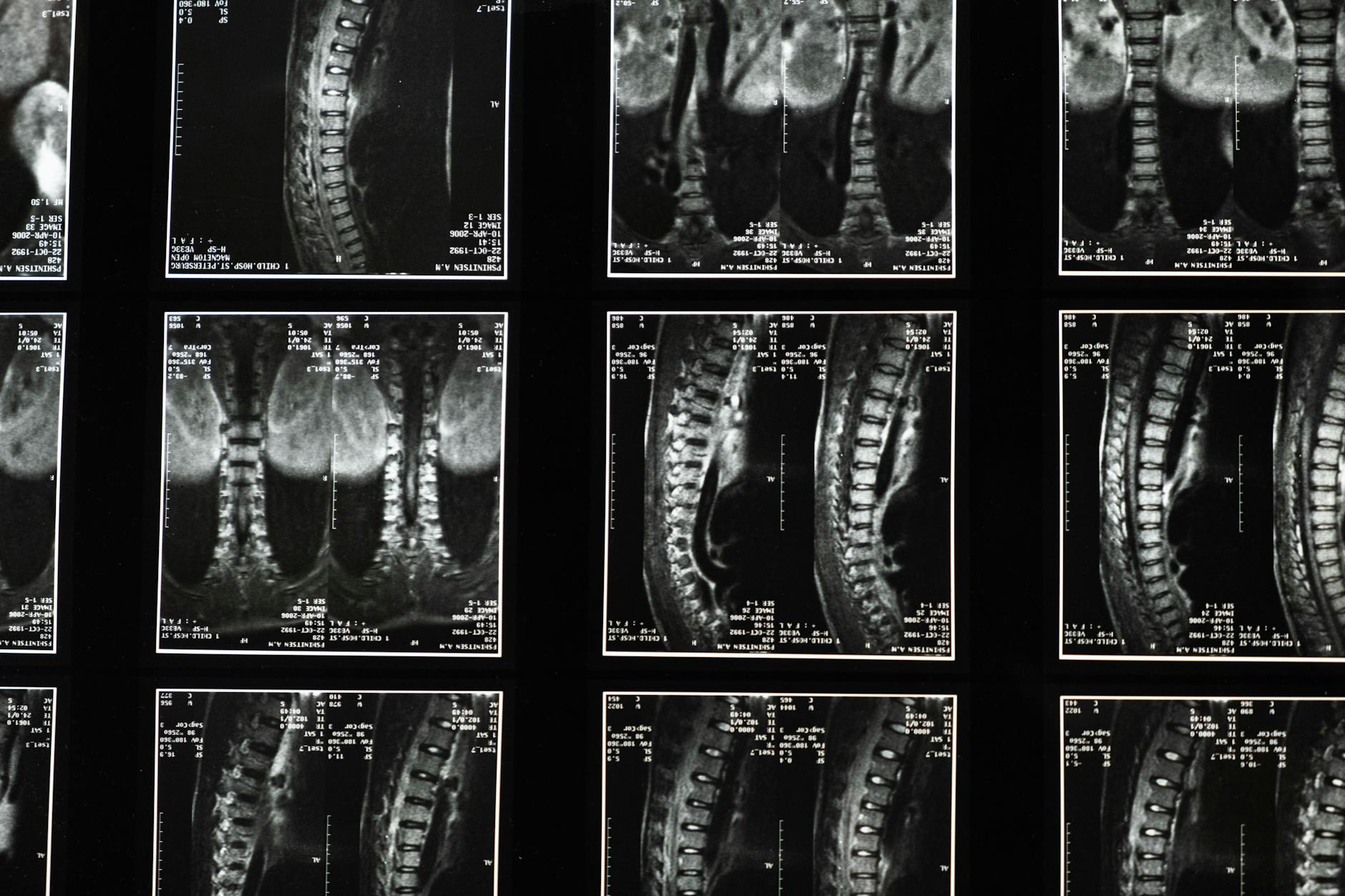
Research from the Wakayama Spine Study, published in *Osteoarthritis and Cartilage* in 2014, found that over 90 percent of men and women aged 50 and older show signs of disc degeneration on imaging. Cedars-Sinai reports that approximately 90 percent of adults over 60 have disc degeneration visible on MRI, yet many of them experience no symptoms at all. So the presence of degeneration does not automatically mean pain or disability, but when symptoms do appear, knowing what to look for matters enormously. This article walks through each of the nine signs in detail, explains the underlying mechanics, discusses when symptoms cross the line from inconvenience into medical urgency, and covers what the research says about who is most affected and why. If you or someone you care for is dealing with unexplained back pain, nerve symptoms, or creeping stiffness, the information below should help clarify what the body may be signaling.
Table of Contents
- What Are the Earliest Signs of Spine Degeneration Most People Miss?
- How Muscle Weakness and Foot Drop Signal Advancing Disc Degeneration
- Why Sitting Makes Spine Degeneration Worse Than Standing
- Muscle Spasms and Stiffness as the Body’s Protective Response
- When Spinal Instability Becomes a Medical Emergency
- Who Gets Spine Degeneration and How Common Is It Really?
- Spine Health, Brain Health, and the Connection Caregivers Should Understand
- Conclusion
- Frequently Asked Questions
What Are the Earliest Signs of Spine Degeneration Most People Miss?
The first sign most people notice is chronic back or neck pain, but “chronic” does not always mean constant. In degenerative disc disease, pain often arrives in bouts that last anywhere from a few days to several months before subsiding, which leads many people to assume the problem has resolved on its own. The location of the pain depends on which disc is affected. Cervical disc degeneration produces neck pain, sometimes with headaches and shoulder tension, while lumbar degeneration concentrates in the lower back. A retired teacher might experience a bad week of lower back pain after gardening, feel fine for a month, then have another flare-up after a long car ride. That intermittent pattern is itself a hallmark of the condition. The second and third signs, radiating pain and numbness or tingling, often appear together and signal that a degenerated disc has begun compressing nearby nerves. When this happens in the lumbar spine, pain can shoot into the buttocks and thighs, a pattern sometimes confused with sciatica from other causes. In the cervical spine, the compression sends pain, tingling, or numbness down the arms and into the hands.
This nerve involvement, called radiculopathy, is where spine degeneration stops being merely a structural issue and becomes a neurological one. The distinction matters because nerve compression that goes unaddressed can lead to lasting damage. One thing that trips people up is the assumption that these symptoms must be dramatic to be meaningful. In reality, the earliest presentations are often subtle. A slight tingling in two fingers. A dull ache that only appears after sitting for more than an hour. Morning stiffness that takes 20 minutes to shake off instead of the usual five. None of these, in isolation, sends most people to a doctor. But they are the body’s early alerts, and paying attention to them creates options that waiting does not.

How Muscle Weakness and Foot Drop Signal Advancing Disc Degeneration
Muscle weakness is the fourth sign on the list, and it represents a meaningful escalation from pain and tingling. When a degenerating disc compresses a nerve root severely enough, the muscles served by that nerve begin to lose strength. In the legs, this can manifest as difficulty climbing stairs, a feeling of instability when walking, or trouble rising from a seated position. The most concerning version is foot drop, the inability to lift the front of the foot while walking, which causes a characteristic slapping gait and a significantly increased risk of falls. Foot drop deserves special attention because it indicates that nerve root damage has progressed beyond irritation into functional impairment. A person with early-stage disc degeneration might notice that one leg feels slightly weaker during exercise.
Someone further along might find that their foot catches on curb edges or that they trip on flat surfaces for no apparent reason. However, muscle weakness in the legs is not exclusive to spine degeneration. Conditions ranging from peripheral neuropathy to stroke can produce similar symptoms, so it is critical not to self-diagnose. If weakness appears suddenly or progresses rapidly, it warrants prompt medical evaluation rather than a wait-and-see approach. For older adults, and particularly for those already managing cognitive decline or dementia, muscle weakness from spine degeneration compounds fall risk in a way that can become dangerous quickly. A person whose balance and spatial awareness are already compromised by neurological changes cannot afford to also lose strength and motor control in the legs. Caregivers should watch for changes in gait, new difficulty with stairs, or reluctance to walk that the person cannot fully explain.
Why Sitting Makes Spine Degeneration Worse Than Standing
The fifth sign, pain worsened by sitting, surprises many people who assume that sitting should be easier on the back than standing. The biomechanics tell a different story. While seated, lumbar discs bear roughly three times more load than they do when a person is standing upright. This increased pressure squeezes degenerated discs further, aggravating inflammation and pushing disc material closer to nerve roots. For someone with lumbar degenerative disc disease, a three-hour flight or a long day at a desk can trigger a flare-up that takes days to settle. The sixth sign, pain worsened by bending, twisting, or lifting, follows a similar mechanical logic. These movements compress the spine dynamically, and a disc that has lost height and hydration cannot absorb the forces the way a healthy disc would.
Many patients report that their worst flare-ups come not from dramatic events but from mundane activities: picking up a grandchild, turning to reach something on a back seat, or bending over to tie shoes. The gap between the triviality of the trigger and the severity of the resulting pain is one of the most frustrating aspects of the condition. A practical example illustrates the point. A 62-year-old man with moderate lumbar disc degeneration might feel reasonably comfortable while walking the dog or standing at a kitchen counter. He sits down to read for 45 minutes and stands up in significant pain. He bends to pick up the newspaper the next morning and feels a sharp jolt. Neither activity would trouble a person with healthy discs, but for him, both put mechanical stress on already compromised structures. Understanding this pattern is useful because it allows people to modify their behavior, alternating sitting with standing, using a lumbar support cushion, and learning to hinge at the hips rather than rounding the lower back when bending.
Muscle Spasms and Stiffness as the Body’s Protective Response
The seventh sign, muscle spasms, represents the body’s attempt to protect an unstable spine. When degenerated discs can no longer provide adequate cushioning and support, the muscles surrounding the affected area contract involuntarily to splint the spine and prevent further damage. These spasms can be intensely painful, sometimes more painful than the underlying disc problem itself. They tend to strike without warning and can lock a person in a bent or twisted position for minutes or hours. The eighth sign, reduced flexibility and stiffness, is related but operates on a longer timeline. Over months and years, chronic spasm and guarding lead to shortened, tightened muscles and restricted range of motion. People notice it most in the morning or after prolonged inactivity, when the muscles and connective tissues around the spine have stiffened during rest.
A person who once moved fluidly might find that turning their head to check a blind spot while driving has become difficult, or that bending forward to put on socks requires a strategy rather than a simple reach. The tradeoff here is real. The body’s spasm response is protective in the short term but harmful in the long term. Muscles that remain in chronic contraction develop their own pain cycles, reduce blood flow to the area, and accelerate the stiffness that further limits mobility. This is why treatment for degenerative disc disease often emphasizes gentle, sustained movement rather than rest. Physical therapy aims to teach the muscles that movement is safe, gradually unwinding the protective spasm cycle. However, this approach requires patience and consistency, and it does not work the same way for everyone. Some people respond well within weeks, while others need months of dedicated work to see meaningful improvement.
When Spinal Instability Becomes a Medical Emergency
The ninth sign, spinal instability, is perhaps the most unsettling to experience. People describe it as a feeling that their spine cannot support them, that their back might “give out” at any moment, or that something in their back periodically locks up and then releases. This instability reflects genuine structural compromise: the degenerated disc has lost enough height and integrity that the vertebrae above and below it are no longer held in proper alignment. The spine may shift slightly with certain movements, producing both mechanical pain and a deep sense of physical insecurity. For most people, spinal instability from disc degeneration is a quality-of-life issue rather than an emergency. But there is one scenario where it becomes urgent. If a severely degenerated disc or the resulting spinal instability compresses the cauda equina, the bundle of nerve roots at the base of the spinal cord, the result is cauda equina syndrome.
Symptoms include sudden loss of bladder or bowel control, severe numbness in the groin and inner thighs, and rapidly progressive leg weakness. This is a medical emergency requiring immediate surgical evaluation. Delay can result in permanent nerve damage, including lasting incontinence and paralysis. Anyone experiencing sudden loss of bladder or bowel function alongside back pain should go to an emergency room, not a scheduled appointment. The limitation worth noting is that spinal instability does not always show up clearly on standard imaging. A person may have significant functional instability that produces real symptoms but looks unremarkable on a static MRI taken while lying down. Flexion-extension X-rays, which image the spine in different positions, can sometimes reveal instability that static images miss. If symptoms strongly suggest instability but imaging appears normal, it is worth discussing dynamic imaging with a spine specialist.

Who Gets Spine Degeneration and How Common Is It Really?
The statistics on spine degeneration are striking for how universal the condition becomes with age. According to StatPearls via the National Center for Biotechnology Information, 10 percent of men have degenerative disc disease at age 50, rising to 50 percent by age 70. A 2021 study published in *Scientific Reports* using Medicare data found that 27.3 percent of the population has a diagnosed spinal degenerative disease, with prevalence increasing sharply with age. Gender differences exist but narrow over time. The Wakayama Spine Study found that among those under 50, prevalence was 71 percent in men and 77 percent in women. After age 50, it exceeded 90 percent in both genders.
These numbers make an important point: spine degeneration is not a disease in the way most people think of the word. It is closer to a universal aging process, like graying hair or wrinkling skin. The clinical question is not whether degeneration is present but whether it is producing symptoms and, if so, how severely those symptoms affect daily life. Many people with significant degeneration on imaging live without pain, while some with relatively mild changes experience debilitating symptoms. The relationship between structural damage and experienced pain is looser than most people assume, which is both reassuring and frustrating. It means that an alarming MRI report does not necessarily predict a painful future, but it also means that the source of a person’s pain can be difficult to pinpoint with certainty.
Spine Health, Brain Health, and the Connection Caregivers Should Understand
For those managing dementia or other forms of cognitive decline, spine degeneration introduces complications that go beyond back pain. Chronic pain from any source is associated with worsened cognitive function, increased agitation, and disrupted sleep in people with dementia. A person who cannot clearly articulate that their back hurts may instead become irritable, withdrawn, or resistant to movement, behaviors that caregivers might attribute to the dementia itself rather than to an underlying and potentially treatable pain source. Reduced mobility from spine degeneration also accelerates the physical deconditioning that already threatens older adults with cognitive impairment.
Less movement leads to weaker muscles, worse balance, and higher fall risk, which in turn leads to less movement. Breaking this cycle requires recognizing spine degeneration as a contributing factor and addressing it directly, whether through physical therapy adapted to the person’s cognitive abilities, appropriate pain management, or ergonomic changes to their living environment. The spine and the brain are not separate problems. In an aging body, they interact constantly, and treating one while ignoring the other leaves half the picture unaddressed.
Conclusion
The nine signs of spine degeneration, from chronic pain and radiating nerve symptoms to muscle weakness, spasms, stiffness, and structural instability, follow a recognizable pattern that reflects progressive loss of disc integrity. Recognizing these signs early opens the door to interventions that can slow progression and manage symptoms effectively. The most important thing to understand is that while disc degeneration itself is nearly universal with aging, the symptoms it produces are not inevitable, and they are often treatable without surgery through physical therapy, activity modification, and targeted pain management.
If you or someone in your care is experiencing any combination of these signs, particularly if numbness, weakness, or bladder and bowel changes are involved, prompt medical evaluation is the right next step. Do not wait for symptoms to become severe before seeking help. Early assessment gives clinicians more options and gives patients better outcomes. And for caregivers supporting someone with cognitive decline, stay alert for behavioral changes that might reflect undiagnosed spinal pain rather than worsening dementia alone.
Frequently Asked Questions
Can spine degeneration be reversed?
No. Disc degeneration is a structural change that cannot currently be reversed. However, symptoms can often be managed effectively, and many people with significant degeneration experience little or no pain. Treatment focuses on reducing symptoms and maintaining function rather than restoring the disc itself.
Is spine degeneration the same as arthritis?
They are related but distinct. Degenerative disc disease affects the intervertebral discs, while spinal osteoarthritis (spondylosis) affects the facet joints. Both are degenerative conditions that often occur together, and both become more common with age, but they involve different structures and can require different treatment approaches.
At what age does spine degeneration typically start?
Structural changes in the discs can begin as early as the 20s and 30s, though symptoms usually do not appear until later. According to the Wakayama Spine Study, prevalence exceeds 70 percent in people under 50 and surpasses 90 percent in those over 50.
Should I avoid exercise if I have degenerative disc disease?
Generally, no. In most cases, appropriate exercise is one of the most effective treatments. Low-impact activities like walking, swimming, and specific physical therapy exercises strengthen the muscles that support the spine and can reduce pain. However, high-impact activities and heavy lifting may need to be modified. A physical therapist can help design a safe program.
When does spine degeneration require surgery?
Surgery is typically considered only when conservative treatments have failed after several months and symptoms are severe, particularly when there is significant nerve compression causing progressive weakness or when cauda equina syndrome is present. The vast majority of people with degenerative disc disease are managed successfully without surgery.