Beta-blockers — a class of drugs that includes carvedilol, metoprolol, and bisoprolol — reduce the combined risk of death, recurrent heart attack, and heart failure by 25 percent in patients who have survived an acute myocardial infarction and have mildly reduced heart function. That finding comes from a landmark individual patient data meta-analysis presented at ESC Congress 2025 and published simultaneously in The Lancet, pooling 1,885 patients from four randomized controlled trials: REBOOT, BETAMI, DANBLOCK, and CAPITAL-RCT. For a 62-year-old patient discharged after a first heart attack with a left ventricular ejection fraction of 45 percent, this evidence now provides clear clinical justification for starting beta-blocker therapy — a decision that, until recently, remained genuinely uncertain for this specific group. But the story is more complicated than a single headline suggests.
The same body of research found that beta-blockers provided no meaningful benefit for post-MI patients whose ejection fraction was preserved at 50 percent or above. That distinction matters enormously, because the majority of heart attack survivors today fall into the preserved category thanks to modern reperfusion therapies. For readers focused on brain health and dementia prevention, this research carries additional relevance: cardiovascular events and heart failure are established risk factors for cognitive decline, and any intervention that reduces post-MI complications may have downstream implications for long-term brain health. This article examines the evidence in detail, explains who benefits and who does not, and considers what other drugs have been tested in this space.
Table of Contents
- Which Drug Reduces Death Risk After Acute MI by 25 Percent, and How Strong Is the Evidence?
- Why Ejection Fraction Determines Whether Beta-Blockers Help After a Heart Attack
- The Heart-Brain Connection — Why Post-MI Outcomes Matter for Dementia Risk
- Beta-Blockers Versus Other Drugs Tested After Acute MI
- Limitations of the Beta-Blocker Evidence and What Remains Unknown
- What This Means for Patients Already on Beta-Blockers
- Where the Research Goes From Here
- Conclusion
- Frequently Asked Questions
Which Drug Reduces Death Risk After Acute MI by 25 Percent, and How Strong Is the Evidence?
The drugs in question are beta-blockers, which work by blocking the effects of adrenaline on the heart, slowing heart rate, reducing blood pressure, and decreasing the heart’s workload. The 25 percent reduction specifically refers to a hazard ratio of 0.75 (95% CI 0.58–0.97; p=0.031) for the composite endpoint of all-cause death, recurrent myocardial infarction, or heart failure. In practical terms, the primary endpoint occurred in 10.7 percent of patients assigned to beta-blockers compared with 14.4 percent in the no-beta-blocker group. That roughly 4-percentage-point absolute difference translates to preventing one major cardiovascular event for every 27 patients treated. What makes this meta-analysis particularly persuasive is the consistency of the signal. The researchers found no heterogeneity between the four contributing trials or across the countries involved — Spain, Italy, Norway, Denmark, and Japan.
When a treatment effect holds up across different healthcare systems, patient populations, and trial designs, it carries substantially more weight than a single-center study. The individual patient data approach is also considered the gold standard for meta-analyses because it allows researchers to examine subgroups with far greater precision than simply pooling published summary statistics. It is worth comparing this to the broader meta-analysis of 17,801 patients across five trials, which included patients with all levels of ejection fraction. In that larger population, the event rates were nearly identical — 8.1 percent with beta-blockers versus 8.3 percent without. The overall result was essentially neutral. This means the 25 percent benefit is concentrated in a specific subgroup, not a universal effect of beta-blockers after heart attack.

Why Ejection Fraction Determines Whether Beta-Blockers Help After a Heart Attack
Left ventricular ejection fraction, or LVEF, measures the percentage of blood the heart’s main pumping chamber ejects with each contraction. A normal LVEF is typically 55 percent or higher. The meta-analysis divided patients into two clinically meaningful groups: those with mildly reduced LVEF (40–49 percent) and those with preserved LVEF (50 percent or above). The 25 percent risk reduction applied exclusively to the mildly reduced group. For patients with preserved ejection fraction, the evidence is now quite clear that beta-blockers do not improve outcomes. The large BETAMI-DANBLOCK trial, which enrolled 5,574 patients, and the separate REDUCE-AMI trial both confirmed no mortality benefit in this population.
This is a significant shift from decades of clinical practice. For years, virtually every heart attack survivor was placed on a beta-blocker as a matter of routine, regardless of ejection fraction. The new evidence suggests that for the majority of modern MI survivors — those who receive prompt revascularization and emerge with preserved heart function — this routine may not be justified. However, if a patient’s ejection fraction falls below 40 percent, they enter the territory of established heart failure with reduced ejection fraction, where beta-blocker benefit has been well documented for decades through older trials. The newly identified “sweet spot” is specifically the 40–49 percent range, sometimes called heart failure with mildly reduced ejection fraction or HFmrEF. Clinicians caring for post-MI patients should be aware that a patient who initially presents with preserved function may experience remodeling and develop mildly reduced function weeks later, making serial echocardiographic assessment important.
The Heart-Brain Connection — Why Post-MI Outcomes Matter for Dementia Risk
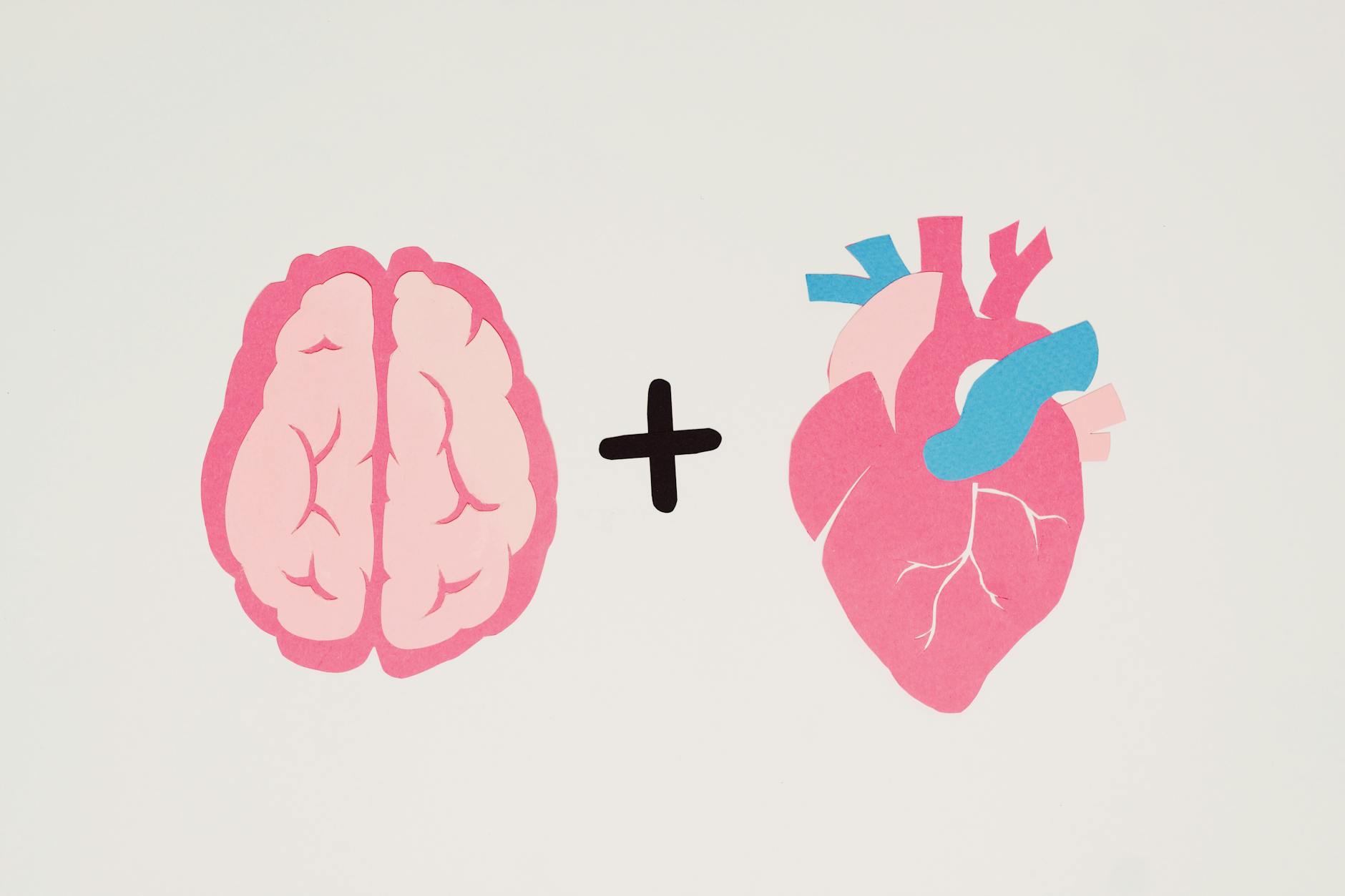
For readers of a brain health website, the relevance of post-MI treatment may not be immediately obvious, but the connection is well established. Heart failure — one of the outcomes reduced by beta-blockers in the mildly reduced EF group — is an independent risk factor for cognitive decline and dementia. Reduced cardiac output leads to chronic cerebral hypoperfusion, which over time can contribute to white matter damage, hippocampal atrophy, and vascular cognitive impairment. A patient who avoids heart failure after a heart attack is, in a real sense, also protecting their brain. Consider a 68-year-old patient who survives a moderate heart attack with an ejection fraction of 44 percent. Without beta-blocker therapy, that patient faces a 14.4 percent chance of death, another heart attack, or heart failure based on the meta-analysis data.
Each of those outcomes carries cognitive consequences. A recurrent MI means another period of hemodynamic instability and potential cerebral hypoperfusion. Heart failure means chronically reduced blood flow to the brain. Even the stress and inflammation associated with these cardiovascular events can accelerate neurodegenerative processes. Reducing that risk to 10.7 percent is not just a cardiovascular intervention — it is, indirectly, a neuroprotective one. Research over the past decade has also highlighted shared pathophysiology between cardiovascular disease and Alzheimer’s disease, including endothelial dysfunction, chronic inflammation, and small vessel disease. Any intervention that stabilizes cardiovascular health in the years following a heart attack has the potential to modify long-term dementia risk, though direct evidence linking beta-blocker use specifically to dementia prevention remains limited and should not be overstated.
Beta-Blockers Versus Other Drugs Tested After Acute MI
Beta-blockers were not the only medications investigated for improving post-MI outcomes in recent large-scale trials. Two other drugs — colchicine and spironolactone — were tested in the CLEAR SYNERGY trial, a major study published in the New England Journal of Medicine in 2024 involving 7,062 patients. Both failed to show significant benefit. Colchicine, an anti-inflammatory drug primarily used for gout, was hypothesized to reduce post-MI events by targeting the inflammatory response that follows a heart attack. The rationale was sound: inflammation plays a known role in plaque instability and recurrent events. But the trial results were definitively neutral, with a hazard ratio of 0.99 (p=0.93) for the composite of cardiovascular death, recurrent MI, stroke, or ischemia-driven revascularization.
There was essentially no difference between colchicine and placebo. Spironolactone, a mineralocorticoid receptor antagonist that is effective in severe heart failure, similarly showed no significant benefit in the broad post-MI population (HR 0.91; p=0.51) for cardiovascular death or new heart failure. The contrast is instructive. Both colchicine and spironolactone had plausible biological mechanisms and were tested in well-designed trials, yet neither delivered. Beta-blockers succeeded — but only in the mildly reduced EF subgroup. The lesson for clinicians and patients is that blanket approaches to post-MI pharmacotherapy are increasingly giving way to precision medicine, where the right drug is matched to the right patient based on measurable physiological parameters like ejection fraction.
Limitations of the Beta-Blocker Evidence and What Remains Unknown
Despite the strength of the meta-analysis, several limitations deserve honest acknowledgment. The mildly reduced EF subgroup included 1,885 patients — a meaningful sample but far smaller than the tens of thousands enrolled in the trials that originally established beta-blocker use decades ago. The confidence interval (0.58–0.97) crosses close to 1.0 on the upper end, meaning that while the result is statistically significant, a larger trial could theoretically narrow or shift the estimate. There are also practical questions the meta-analysis does not answer.
The optimal duration of beta-blocker therapy in this group remains unclear. Should a patient with a post-MI ejection fraction of 45 percent stay on metoprolol indefinitely, or can it be safely discontinued after a year if their ejection fraction improves? The trials included in the meta-analysis had varying follow-up periods, and none were specifically designed to answer the duration question. For older patients who may already be on multiple medications and face increased risk of side effects like fatigue, bradycardia, and depression — all of which can mimic or worsen cognitive symptoms — this is not a trivial consideration. Additionally, the meta-analysis pooled patients across different beta-blocker agents (carvedilol, metoprolol, bisoprolol), and it is not possible to determine from the available data whether one specific beta-blocker is superior to another within this subgroup. Carvedilol, which has additional vasodilatory properties, may behave differently from a purely beta-1 selective agent like bisoprolol, but the current evidence treats them as a class.

What This Means for Patients Already on Beta-Blockers
Many heart attack survivors are already taking beta-blockers, often initiated in the hospital and continued indefinitely without reassessment. This new evidence should prompt a conversation — not an abrupt medication change.
A patient whose post-MI echocardiogram showed an ejection fraction of 55 percent might reasonably discuss with their cardiologist whether continued beta-blocker therapy is adding value, particularly if they are experiencing side effects like exercise intolerance or fatigue that reduce their quality of life and physical activity levels. Conversely, a patient in the 40–49 percent range who was never started on a beta-blocker, or who discontinued one, now has strong evidence supporting its use. The key practical step is knowing one’s ejection fraction — a number that many patients are never told or quickly forget after discharge.
Where the Research Goes From Here
The cardiology community is moving rapidly toward more individualized post-MI treatment strategies. Future trials are likely to focus on whether the benefit of beta-blockers in the mildly reduced EF group extends to specific agents, to longer or shorter treatment durations, and to patients with additional comorbidities like diabetes or chronic kidney disease.
There is also growing interest in whether serial imaging — tracking ejection fraction recovery over months — can guide when to start or stop therapy. For brain health researchers, the evolving post-MI landscape raises an important question: as cardiologists refine who benefits from which treatments, will those refinements translate into measurable differences in long-term cognitive outcomes? Large cardiovascular outcome trials rarely include cognitive endpoints, but as the population ages and the overlap between cardiac and dementia patients grows, that gap in the evidence is becoming harder to ignore. The 25 percent risk reduction from beta-blockers in the right patients is a meaningful cardiovascular finding — its full significance for brain health remains to be written.
Conclusion
Beta-blockers reduce the combined risk of death, recurrent heart attack, and heart failure by 25 percent after an acute MI, but only in patients with mildly reduced left ventricular ejection fraction between 40 and 49 percent. This finding, drawn from a rigorous individual patient data meta-analysis of four randomized trials and published in The Lancet in 2025, represents a meaningful advance in post-MI care. For patients with preserved ejection fraction of 50 percent or above, the evidence now consistently shows no benefit, and other drugs tested in this setting — colchicine and spironolactone — have also failed to improve outcomes in the general post-MI population.
The practical takeaway is straightforward: every heart attack survivor should know their ejection fraction and discuss with their physician whether beta-blocker therapy is appropriate for their specific situation. For those in the mildly reduced range, the evidence supports treatment. For those with preserved function, the calculus shifts toward weighing potential side effects against absent benefit. And for anyone concerned about long-term brain health, maintaining cardiovascular stability after a heart attack is one of the most important — and now more precisely targetable — steps they can take.
Frequently Asked Questions
What are beta-blockers, and how do they work after a heart attack?
Beta-blockers are medications that block adrenaline’s effects on the heart, reducing heart rate and blood pressure. After a heart attack, they decrease the heart’s oxygen demand and workload, which can prevent further damage and reduce the risk of recurrent events.
How do I find out my ejection fraction?
Ejection fraction is measured by echocardiogram, a standard ultrasound of the heart typically performed during or shortly after a heart attack hospitalization. Ask your cardiologist for this number — it is one of the most important metrics guiding your post-MI treatment plan.
Should I stop taking my beta-blocker if my ejection fraction is normal?
Do not stop any medication without consulting your physician. While recent evidence suggests beta-blockers may not provide additional benefit for post-MI patients with preserved ejection fraction of 50 percent or above, there may be other reasons your doctor has prescribed it, including blood pressure control or arrhythmia management.
Can beta-blockers cause cognitive side effects?
Some patients report fatigue, depression, or mental sluggishness on beta-blockers, particularly older lipophilic agents that cross the blood-brain barrier more readily. If you experience cognitive symptoms, discuss alternatives with your doctor rather than discontinuing on your own.
Does preventing heart failure after a heart attack protect the brain?
Evidence suggests it can. Heart failure is associated with reduced blood flow to the brain, which over time increases the risk of cognitive decline and vascular dementia. By preventing heart failure, effective post-MI treatment may indirectly support long-term brain health, though direct evidence linking beta-blocker use to dementia prevention is still limited.