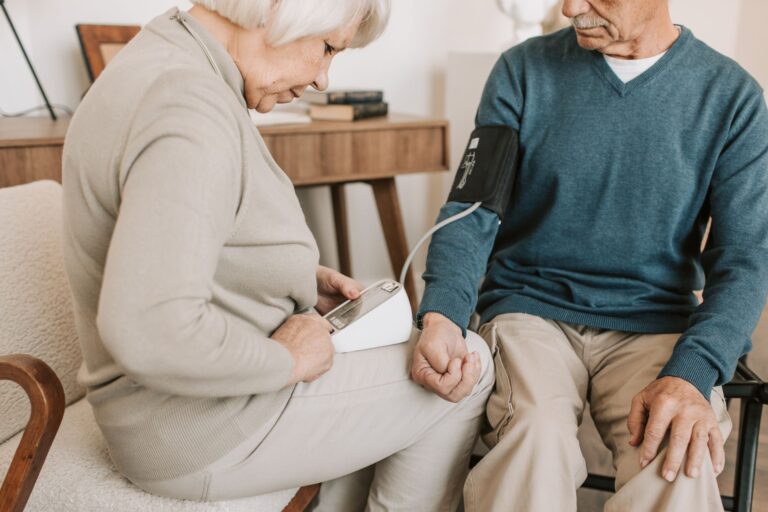
Seniors heal more slowly from injuries because the body’s repair systems — cellular regeneration, immune response, circulation, and hormone production — all decline with age. A 70-year-old who fractures a wrist may need twice as long to regain full function compared to a 30-year-old with the same injury, and even then may never return to baseline. The slowdown is not caused by one factor but by a cascade of biological changes that compound one another, making recovery longer, more complicated, and more vulnerable to setbacks.
The reasons behind this slowdown matter especially for anyone caring for an older adult, whether that person lives with dementia, heart disease, or simply the wear of advancing years. Understanding why the body struggles to repair itself after age 65 helps caregivers set realistic expectations, recognize warning signs early, and support recovery in ways that actually help. This article covers the biology of aging and wound repair, the role of nutrition and circulation, the impact of cognitive decline on recovery, medication effects, and what practical steps can make a real difference.
Table of Contents
- Why Does the Body Repair Itself More Slowly as We Age?
- How Does Poor Circulation Affect Wound Healing in Older Adults?
- What Role Does Nutrition Play in Recovery for Elderly Patients?
- How Can Caregivers Support Faster Recovery in Older Adults?
- Does Cognitive Decline Make Injury Recovery Harder?
- How Do Medications Affect Healing in Older Adults?
- What Does the Future Hold for Elderly Injury Recovery?
- Conclusion
- Frequently Asked Questions
Why Does the Body Repair Itself More Slowly as We Age?
The fundamental answer lies in cellular biology. Every tissue in the body relies on cells that can divide, migrate to a damaged area, and lay down new material. In younger people, stem cells and tissue-specific progenitor cells respond quickly to injury signals. In older adults, these cells are fewer in number, slower to activate, and more prone to senescence — a state where cells stop dividing but remain metabolically active, secreting inflammatory molecules that can actually interfere with healing rather than support it. A concrete example: bone fractures in elderly patients heal through the same basic process as in younger people — a clot forms, then soft callus, then hard callus, then bone remodeling — but each stage takes longer and is less efficient.
Studies have shown that the remodeling phase, which restores bone density and architecture, can take up to three times longer in adults over 70 compared to those under 40. Additionally, the quality of the repaired bone is often lower, leaving the patient at higher risk for re-fracture at the same site. The decline in growth hormone and insulin-like growth factor 1 (IGF-1), both of which peak in adolescence and drop steadily through adulthood, contributes directly to this cellular slowdown. These hormones signal cells to proliferate and rebuild tissue. By the time someone reaches their late 60s, circulating levels of both are a fraction of what they were at 20, and the tissues most dependent on them — muscle, bone, and skin — show the consequences most visibly.
How Does Poor Circulation Affect Wound Healing in Older Adults?
Oxygen and nutrients reach damaged tissue through the bloodstream. When circulation is compromised, healing stalls. Aging brings a gradual stiffening of arterial walls, reduced cardiac output, and in many older adults, narrowing of small blood vessels due to decades of atherosclerosis. The result is that injured tissue receives less of what it needs to repair itself, and metabolic waste products are cleared away more slowly. This becomes critically important in injuries involving the lower extremities. Leg ulcers and foot wounds in elderly patients — particularly those with diabetes or peripheral artery disease — heal notoriously slowly precisely because blood flow to those areas is already reduced.
A small cut on the foot that would close in days for a healthy young adult can persist for weeks or months in an 80-year-old with vascular disease, and can eventually require amputation if infection sets in. This is not a rare edge case; chronic non-healing wounds affect roughly 6 million Americans, the majority of them elderly. However, poor circulation is not inevitable. seniors who remain physically active, maintain healthy blood pressure and cholesterol levels, and avoid smoking preserve significantly better vascular function than those who do not. The warning here is that assuming all elderly patients have the same circulatory capacity leads to underestimating risk in some and overestimating it in others. Assessment matters: a healthy, active 75-year-old may heal a wound much faster than a sedentary 65-year-old with uncontrolled hypertension.
What Role Does Nutrition Play in Recovery for Elderly Patients?
Tissue repair is a metabolic process that demands protein, vitamins, and minerals in quantities higher than what an older person may be consuming on a typical day. Protein is the raw material for collagen synthesis, immune cell production, and muscle rebuilding. Vitamin C is essential for the enzyme reactions that cross-link collagen fibers. Zinc supports cell division and immune defense. Vitamin D and calcium are critical for bone repair. When any of these are deficient, healing slows in measurable ways.
Malnutrition among older adults is far more common than most people realize. Estimates suggest that 15 to 50 percent of hospitalized elderly patients are malnourished, depending on the criteria used. Causes include reduced appetite from medication side effects, difficulty chewing due to dental problems, depression, cognitive decline that interferes with meal preparation, and the simple metabolic change that makes older adults feel full more quickly. A person admitted to a hospital for a hip fracture who was already mildly malnourished before the injury arrives at surgery already behind, with fewer reserves to draw on during recovery. A specific example illustrates the stakes: hip fracture patients with low albumin levels — a marker of protein status — have significantly higher rates of surgical complications, longer hospital stays, and greater mortality at 30 days compared to those with normal albumin. Nutritional screening on hospital admission and targeted supplementation have been shown to improve outcomes, yet this step is still inconsistently applied in many facilities.

How Can Caregivers Support Faster Recovery in Older Adults?
Supporting recovery in an elderly person requires attention to several parallel tracks at once: nutrition, mobility, medication review, mental engagement, and wound management. These are not independent; each influences the others. A caregiver who focuses only on keeping a wound clean while ignoring the person’s food intake and activity level will see slower results than one who addresses the whole picture. On the nutrition side, the practical approach involves increasing protein density in meals rather than simply increasing volume, since appetite is often the limiting factor. Greek yogurt, eggs, nut butters, and fortified shakes can boost protein intake without requiring large portions.
For bone injuries specifically, ensuring adequate vitamin D and calcium — ideally through sunlight exposure and dietary sources, with supplementation when labs indicate deficiency — is a concrete step with evidence behind it. Comparing the two main approaches to protein supplementation (whole food versus commercial oral nutritional supplements), the evidence suggests both can be effective, but whole food is preferable when the person can eat it, since it typically delivers broader micronutrient coverage. On the mobility side, the tradeoff is real: rest protects an injured site from further damage, but immobility accelerates muscle loss in older adults at a rate much faster than in younger people. A week of bed rest in a 75-year-old can produce as much muscle atrophy as a month might in a 30-year-old. Supervised, gentle movement — within whatever limits the injury allows — is almost always preferable to extended immobilization, both for physical recovery and for maintaining cognitive engagement.
Does Cognitive Decline Make Injury Recovery Harder?
The relationship between cognitive impairment and injury recovery runs in both directions and is frequently underappreciated. On one hand, people with dementia are more likely to sustain injuries in the first place — falls are the leading cause of injury death in adults over 65, and fall risk increases substantially with cognitive decline. On the other hand, the experience of injury and the demands of recovery can accelerate cognitive decline, particularly through the mechanism of delirium. Postoperative delirium — an acute state of confusion that can follow surgery or hospitalization — occurs in 10 to 50 percent of elderly surgical patients, with rates higher among those who already have some degree of cognitive impairment.
It is not simply disorientation that resolves cleanly; delirium is associated with longer hospital stays, higher rates of institutionalization, and in some patients, permanent worsening of baseline cognition. Anesthesia, pain medications, disrupted sleep, unfamiliar environments, and the physiological stress of the injury itself all contribute. The warning for caregivers is this: if an elderly person with mild cognitive impairment undergoes surgery or is hospitalized for a significant injury, do not assume the confusion that follows is just from the medication or the unfamiliar setting. It needs to be assessed, monitored, and treated as a medical condition in its own right. Familiar objects, consistent routines, family presence, minimal sedation, and early mobilization are all evidence-based strategies for reducing delirium risk, but they require active attention from the care team and often need to be requested rather than assumed.
How Do Medications Affect Healing in Older Adults?
Most older adults take multiple medications, and several common classes can directly impair healing. Corticosteroids suppress inflammation, which is a necessary early phase of wound repair, and long-term use also reduces collagen synthesis and skin integrity. Anticoagulants like warfarin or the newer direct oral anticoagulants are essential for preventing strokes in many patients but complicate wound healing and increase bleeding risk.
NSAIDs taken for pain relief inhibit prostaglandins that are involved in the inflammatory cascade required for early tissue repair. A practical example: an elderly woman on long-term prednisone for rheumatoid arthritis who suffers a skin tear will heal more slowly and is at higher risk for wound breakdown than a peer not on steroids, even if all other factors are identical. Her care team needs to know about the prednisone not just as a background detail but as a factor that changes wound management decisions — including whether surgical closure is advisable and how long to monitor for complications. Medication reconciliation at the start of any injury treatment is not a formality; it directly affects the clinical approach.
What Does the Future Hold for Elderly Injury Recovery?
Research into the biology of aging has produced a growing number of potential interventions. Senolytic drugs — compounds that selectively clear senescent cells — have shown promise in animal studies for accelerating wound healing and improving tissue repair, and early human trials are underway. Stem cell therapies, growth factor applications, and bioengineered skin substitutes are moving from experimental settings into clinical use for chronic wounds.
The trajectory of this field suggests that the gap between young and old healing capacity may narrow in coming decades. For those caring for elderly patients today, however, the most powerful tools remain the basics: adequate protein and micronutrient intake, preserved mobility, careful medication management, early identification of complications, and attention to cognitive health. The biology of aging creates real constraints, but within those constraints there is significant room for better or worse outcomes depending on how recovery is supported. The goal is not to reverse aging but to give the body the conditions it needs to do the best job it can.
Conclusion
Slower healing in older adults is the result of multiple converging biological changes — reduced cellular regeneration, impaired circulation, nutritional deficits, hormonal decline, immune system changes, and the complications introduced by medication and cognitive vulnerability. No single factor explains the difference, and no single intervention reverses it. Understanding the full picture is what allows caregivers and clinicians to act on multiple fronts simultaneously rather than treating each issue in isolation.
For families and caregivers, the most actionable takeaway is this: recovery in an elderly person requires sustained attention over a longer timeline than it would for a younger person, and setbacks are more likely. Preparation — through nutritional support, fall prevention, medication review, and cognitive monitoring — reduces the chance of complications more than any intervention applied after the fact. When injury does occur, advocating for a comprehensive recovery plan rather than a narrowly focused medical response can make a meaningful difference in how fully and how quickly an older adult returns to function.
Frequently Asked Questions
How much longer does a fracture take to heal in an elderly person compared to a younger adult?
It varies by fracture type and location, but as a general estimate, bone healing in adults over 70 can take 1.5 to 3 times longer than in adults under 40. A wrist fracture that might heal in 6 weeks for a younger person may take 12 to 16 weeks in an elderly patient, and full functional recovery often takes longer still.
Is slower healing in seniors reversible or preventable?
The underlying biology of aging cannot be reversed, but many of the factors that worsen healing — malnutrition, physical inactivity, uncontrolled chronic disease, and certain medications — can be addressed. Seniors who are well-nourished, physically active, and have well-managed chronic conditions heal meaningfully faster than those who do not.
Why do older adults with dementia have higher rates of falls and injuries?
Dementia impairs judgment, spatial awareness, attention, and gait — all of which contribute to fall risk. Behavioral symptoms like wandering at night or moving too quickly without recognizing physical limitations further increase exposure to hazardous situations. Medications used to manage dementia symptoms can also cause dizziness or orthostatic hypotension.
What nutrients are most important for healing in older adults?
Protein is the most critical, followed by vitamin C (collagen synthesis), zinc (immune function and cell division), vitamin D and calcium (bone repair), and vitamin A (tissue regeneration). Deficiencies in any of these are common in elderly populations and can measurably slow recovery.
Should an elderly person rest completely after an injury?
In most cases, no. While protecting the injured site is important, extended immobility causes rapid muscle loss, increases clot risk, and contributes to delirium. Supervised movement, within the bounds of what the injury allows, is generally recommended as early as safely possible.
What is postoperative delirium and why does it matter for recovery?
Postoperative delirium is an acute state of confusion that can follow surgery or hospitalization, affecting 10 to 50 percent of elderly surgical patients. It extends hospital stays, increases complication rates, and can cause permanent cognitive decline, particularly in those who already have underlying impairment. It is a serious medical condition, not simply medication-related drowsiness.