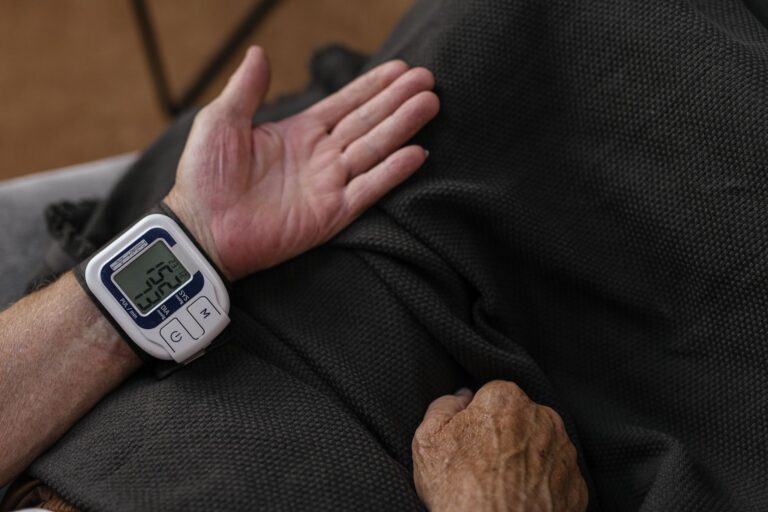
Best gps sits at the center of this dementia and brain health question.
The best GPS trackers for dementia patients who wander include the Family1st Senior GPS Tracker, AngelSense GPS Tracker and Watch, Tranquil Watch, Seculife SOS Wristband, Tack GPS Plus, and the GPS Smart Sole by AlzStore. Each serves a different use case — some prioritize speed and accuracy, others focus on tamper resistance, and at least one is designed to be completely invisible to the patient. For most caregivers, the right choice depends on whether the person can tolerate wearing a device, how severe the wandering behavior is, and what level of monitoring is realistic day to day. Consider a situation many families face: an 80-year-old with moderate Alzheimer’s who repeatedly removes wristbands and leaves the house before dawn.
In that case, a standard GPS watch is nearly useless. The GPS Smart Sole — a tracker embedded directly into a shoe insole — sidesteps the removal problem entirely. For someone at an earlier stage who accepts wearing a watch, the AngelSense or Tranquil Watch may offer more real-time communication features. This article covers what wandering actually looks like statistically, what features matter most, how the top devices compare, the ethical and practical trade-offs involved, and what to watch out for when choosing a device for long-term use.
Table of Contents
- How Dangerous Is Wandering for Dementia Patients, and Why Do GPS Trackers Matter?
- What Features Should You Look for in a GPS Tracker for Someone With Dementia?
- Which GPS Trackers Are Rated Best for Dementia Patients in 2026?
- How Do You Choose Between a GPS Watch, Clip-On Tracker, and Shoe Insole?
- What Are the Ethical Concerns and Psychological Trade-Offs of GPS Tracking?
- Does GPS Tracking Actually Delay the Need for Memory Care Facilities?
- Where Is GPS Tracking Technology for Dementia Patients Headed?
- Conclusion
- Frequently Asked Questions
How Dangerous Is Wandering for Dementia Patients, and Why Do GPS Trackers Matter?
Wandering is not a minor behavioral quirk. Roughly 60% of dementia patients will wander at least once, and many do so repeatedly. A broader look at Alzheimer’s specifically found that 74% of affected persons have wandered from home — on foot, by bicycle, by car, or via public transit. These are not slow, confused shuffles down the hallway. Many wandering incidents involve people covering significant distances, crossing streets, entering traffic, or ending up outdoors in dangerous weather. The mortality figures are stark.
According to research compiled by Theora Care, approximately 30% of missing wandering incidents end in death — by exposure to cold or heat, drowning, traffic injuries, or accidents. If a person is not found within 24 hours, roughly 50% face serious injury or death. For those not recovered within three to five days, survival rates drop to around 20%. These numbers explain why early detection and rapid response are not optional features — they are the entire point. GPS trackers matter in this context because they close the gap between when someone leaves and when a caregiver knows about it. A geofencing alert that fires the moment a person crosses the front walkway gives family members or professional caregivers a several-minute head start over a neighbor calling to say they spotted someone wandering down the road. Research published in PMC also found that GPS tracking can delay the need for round-the-clock supervised care, allowing patients to remain at home longer — an outcome most families prefer for quality-of-life and financial reasons.

What Features Should You Look for in a GPS Tracker for Someone With Dementia?
Not all GPS trackers are built for dementia specifically, and the difference shows in the details. The most important features to evaluate are: geofencing with fast alert response times, tamper resistance or locking design, SOS button functionality, battery life, and whether the device works indoors as well as outdoors. Two-way communication and fall detection are valuable additions, though they are not universally available. Geofencing is the baseline feature. You set a virtual boundary — say, the perimeter of the property — and the device alerts you the moment that boundary is crossed.
The Family1st Senior GPS Tracker advertises geofence alerts in approximately six seconds, with live location updates every eight seconds and accuracy under 12 feet. That response time is meaningfully faster than many consumer GPS products built for luggage or vehicle tracking. For dementia patients who can move quickly and purposefully despite cognitive impairment, those seconds matter. However, there is an important limitation to understand with GPS technology: it relies on satellite signals, which means accuracy degrades or disappears indoors, in dense urban canyons, or underground. Some devices supplement GPS with Wi-Fi positioning or cellular triangulation to improve indoor coverage, but no device provides perfect tracking in all environments. If the person you are caring for tends to wander inside a large building — a facility, a mall, or a multi-story home — verify that the device’s indoor tracking capabilities actually function before committing to a subscription plan.
Which GPS Trackers Are Rated Best for Dementia Patients in 2026?
The Family1st Senior GPS Tracker is consistently rated as a top overall choice for dementia monitoring, largely because of its real-time tracking speed and geofencing precision. For families who need to monitor someone without relying on a static check-in schedule, the eight-second update interval is among the fastest available in the consumer segment. The AngelSense GPS Tracker takes a different approach. It is designed for individuals who need continuous, AI-assisted monitoring rather than periodic location pings. The device clips to clothing or can be worn as a watch, and a non-removable sleeve option is available for patients who tend to pull off accessories. It includes a two-way speakerphone with auto-answer capability, which means a caregiver can listen in or speak to the patient without the patient needing to interact with the device at all.
The hardware costs around $229, with monthly subscriptions ranging from approximately $45 to $65 depending on the plan. That is on the higher end of the market, but the feature depth justifies the cost for many families dealing with significant wandering risk. The Tranquil Watch addresses the removal problem differently: its locking strap requires a special key to remove, making it difficult for a patient to take off independently. The Seculife SOS Wristband adds fall detection to GPS and real-time monitoring, and its SOS button sends emergency alerts after a three-second press — long enough to avoid accidental triggers but fast enough for genuine emergencies. The Tack GPS Plus operates entirely without a phone or Bluetooth connection, which matters for patients in rural areas or for caregivers who are not always near their phones. Finally, the GPS Smart Sole from AlzStore embeds a tracker directly into a shoe insole — entirely concealed from the patient, requiring no cooperation or tolerance from them at all.
How Do You Choose Between a GPS Watch, Clip-On Tracker, and Shoe Insole?
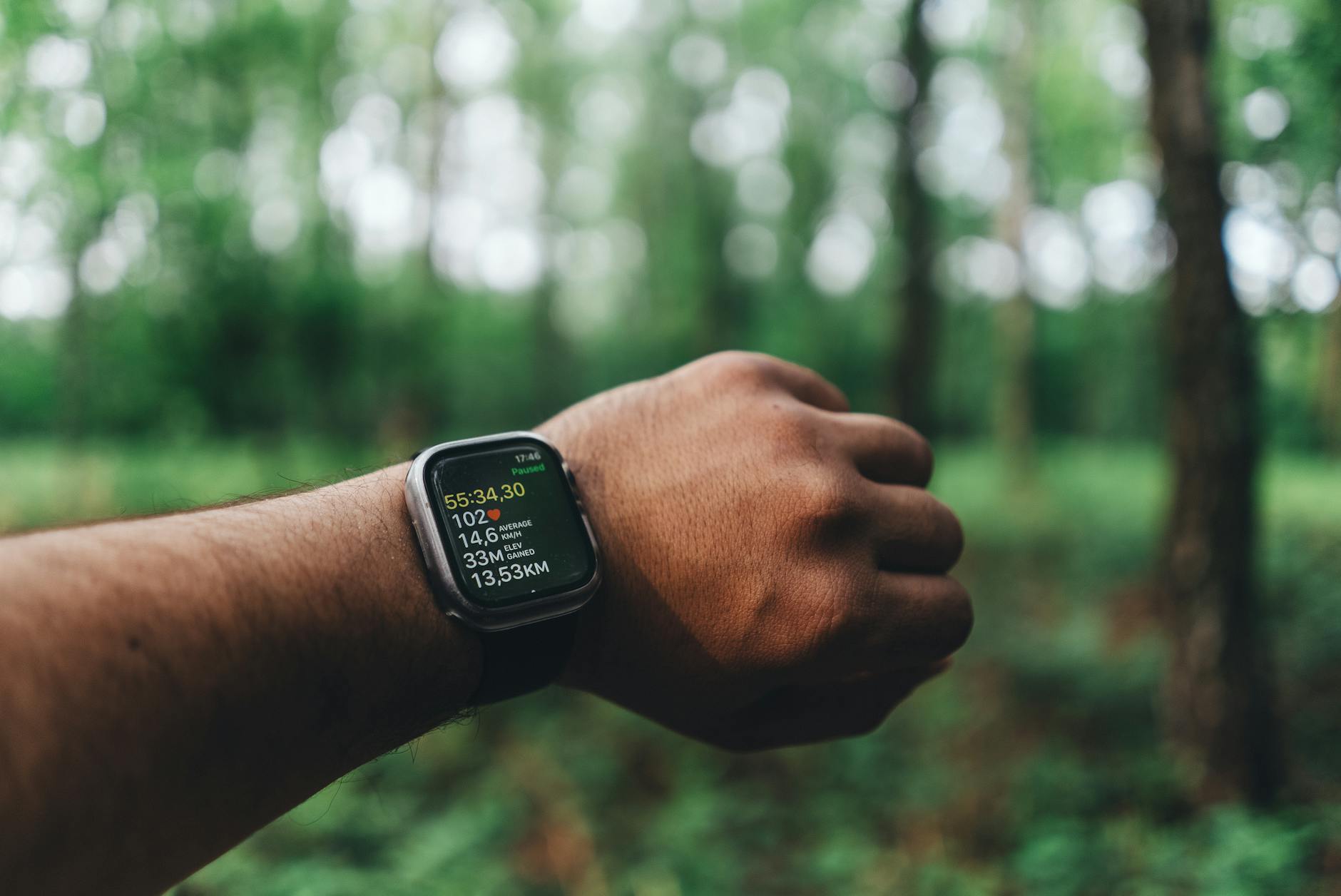
The choice between form factors comes down to one practical question: will the person actually wear or keep the device on? For patients in early to moderate stages of dementia who accept wearing a watch, a GPS watch with a locking strap — like the Tranquil Watch — is a natural fit. It looks familiar, does not require a separate clip or pocket, and the locking mechanism prevents easy removal without making the watch look institutional. Clip-on devices like the AngelSense offer flexibility in placement. They can be attached to a collar, belt, bra, or jacket — wherever the patient is least likely to find and remove them. This is useful for patients who have developed a specific aversion to wrist-worn objects but still tolerate clothing they are used to wearing. The downside is that clothing changes create gaps in tracking if caregivers forget to transfer the device, and it can be left behind on a coat that the patient does not end up wearing.
The GPS Smart Sole sidesteps the cooperation problem entirely. Because it is embedded in the insole of a shoe, most patients are completely unaware of it. The trade-off is obvious: it only works when the person is wearing that particular pair of shoes. If they leave the house in a different pair, or go barefoot, the tracker is useless. For caregivers with a reliable routine — a specific pair of shoes always placed by the door, for instance — this limitation is manageable. For households with less predictable routines, it is a real vulnerability.
What Are the Ethical Concerns and Psychological Trade-Offs of GPS Tracking?
Tracking a person without their ongoing informed consent raises legitimate ethical questions. A 2025 systematic literature review published in Tandfonline examined GPS trackers, wearables, and proximity sensors used for dementia monitoring and found a clear “dual effect”: while these technologies improve safety and support autonomy by delaying institutionalization, they also introduce psychological burden — both for the person being monitored and for caregivers who feel tethered to a monitoring dashboard. For patients in early stages of dementia who retain some self-awareness, the knowledge that they are being constantly tracked can feel demeaning. It is worth having a direct conversation — while the person still has capacity — about their preferences regarding monitoring. Some people, when informed about the risks of wandering, agree to GPS tracking voluntarily.
Others find it distressing. Documenting that conversation matters both ethically and, in some jurisdictions, legally. For caregivers, the technology introduces a different kind of pressure. The constant availability of location data can make it harder to mentally “step away” from caregiving. Alert fatigue is also a real risk: if geofences are set too conservatively, repeated false alarms in the middle of the night erode caregiver trust in the system and lead people to ignore notifications. Setting appropriate boundaries — not too tight, not too loose — and testing the device over several days before depending on it are steps that are easy to skip and costly to ignore.

Does GPS Tracking Actually Delay the Need for Memory Care Facilities?
Research published in PMC suggests that GPS tracking can meaningfully delay the transition to 24-hour supervised care. When caregivers have a reliable safety net — knowing that a wandering event will trigger an immediate alert — they are more willing to continue home-based care rather than making an early, often premature decision to move a family member into a memory care facility. That is a significant outcome.
Memory care costs average several thousand dollars per month in the United States, and many families delay that transition as long as safely possible. The practical implication is that investing in a quality GPS tracker — even one at the higher end of the price range, like AngelSense at around $45 to $65 per month — may be far less expensive than the alternative it is helping to postpone. That cost-benefit comparison is worth making explicit when families are deciding whether to budget for a subscription-based device.
Where Is GPS Tracking Technology for Dementia Patients Headed?
The 2025 systematic literature review from Tandfonline identified GPS trackers and wearables as the most popular category of wandering prevention and monitoring technology for dementia — but also noted that the field is evolving quickly. Devices are becoming smaller and lighter, battery life is extending into multi-week and in some cases multi-month ranges, and AI-assisted pattern recognition is beginning to allow systems to predict wandering behavior before it happens rather than simply responding after a boundary is crossed. Indoor tracking remains the most significant unsolved problem.
As long as GPS requires a clear line of sight to satellites, performance inside buildings will remain inconsistent. Hybrid systems combining GPS, Wi-Fi positioning, ultra-wideband, and Bluetooth mesh networks are in development, and some early commercial products are beginning to address this gap. For families making decisions now, the most reliable approach is to select a device that performs well outdoors — where the greatest dangers lie — while supplementing with door and window sensors for indoor perimeter monitoring.
Conclusion
For families navigating dementia caregiving, GPS trackers are not a perfect solution, but they are among the most practical safety tools currently available. The best device depends on the individual patient’s behavior, tolerance for wearing technology, and the caregiver’s ability to respond to alerts. The Family1st Senior GPS Tracker offers fast, accurate real-time tracking at a competitive price point. AngelSense provides the deepest feature set for continuous monitoring. The Tranquil Watch and Seculife SOS Wristband address wrist-worn form factors with locking and fall detection features.
The GPS Smart Sole is the most discreet option for patients who remove devices. And the Tack GPS Plus works without phone dependency. The statistics on wandering outcomes — 30% of incidents ending in death, survival rates falling sharply after 24 hours unlocated — make a clear case for acting before a first wandering incident rather than after. Start with the features that address the specific vulnerabilities in your situation: if removal is the problem, prioritize tamper resistance; if indoor coverage matters, evaluate hybrid systems carefully; if cost is a constraint, compare total subscription costs over 12 months rather than hardware price alone. Then test the device thoroughly before treating it as a reliable safety net.
Frequently Asked Questions
Do GPS trackers for dementia patients require a monthly subscription?
Most do. Devices like AngelSense charge between $45 and $65 per month depending on the plan. Some devices, like the Tack GPS Plus, are also subscription-based. Hardware costs are typically separate. When comparing options, calculate the 12-month total cost — hardware plus subscription — to get a realistic picture.
What happens if the patient removes the GPS tracker?
This is one of the most common failure points. Devices with locking straps, like the Tranquil Watch, or non-removable sleeves, like the AngelSense, are specifically designed to address this. The GPS Smart Sole is another option since it is embedded in a shoe insole and not visible to the patient. No wearable is completely tamper-proof, but locking mechanisms significantly reduce the likelihood of removal.
Can GPS trackers work indoors?
Standard GPS does not work reliably indoors due to satellite signal limitations. Some devices supplement GPS with Wi-Fi positioning or cellular triangulation for better indoor performance, but no current consumer device provides seamless indoor tracking across all environments. Door and window sensors can be used alongside GPS trackers to compensate for this gap.
How quickly do caregivers receive alerts when a patient wanders?
It depends on the device. The Family1st Senior GPS Tracker is among the fastest available, delivering geofence alerts in approximately six seconds with location updates every eight seconds. Many standard consumer trackers have update intervals of 30 seconds to several minutes, which is a meaningful difference when a person can walk a city block in under a minute.
Is GPS tracking legal without the patient’s consent?
Legal requirements vary by jurisdiction. In many U.S. states, a caregiver with legal guardianship or power of attorney can authorize tracking for a person who lacks decision-making capacity. For patients in earlier stages of dementia who retain capacity, informed consent is both legally and ethically appropriate. Consulting an elder law attorney is advisable if there is any uncertainty about authorization.
Can GPS trackers really delay the need for memory care facilities?
Research published in PMC suggests yes — GPS tracking allows caregivers to continue home-based care with greater confidence, potentially delaying the transition to supervised memory care facilities. Given that memory care costs often run several thousand dollars per month, even a subscription-based GPS service at $45 to $65 per month represents significant cost savings if it extends safe home care by even a few months.
You Might Also Like
- What are the best music playlists for calming dementia patients
- What are the benefits of adult day programs for dementia patients
- What are the legal documents every dementia family needs
For more, see CDC — Alzheimer’s and Dementia.