Yes, it is entirely possible to pass a standard memory test and still be in the early stages of dementia. Brief screening tools like the Mini-Mental State Examination (MMSE) or a quick memory recall test at a routine checkup are designed to catch obvious, moderate impairment. They are blunt instruments. A person with a high level of education, strong verbal skills, or a lifetime of intellectual work can score within the “normal” range while their brain is already changing. In clinical practice, this happens often enough that specialists warn against treating a passing score as an all-clear.
Consider a retired college professor who aces a 30-point office screening but has quietly stopped hosting the dinner parties she loved because following multiple conversations now exhausts her. She “passed,” yet the functional decline is real. This gap between test performance and lived reality is one of the most misunderstood aspects of early dementia, and it explains why families are sometimes reassured on paper while sensing that something is genuinely wrong. The reason lies in what these tests actually measure, how cognitive reserve masks decline, and which types of dementia short screenings are poorly equipped to detect. Understanding those limits helps you know when a normal result should still prompt further questions.
Medical information disclaimer: This article is for general educational purposes only and does not provide medical advice, diagnosis, or treatment. Always consult a physician or other qualified health professional about symptoms, medications, tests, or treatment decisions.
Table of Contents
- Can You Pass a Memory Test and Still Have Early Dementia?
- What a Standard Memory Screening Actually Measures and Misses
- How Cognitive Reserve and Education Mask Early Decline
- When to Push for More Than a Quick Memory Test
- The Risks of False Reassurance From a Passing Score
- Biomarkers and Imaging Beyond the Memory Test
- The Difference Between Normal Aging and Early Dementia on a Test
- Frequently Asked Questions
Can You Pass a Memory Test and Still Have Early Dementia?
The short answer is that memory tests measure performance on a specific day, on specific tasks, not the underlying health of the brain. The mmse and the similar Montreal cognitive Assessment (MoCA) sample a narrow slice of thinking: recalling a few words, copying a shape, naming the date. A person can compensate for early deficits by concentrating harder, using verbal tricks, or leaning on well-practiced knowledge. The test captures the result, not the extra effort it took to get there. Cognitive reserve is the key concept.
People with more years of education, complex careers, bilingualism, or lifelong reading habits tend to have brains that reroute around damage more effectively. Two people with the same amount of physical brain change on a scan can perform very differently on a screening. The one with high reserve may score normally for years while the disease progresses underneath, which is why a passing score is more reassuring in someone with limited education than in someone who has spent decades solving hard problems for a living. There is also the matter of the “worried well” versus the genuinely early-affected. Someone anxious about normal age-related forgetfulness may over-report symptoms and still test fine because nothing is truly wrong. But the opposite pattern, testing fine while something is wrong, is the one that gets missed, because a clean number tends to end the conversation.
What a Standard Memory Screening Actually Measures and Misses
Most brief screenings are heavily weighted toward episodic memory and orientation, which makes sense because Alzheimer’s disease, the most common cause of dementia, often starts there. But this focus creates blind spots. Executive function, the ability to plan, multitask, judge risk, and adapt to new situations, is barely tested in a five-minute screen. A person can name the date and recall three words while being unable to manage their own finances or follow a new recipe. This is a significant limitation, not a minor caveat.
Frontotemporal dementia frequently begins with personality changes, poor judgment, or loss of empathy while memory stays intact. Someone with this condition can breeze through an MMSE and still be seriously impaired, having perhaps made reckless financial decisions or behaved inappropriately at work. Families who insist “but his memory is perfect” are sometimes describing a real dementia that the wrong test simply cannot see. A warning worth heeding: a normal screening score should never be used to dismiss a caregiver’s or spouse’s specific, concrete observations. When the people who live with someone report that they are not themselves, that account often carries more diagnostic weight than a single office test. The test measures the patient; the family measures the change over time.
How Cognitive Reserve and Education Mask Early Decline
Cognitive reserve is not just an abstract idea; its effect on testing is measurable and sometimes dramatic. Researchers have long observed that highly educated individuals can show substantial disease-related changes at autopsy while having functioned at a near-normal level in life. Their brains compensated so well that standard tests never flagged them, at least not until the underlying damage overwhelmed the reserve, at which point decline can appear surprisingly rapid. Take an engineer who has done mental arithmetic every day for forty years.
Asked to count backward from 100 by sevens, a classic screening item, he does it flawlessly out of sheer habit, even as he struggles to learn the names of new grandchildren or remember why he walked into a room. The test rewards his over-practiced skill and stays silent about his genuine new-learning deficit. His score reflects his past, not his present trajectory. The tradeoff of high reserve is a delayed diagnosis. It buys years of good function, which is a gift, but it can also mean the disease is more advanced by the time tests finally register it, leaving a shorter window for early planning, medication trials, and important family conversations.
When to Push for More Than a Quick Memory Test
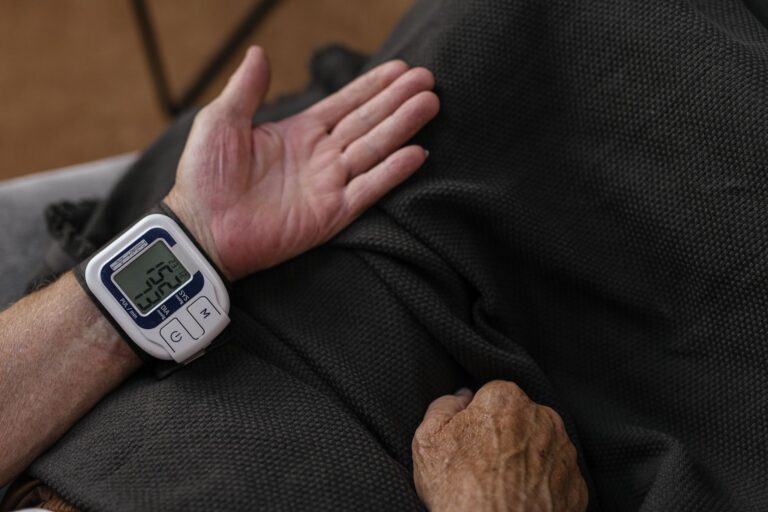
If you or a family member has a normal screening score but persistent, real-world difficulties, the practical next step is neuropsychological testing. This is a far more thorough evaluation, often lasting several hours, that probes memory, language, attention, processing speed, visual-spatial skills, and executive function in detail. It can detect subtle deficits and, importantly, can compare current performance against what would be expected for that person’s age and education, catching decline that a one-size-fits-all screen misses. The comparison between a brief screen and full neuropsychological testing is like the difference between a home blood-pressure cuff and a full cardiac workup.
The quick tool is convenient and useful for flagging obvious problems, but a normal reading does not rule out disease. The comprehensive evaluation costs more time and money and may require a referral and a wait, but it produces a baseline you can measure future changes against, which is invaluable if symptoms progress. Baseline testing is the underrated benefit here. Even if the first comprehensive evaluation comes back reassuring, having those detailed numbers on record means that a repeat test in a year or two can reveal a decline that would otherwise be invisible. A single snapshot cannot show a trend; two data points can.
The Risks of False Reassurance From a Passing Score
The biggest danger of a normal memory test is that it ends the investigation prematurely. Patients and even some clinicians treat a passing MMSE as proof that nothing is wrong, and the person is sent home without further follow-up. Meanwhile, reversible or treatable contributors, thyroid problems, vitamin B12 deficiency, sleep apnea, depression, or medication side effects, go unexamined, and any genuine early neurodegeneration continues unaddressed. There is also the problem of test practice and familiarity. Someone tested repeatedly with the same instrument can improve their score simply by learning the questions, masking a real decline.
This is a known limitation of relying on the same short screen year after year. A stable or slightly improved number can create a false sense of security when the underlying condition is actually worsening. The warning is straightforward: do not let a single normal result close the door on a real concern. If troubling symptoms persist, insist on either repeat testing over time or a more comprehensive evaluation. A screening test is designed to be sensitive to obvious impairment, not to prove the absence of early disease, and treating it as the latter can cost a family years of preparation.
Biomarkers and Imaging Beyond the Memory Test
Increasingly, the diagnosis of early dementia is moving beyond cognitive tests entirely. Brain imaging such as MRI can reveal patterns of shrinkage in specific regions, and specialized scans or spinal fluid analysis can detect the amyloid and tau proteins associated with Alzheimer’s before significant memory loss appears.
Newer blood tests aimed at these same proteins are emerging as a less invasive option, though access and interpretation still vary widely by clinic. For example, a person with a completely normal memory screen but a strong family history and vague concerns might undergo amyloid testing and learn that the biological process of Alzheimer’s is already underway. This does not mean symptoms are inevitable on any fixed timeline, but it reframes the situation: the disease is defined by brain changes, not by whether someone can recall three words in an exam room.
The Difference Between Normal Aging and Early Dementia on a Test
Part of the confusion is that everyone’s memory changes with age, and screening tests are not always good at separating benign forgetfulness from early disease. Normal aging might mean occasionally misplacing keys or taking longer to recall a name that comes back later. Early dementia more often involves forgetting entire conversations, repeating the same question within minutes, or getting lost in familiar places, patterns that a quick test may or may not catch depending on the day.
A concrete distinction clinicians watch for is whether cues help. In normal aging, a reminder usually jogs the memory back into place; the information was stored but hard to retrieve. In early Alzheimer’s, cues often do not help because the information was never firmly encoded. A brief screening rarely tests this cued-versus-uncued difference, but a detailed evaluation does, which is one more reason a passing score on a short test leaves important questions unanswered.
Frequently Asked Questions
Does a normal MMSE score rule out dementia?
No. Brief screenings are built to catch moderate impairment and can miss early disease, especially in people with high education or strong verbal skills who compensate well.
Which dementias are most likely to be missed by a memory test?
Frontotemporal dementia, which often starts with personality and judgment changes rather than memory loss, is commonly missed, as are conditions affecting executive function more than recall.
What test is more thorough than a quick memory screen?
Neuropsychological testing, a multi-hour evaluation of memory, language, attention, and executive function, detects subtle deficits and compares results to what is expected for your age and education.
Why do educated people often score normally despite decline?
Cognitive reserve lets their brains compensate for damage, so they perform well on tests until the reserve is exhausted, which can delay diagnosis.
Should I trust family observations over a normal test result?
Concrete, specific reports from people who live with someone often carry real diagnostic weight and should prompt further evaluation even when a screening score looks fine.