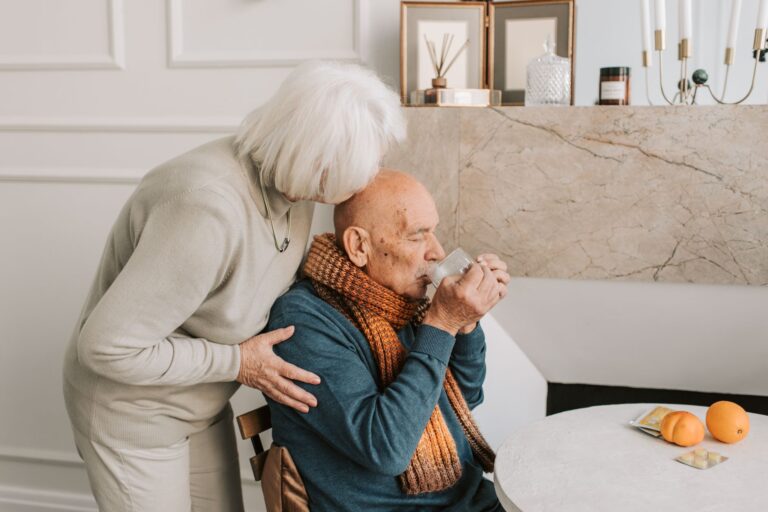
Offer one familiar prayer once a day at the same calm, alert time. Keep it under five minutes and repeat it daily instead of saving prayer for one longer visit.
Middle-stage dementia means function has declined and daily routines need more structure. A familiar prayer means one long-known prayer, such as the Lord's Prayer. Presbyterian Church (U.S.A.) News shares chaplain guidance on spiritual care that person-centered rituals and symbols bring comfort and tap into memory.
Medical information disclaimer: This article is for general educational purposes only and does not provide medical advice, diagnosis, or treatment. Always consult a physician or other qualified health professional about symptoms, medications, tests, or treatment decisions.
Table of Contents
- Which prayer should you keep?
- When during the day works best?
- How long and how often is enough?
- How do you adapt as language fades?
Which prayer should you keep?
Pick the one prayer the person has known longest. Ask what brings comfort and which prayer, worship, scripture, music, or symbol matters most to that person. Then use that single choice each day.
Creighton University ministry guidance highlights early-learned prayers that often remain, such as the Our Father, Hail Mary, and Glory Be of the Rosary. Clinicians also see brief clarity most often with the Lord's Prayer, then the Hail Mary and Communion responses. Stay with the strongest match rather than rotating prayers.
When during the day works best?
Use the same daily time, often linked to an existing routine. Morning calm, before a meal, or bedtime works when the person is awake and settled. Consistency helps because middle-stage days need steady structure.
Watch for alert, relaxed signals like eye contact, still hands, and easy breathing. Start then, in a quiet spot with low noise and soft light. A familiar voice reading aloud adds safety and recognition.
How long and how often is enough?
Aim for daily and brief. Alzheimer's Texas advises short prayers and frequent visits lasting no more than five minutes rather than lengthy ones.
One short daily prayer beats an occasional long session. Use a simple pattern each time: If attention drops, end early and try again tomorrow. Frequency builds familiarity; length does not.
- Settle beside the person with touch, such as hand-holding.
- Say the same prayer slowly in a familiar voice.
- Pause for a reply, gesture, or quiet listening.
- Close the same way and move gently to the next activity.
How do you adapt as language fades?
Lower the demand for words while keeping the same prayer. Move from reciting together to a short reply, then listening, gesture, and touch. Keep your tone warm, pace slow, and wording unchanged.
Stop if the person looks tense, sad, restless, or upset. Clinicians reporting in the National Catholic Register describe clarity during familiar prayers and advise daily repetition at calm times, with stopping when distress appears. Return at the next usual time with the same short form.