To help someone with dementia get in, have them back up to the seat, sit sideways first, then swing both legs in together. To help them get out, reverse the order: swing both legs out together, plant feet flat, then stand with support. Dementia is a decline in memory, thinking, and judgment that can make a simple transfer confusing and unsafe. Depth perception, balance, leg strength, and ability to follow steps all affect what method is safe.
Medical information disclaimer: This article is for general educational purposes only and does not provide medical advice, diagnosis, or treatment. Always consult a physician or other qualified health professional about symptoms, medications, tests, or treatment decisions.
Table of Contents
- How Should You Set Up the Car?
- How Do You Guide Someone In?
- How Do You Help Them Get Out Safely?
- What Helps When Words and Movement Are Difficult?
- When Is a Basic Pivot Not Enough?
How Should You Set Up the Car?
Park on a flat surface away from the curb to give stable footing and room to open the door wide. Slide the front passenger seat as far back as possible to create leg and turning space. According to the Alzheimer Society of Canada in its driving and transportation guide, the front seat is often more accessible than rear seats for a person with dementia.
That choice trades ease against ride safety. For travel, the back seat reduces the chance the person will grab the wheel, and child safety locks and window locks keep doors and windows controlled. Keep the seatbelt buckled throughout travel.
How Do You Guide Someone In?
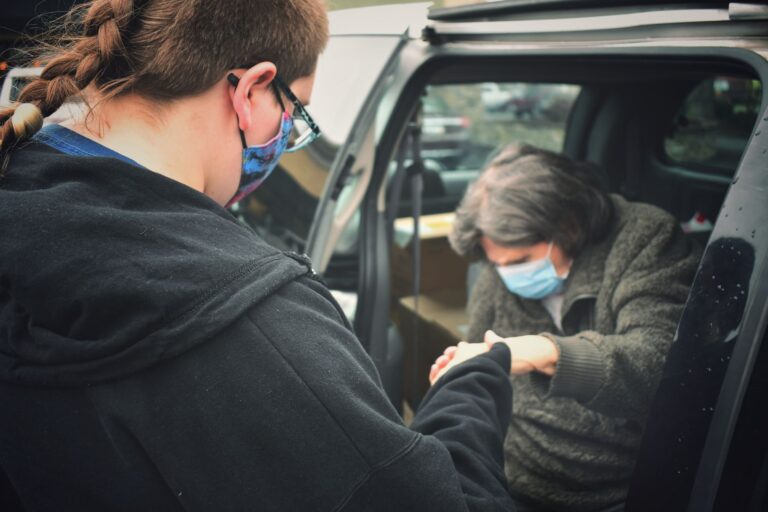
Dementia can impair depth perception, so do not ask the person to step up and turn at the same time. Have them back up until their buttocks face the car interior, then sit sideways on the seat edge first. Then they can swing both legs in together while holding your hands or the roof for support.
Cloth seats can catch clothing and force twisting. Cover the seat with slippery material such as a plastic sheet, then guide the seated person to slide back and turn forward. Protect the head from the doorframe while turning.
- Back up to the open door until legs touch the seat
- Sit sideways on the seat edge
- Swing both legs in together with support
- Slide back, turn forward, then buckle the belt
How Do You Help Them Get Out Safely?
Getting out reverses the entry sequence. Ask the person to swing both legs out together, place feet flat and secure on the ground, then scoot to the seat edge. From there, they can stand by pushing on the seat or doorframe.
According to Emoha Elder Care Library in its guide to getting an elderly person in and out of a car, never have the person pull on the movable door itself for support. The door can shift and cause a fall. Wait until footing feels steady before stepping away from the car.
What Helps When Words and Movement Are Difficult?
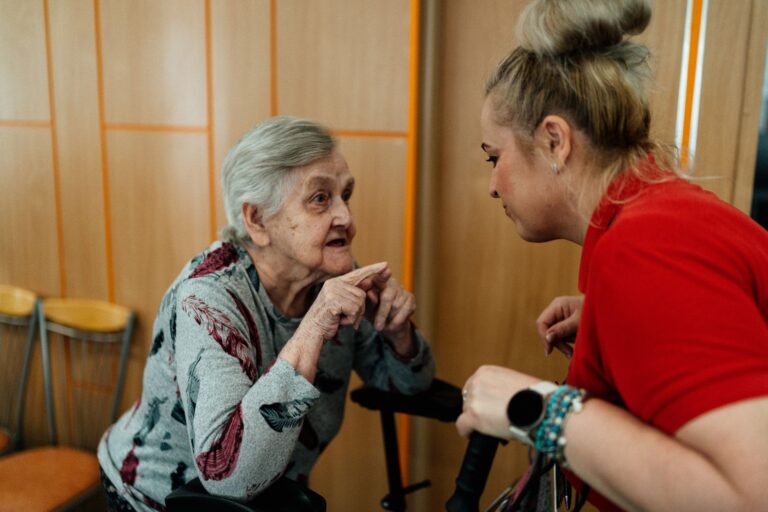
Use calm, short, one-step instructions such as sit here or stand now. Give extra processing time after each step, and stay patient if a step must be repeated. If the person is frightened or refuses, do not force the transfer and try again later.
Mobility aids help when twisting or lifting is hard. According to Kaiser Permanente Health Encyclopedia in its guide to getting in and out of a car safely, a non-slip swivel cushion lets a seated person rotate, a portable Handy Bar inserts into the door striker for a grip, and a leg-lifter strap helps move legs over the sill. Choose one aid for the exact problem, such as rotation, grip, or leg clearance.
When Is a Basic Pivot Not Enough?
The safe transfer depends on leg strength. Use a stand-pivot only if the person bears full weight and stands fully. Use a modified stand-pivot for partial weight-bearing without a full stand, and a sliding-board transfer if the person cannot stand.
That limit protects both people. Lifting a person who cannot bear weight risks injury to the caregiver and a fall for the passenger. Ask the care team which transfer matches current strength before changing cars or helpers.