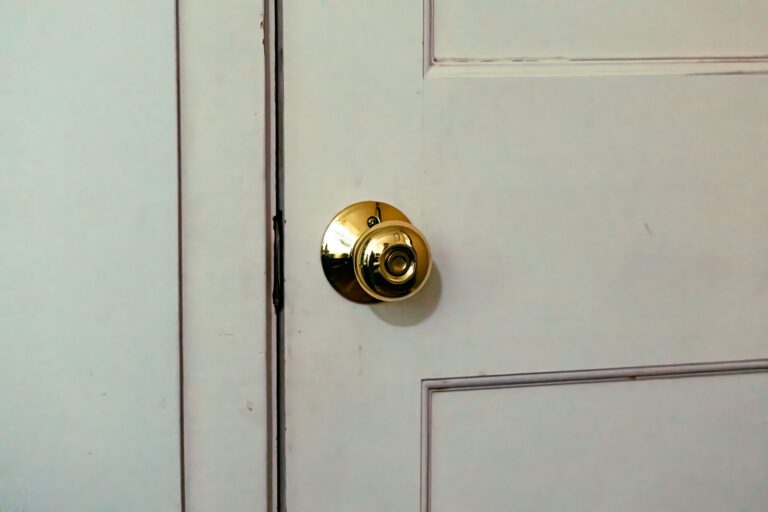
Yes, door murals and curtains can reduce exit-seeking in dementia, but they do not stop it every time. Exit-seeking means repeatedly checking, pushing, or trying to open a door in order to leave. These covers work by making the door less visible and less inviting. A painted scene, poster, or cloth curtain blends the door into the wall and breaks the cue to try it.
Medical information disclaimer: This article is for general educational purposes only and does not provide medical advice, diagnosis, or treatment. Always consult a physician or other qualified health professional about symptoms, medications, tests, or treatment decisions.
Table of Contents
- What the evidence shows
- Why disguise helps some people
- Where the limits are
- How to try a door cover safely
What the evidence shows
A painted wall mural over a locked-unit exit door reduced overall door-testing and two of four subtypes, according to the Center for Health Design summary summary of the Kincaid and Peacock study. The change did not remove all attempts. It lowered how often residents tested the door.
In a small seven-resident unit, a blue cloth barrier over the exit door and frame cut exiting by 96%, while a closed mini-blind over the door windows cut exiting by 44%, according to the 1995 Gerontologist study PubMed record. Full coverage worked better than partial coverage. The result points to concealment, not decoration alone, as the active factor.
Why disguise helps some people
Many people with dementia respond strongly to clear visual cues. A visible door handle, frame, or lighted exit sign invites approach. A mural, bookshelf decal, wall-color paint, or curtain removes that invitation.
Disguise also buys time for redirection. Staff or family can notice the pause and offer food, rest, activity, or a bathroom visit. That pause matters because exit-seeking often signals discomfort, boredom, or need for movement.
Where the limits are
Results come from small studies and single units, so effects may vary by person, setting, and door type. A Cochrane review of subjective barriers such as mirrors, floor stripes, and camouflaged door furniture found no evidence so far that they prevent wandering, as reported in the Cochrane review Cochrane review. That finding does not cancel the positive mural and curtain results.
It means families should treat covers as one aid, not a guarantee. Covers also do not teach wayfinding or replace supervision. A person may still find the door by habit, sound, or watching others. Some people may pull a curtain aside, especially if the fabric draws attention.
How to try a door cover safely
Federal guidance recommends camouflaging doors with wall-color paint, scenic posters, or removable curtains, plus out-of-sight locks, STOP or DO NOT ENTER signs, and door alarms, according to the National Institute on Aging current wandering guidance. Use covers with locks and alarms, never alone.
- Match the cover to the wall: paint the door the wall color, add a mural or poster, or hang a curtain over door and frame.
- Hide the hardware cue: place locks high or low, out of direct sight, and keep keys secured.
- Add a signal: place a STOP sign at eye level and set a door alarm or sensor chime.
- Check daily: keep the path lit, remove trip hazards, and watch whether attempts fall, shift to another door, or persist.