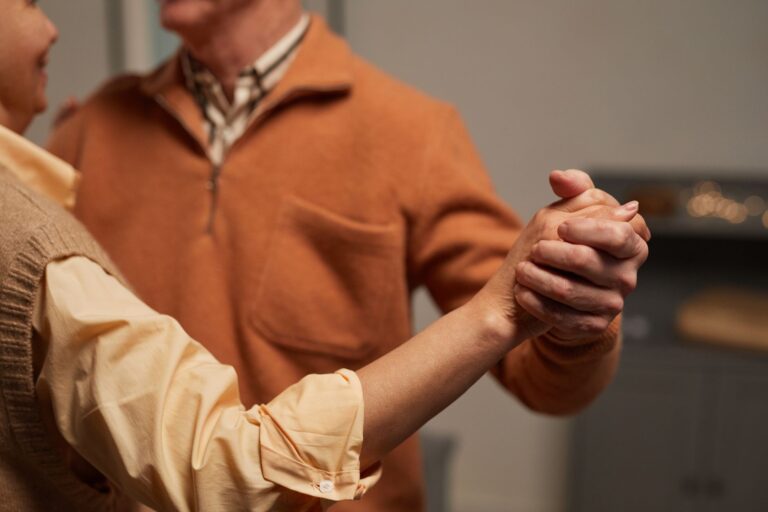
Adapt dancing for dementia home care with familiar songs, short repeatable steps, rhythm cues, seated movement, moderate volume, and rest breaks. Match the activity to current ability and enjoyment, and simplify it as needs change.
Ageing Research Reviews reports a 2024 meta-analysis of 29 dance studies with 1,708 older adults in Ageing Research Reviews meta-analysis. Participants had mild cognitive impairment, Alzheimer's disease, or dementia, and dance improved global cognition, memory, balance, and reduced depression. Global cognition means overall thinking ability.
Medical information disclaimer: This article is for general educational purposes only and does not provide medical advice, diagnosis, or treatment. Always consult a physician or other qualified health professional about symptoms, medications, tests, or treatment decisions.
Table of Contents
- What can dance support?
- How do you make the space safe?
- How do you adapt music and steps?
- How do you fit dance to the person?
What can dance support?
Aged Care Research and Industry Innovation Australia summarizes aged-care evidence that dance can decrease responsive behaviors such as agitation and aggression in ARIIA dance evidence theme. Responsive behaviors are actions that express need, discomfort, or distress. The same summary links dance to better social interaction and enjoyment for residents and staff.
The same ARIIA summary reports added physical benefits, including motor learning, mobility, fitness, coordination, muscle strength, and reduced fall risk. These gains support daily movement at home, from standing steady to shifting weight. Focus on safe repetition rather than new or difficult routines.
How do you make the space safe?
A 2024 scoping review sample included mainly people with mild cognitive impairment rather than moderate or advanced dementia, and many studies occurred in facilities, noted in PubMed scoping review record. Home caregivers should therefore start seated and supported. Ask a clinician for guidance when balance, strength, mood, or thinking changes.
Clear trip hazards, cords, rugs, and clutter before you begin. Use sturdy seating with armrests, supportive closed footwear, and enough light to see feet and floor. Stay close enough to offer a hand, chair support, or a rest break.
How do you adapt music and steps?
The Alzheimer's Association advises caregivers to encourage movement such as clapping and dancing during music activities, and to simplify art and music activities for middle- to late-stage Alzheimer's in Alzheimer's Association art and music guidance. The U.S.
Department of Veterans Affairs caregiver guide adds that music and art allow creativity and support joining a senior dancing class if the person enjoyed dancing. Keep verbal directions short and show each move while you say it. Repeat the same sequence across sessions, then change only one part when it feels easy and fun.
- Choose one or two familiar songs with a clear beat.
- Teach one short step, then repeat it with rhythm cues.
- Dance seated first: tap, clap, sway, march, or reach.
- Keep volume moderate and give rest breaks.
- Use simple cues like step, tap, sway, or stop.
How do you fit dance to the person?
Start from past taste and present response. If dancing brought joy before, try a familiar style again in a shorter, simpler form. If attention fades, switch songs, move to clapping, or pause.
For middle- to late-stage needs, reduce choices and steps. Play one loved song, invite hand taps or shoulder sways, and join in yourself. End while energy remains, offer water, and repeat another day when mood and alertness allow.