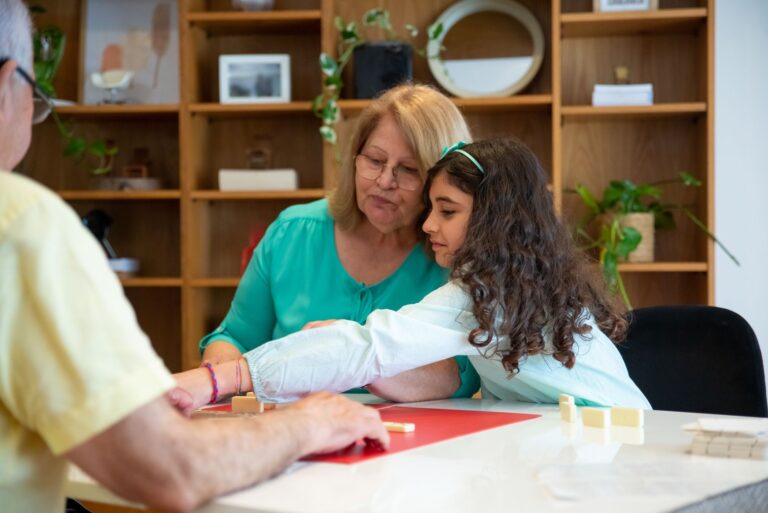
Caregivers choose games for shared family visits by starting from the person with dementia, a decline in memory and thinking that affects daily life, and matching interests, mood, energy, vision, hearing, mobility and attention to what feels comfortable. They then narrow the choice to a few games the whole family can enjoy, simplify the rules, and form mixed-age teams so players help each other.
The Alzheimer's Association advises taking cues from the person each day, offering what they like and can do, then trying something else if it does not work. That daily check matters more than age alone, according to Arcadia Senior Living's 2026 guide in engaging games for seniors in care homes. Connection, not winning, becomes the measure of a good visit.
Medical information disclaimer: This article is for general educational purposes only and does not provide medical advice, diagnosis, or treatment. Always consult a physician or other qualified health professional about symptoms, medications, tests, or treatment decisions.
Table of Contents
- Start with the person, not the game box
- How do you include every age at the table?
- Which games fit early- to mid-stage dementia?
- What works when words and focus fade?
Start with the person, not the game box
Look at today before you open a box. Check alertness, mood, pain, noise, light, glasses, and hearing aids. Offer one or two familiar choices and watch the response.
If attention fades, switch activities without pressure. Short, calm play protects dignity and keeps the visit warm. The person leads, and the family follows.
How do you include every age at the table?
Pick one shared game rather than several competing ones. BrightStar Care Chicago recommends junior or simplified versions when cognition has declined, plus mixed-age teams so members help each other, in tips for playing games as a family activity.
Give each child a clear helper role, such as rolling, dealing, moving pieces, or reading cards aloud. Keep turns quick and coaching kind.
- Choose one game everyone knows or can learn in two minutes
- Seat helpers beside the person with dementia
- Agree that fun counts more than score
Which games fit early- to mid-stage dementia?
For early- to mid-stage dementia, the Alzheimer's Association lists puzzles, card games, checkers, dominoes, naming presidents, and locating states for stimulating shared indoor time in indoor activities to keep people with dementia engaged in winter. Start with a long-enjoyed game such as bridge when it still fits.
Match difficulty to current thinking, movement, and senses. Use large-print cards, dominoes, bingo, word tiles, and photo pairs, and keep rounds to 15 to 25 minutes. Add yearbooks and scrapbooks as memory prompts, and record stories during the visit when the person wants to share.
What works when words and focus fade?
Shift toward reminiscence play. Play favorite music, sing together, look through photo albums, and ask about school, pets, and first cars.
These simple forms work even in late stages. A 2025 preliminary study of 36 people with dementia, mean age 86.1, found observed well-being during group board games exceeded discomfort, but cognitive scores improved only after the first month with no significant overall gain, reported by Guardabassi and colleagues in group board games and well-being in dementia. Plan the visit for comfort, laughter, touch, music, and time together.