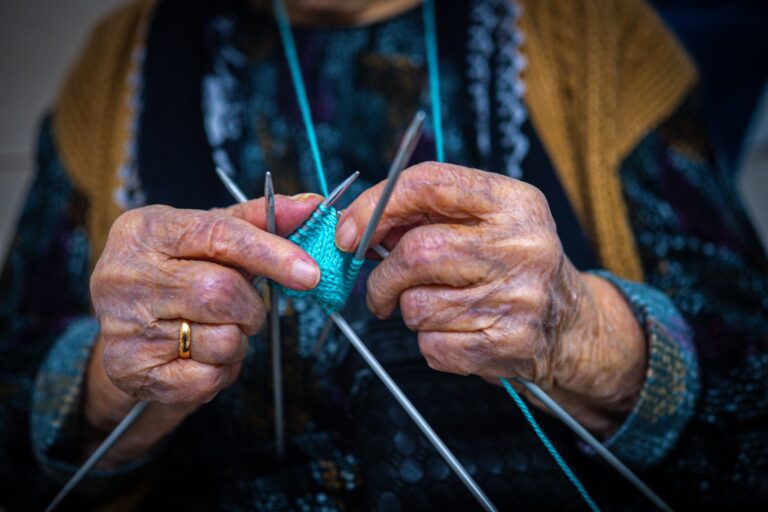
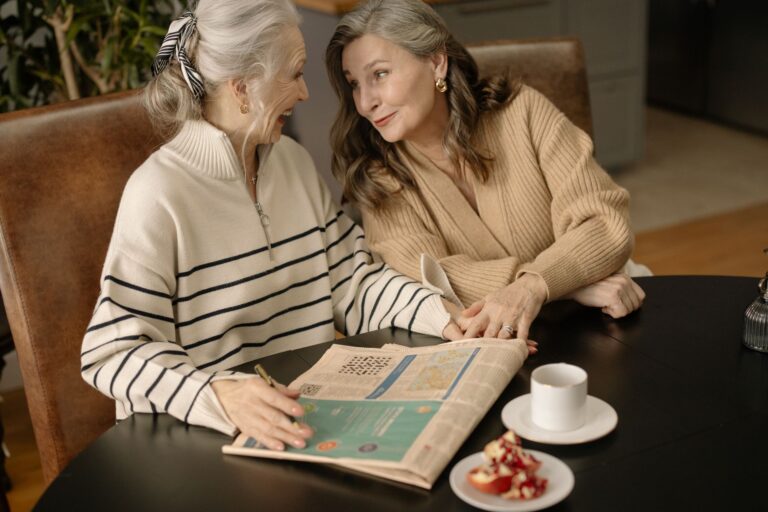
The activities that work best during holiday visits are the small, bounded ones: measuring an ingredient, handing up an ornament, opening cards together, or listening to familiar holiday music. The Alzheimer's Association recommends giving the person with dementia a real part in preparation — helping prepare food, wrap packages, decorate, or set the table — scaled down to a single step rather than leaving them to sit out while everyone else works. Dementia is a loss of memory, reasoning, and other thinking skills severe enough to interfere with daily life, and the central planning rule follows from that: choose activities that require no new learning. The second half of the job is managing the visitors themselves — how many arrive at once, when they come, what they expect, and whether anyone has told them what the person can do today.
Medical information disclaimer: This article is for general educational purposes only and does not provide medical advice, diagnosis, or treatment. Always consult a physician or other qualified health professional about symptoms, medications, tests, or treatment decisions.
Table of Contents
- Activities that require no new learning
- How many visitors, and when
- Brief the guests before they arrive
- The quiet room is part of the plan
- Permission to shrink the holiday
- Where the limits are
- Frequently Asked Questions
Activities that require no new learning
The Alzheimer's Association's holiday guidance names low-demand activities for time with guests: discussing gift selections, opening holiday cards together, and listening to holiday music. None of them asks the person to learn a rule, follow a sequence, or keep track of whose turn it is — which is exactly why they hold up when a board game does not. The same logic applies to preparation.
The Association's holiday tip sheet suggests scaling a familiar task down to its smallest piece: not baking the pie, but measuring one ingredient; not decorating the tree, but handing decorations up to whoever is on the stepladder. The activity keeps its meaning while the demand drops. Activities with a visitor in them do double work. A guest who sits down to sort through a card pile or a photo album has a script to follow, which spares both people the open-ended conversation that tends to expose memory gaps.
How many visitors, and when
Large gatherings can cause confusion and anxiety in people with Alzheimer's, and the National Institute on Aging's holiday hints for caregivers advises limiting how many visitors are present at any one time and scheduling rest periods — rather than concentrating everyone into one long event. In practice that means splitting the guest list across the day or across days.
Four people at eleven and four at three is a different event from eight people for six hours, even though the same relatives come. Timing matters as much as volume. Guidance based on NIA materials, summarized by the Wisconsin ADRC, suggests moving holiday dinner to lunch when the person is at their best around midday, since familiar routines and long-term memories hold up better than late-day demands.
Brief the guests before they arrive
The Alzheimer's Association tells caregivers to contact guests in advance — face to face, by phone, video chat, or email — about the person's current abilities, so visitors arrive with realistic expectations and know which activities and communication approaches actually work. This is the single step most likely to change how the day goes, and it costs one message. Two specific requests belong in that briefing: The same guidance steers visitors away from challenging board games, complicated electronics, dangerous tools, and pets — gifts that create a problem for the caregiver after the giver goes home.
- Do not correct the person when they misremember a name, a date, or an event.
- Choose gifts the person can use: comfortable clothing, favorite music, photo albums, or an identification bracelet.
The quiet room is part of the plan
NIA instructs caregivers to create a quiet space where the person can take a break or nap away from the gathering, and to keep quiet distractions ready — a family photo album is the example it gives — for when someone becomes overstimulated. Set this up before anyone arrives, not when it is needed.
A designated room with a chair, the album, and a closed door gives you somewhere to go in the moment instead of improvising in front of guests. Tell one other adult where it is and what it is for. That way the break does not depend on you being free to supervise it.
Permission to shrink the holiday
The Alzheimer's Association states plainly that no one should expect a caregiver to maintain every tradition or event. Its holiday page advises building on existing traditions and memories while trying gentler substitutes — watching seasonal movies together instead of hosting, for instance — on the reasoning that a tradition which fits caregiving duties beats one that does not. NIA adds the practical form of this: guard against fatigue and accept help, such as a potluck instead of cooking a full dinner.
Asking each guest to bring a dish converts your hardest hours into theirs. The strain behind that advice is measurable. The Association's 2025 Facts and Figures report counts more than 7 million Americans living with Alzheimer's and more than 19 billion hours of unpaid care valued above $446 billion, with 59% of dementia caregivers rating their emotional stress high or very high.
Where the limits are
This guidance assumes a person who can still participate in a familiar task with help. Someone further along may do better with music and a photo album alone, and the test is what works today rather than what worked last December.
None of these adaptations prevents a difficult day. They reduce the number of demands landing at once, which is the part a caregiver controls; the illness itself is not on that list. The Alzheimer's Association runs a free Helpline at 800-272-3900, staffed 24 hours a day, every day — including the holidays themselves, which is when a plan is most likely to come apart.
Frequently Asked Questions
What should I tell a relative who insists on correcting the person's memory?
The Alzheimer's Association advises asking guests in advance not to correct a misremembered name or event. Making the request before arrival avoids a confrontation in front of the person.
Is it better to host or to visit someone else?
Whichever one you can sustain. The Association's position is that a scaled-down tradition that fits your caregiving duties is preferable to one that does not — including substitutes like watching seasonal movies rather than hosting at all.
Should we keep the person out of kitchen and decorating work to avoid frustration?
No. The Association's tip sheet recommends involving them in a bounded piece of it — one ingredient, one handful of ornaments, setting the table — rather than having them sit out.