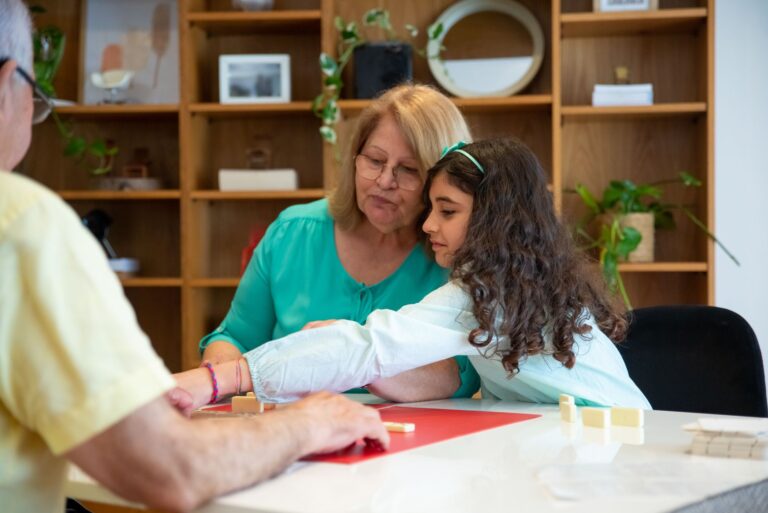
Caregivers say dementia patients lose interest in games because apathy — loss of interest and initiation — removes the drive to start play. Games also demand remembering rules, planning and sequencing, which become harder as motivation pathways change.
That shift can look like stubbornness or boredom. The Alzheimer Society of Sarnia-Lambton says apathy is a dementia symptom that is hard for care partners to cope with guide on helping with apathy. Recognizing it as a symptom helps caregivers change the setup instead of pressuring the person.
Medical information disclaimer: This article is for general educational purposes only and does not provide medical advice, diagnosis, or treatment. Always consult a physician or other qualified health professional about symptoms, medications, tests, or treatment decisions.
Table of Contents
- Is quitting games a warning sign?
- What changes in the brain?
- Why do familiar games get hard first?
- What helps at playtime?
Is quitting games a warning sign?
The Alzheimer's Association lists withdrawal from work or social activities among its 10 warning signs 10 warning signs. A person may quit hobbies, clubs, work projects or sports.
The Alzheimer Society of Sarnia-Lambton and Home and Community Care Ltd. report about 80 of 100 people with Alzheimer's develop apathy. Apathy can precede memory loss, worsens as dementia progresses, and is particularly common in frontotemporal dementia.
What changes in the brain?
The Alzheimer Society of Sarnia-Lambton links frontal lobe damage to impaired motivation, planning and sequencing of tasks. Neuroscientists connect these problems to changes in the brain's motivation pathways that produce apathy.
University of Sydney brain scans found profound anhedonia, or inability to feel pleasure, in frontotemporal dementia report on pleasure loss in dementia. The scans showed marked atrophy in frontal and striatal hedonic hotspots distinct from apathy and depression regions.
Why do familiar games get hard first?
The Maryland Senior Resource Network, summarizing the Alzheimer's Association, cites forgetting rules of a favorite game as an example. It also cites trouble remembering how to complete a favorite hobby or keep up with a sports team.
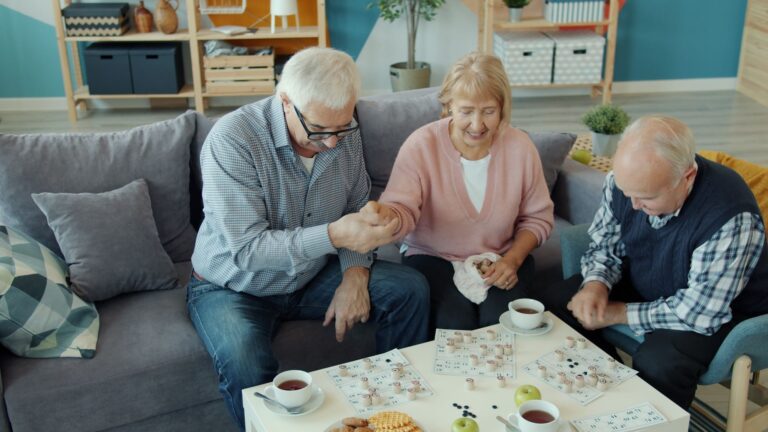
A card game needs rule recall, turn order and scoring. A board game needs planning, sequencing and attention to others. When those skills slip, the person may sit out, leave mid-game or refuse to start.
What helps at playtime?
The Alzheimer Society of Sarnia-Lambton advises choosing successful, failure-free activities, using small steps and adjusting tasks that overwhelm. Home and Community Care Ltd.
notes apathy is disengagement without sadness, hopelessness or worthlessness, so caregivers unsure which is present should consult a health professional. Say "time to play cards" and set out the cards.
- Choose one short, familiar game with no score pressure.
- Break play into small steps and set out the first move.
- Adjust rules, pieces or time so the task fits today.
- Prompt with "time to" rather than asking "do you want to?"