A dementia-friendly book uses large print, short simple language, and clear pictures that carry the meaning. Caregivers choose it by matching that format to the person's dementia stage and using it together for comfort and connection.
Dementia-friendly means easy to see, follow, and talk about. The right choice lowers effort and protects dignity. The wrong choice can cause frustration and withdrawal.
Medical information disclaimer: This article is for general educational purposes only and does not provide medical advice, diagnosis, or treatment. Always consult a physician or other qualified health professional about symptoms, medications, tests, or treatment decisions.
Table of Contents
- Does the book fit their stage?
- What should the page look like?
- Will the topic invite conversation?
- How do you read together without pressure?
Does the book fit their stage?
Early-stage readers can often use near-normal books with support. Middle and late stages need image-led books with simple descriptions read together to prompt recall. A Place for Mom advises matching the book to dementia stage in its stage-by-stage book guide.
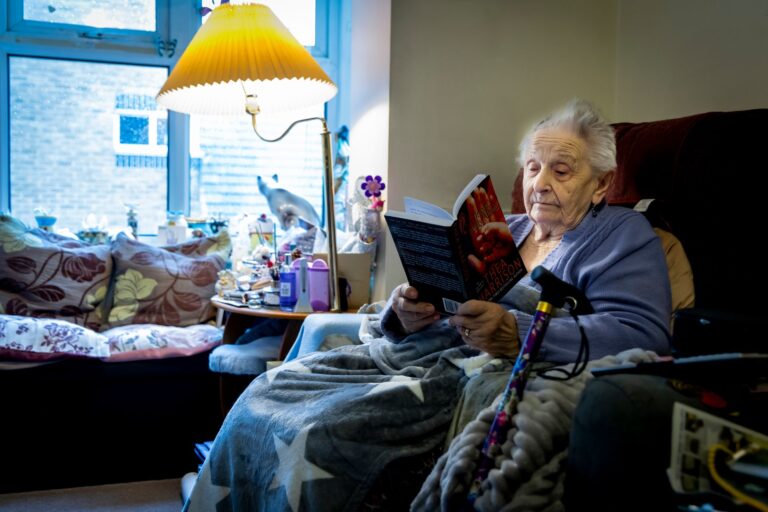
When longer text becomes hard, change the format rather than stopping. The ReaDementia guide summarizing Alzheimer's Society advice points to short stories, anthologies, magazines, poetry, audiobooks, or reading aloud together. Aim for comfort and connection, not testing memory.
What should the page look like?
Look for short mature stories, large type, wide breaks between paragraphs, and pictures or visual cues. Elgin County's dementia-friendly materials leaflet describes that combination to reduce reading effort in its dementia-friendly materials leaflet. The layout should let the eye rest and the meaning land quickly.
Prefer a linear plot with few characters, short easy paragraphs, and full-colour illustrations. The SWAN Libraries catalogue describes that design in books for early-stage readers who struggle with normal books. If the reader loses track of who is who, the book has too many threads.
Will the topic invite conversation?
Choose familiar past topics, photos, objects, and music that support reminiscence, conversation, and identity. The UK NICE guideline NG97 says to consider group reminiscence therapy for mild-to-moderate dementia.
A familiar kitchen tool, song, street scene, or holiday ritual can start more talk than a new plot. Keep the material adult and dignified, not childish. Kirklees Council Libraries uses poetry or prose with each image in adult picture collections that remain enjoyable even when speech is lost, as explained on its dementia support page.
- Early stage: simple chapter book with large print and some pictures
- Middle stage: short stories, poetry, or photo book read together
- Late stage: dignified picture book with one clear image per page
How do you read together without pressure?
Present language the way dementia communication guidance advises. The U.S. National Institute on Aging recommends one idea at a time, simple wording, yes-or-no or limited choices, slow pace, and extra response time.
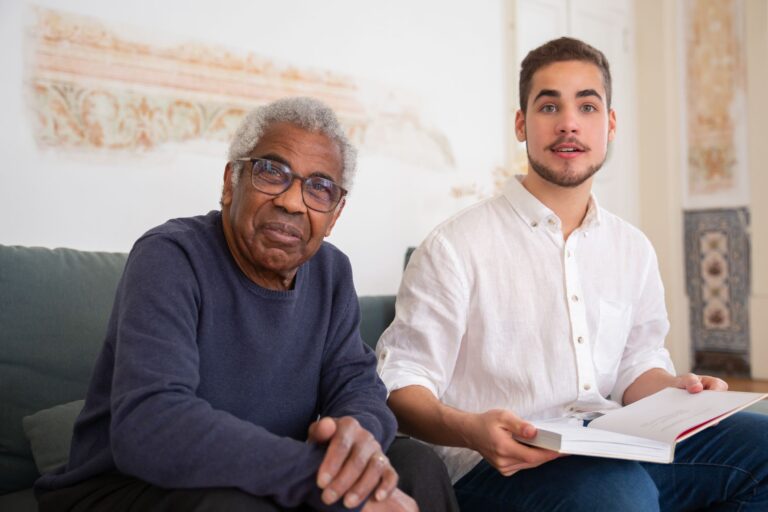
Let the person answer, point, smile, or simply look. Keep sessions short, follow their energy, and stop before tiredness sets in. The Reading Agency says its Reading Well for dementia list covers dementia, living with dementia, and carers and family, and is free in local libraries with e-books and audiobooks. Ask library staff to help you pick one title for the person and one for yourself.