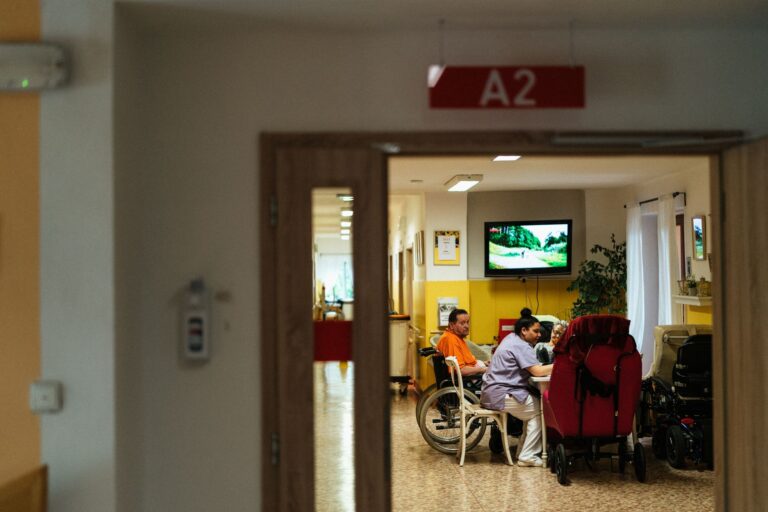
Injection training for the 2026 at-home Leqembi regimen teaches patients and caregivers to give weekly shots at home. Key follow-up decisions to revisit are staying with self-injection, changing dose or setting, and keeping scheduled brain safety scans.
Leqembi Iqlik (lecanemab-irmb) is an anti-amyloid therapy for early Alzheimer's that targets amyloid-beta protein in the brain. The Alzheimer's Association reports the FDA approved it on July 13, 2026 as a once-weekly under-the-skin starting dose for the full course at home Alzheimer's Association approval announcement. That shift makes training and return visits practical decisions, not one-time approvals.
Medical information disclaimer: This article is for general educational purposes only and does not provide medical advice, diagnosis, or treatment. Always consult a physician or other qualified health professional about symptoms, medications, tests, or treatment decisions.
Table of Contents
- Who Can Start At Home?
- What Does Home Training Require?
- What Does The Weekly Shot Involve?
- Which Safety Visits Still Need A Clinic?
- When Should You Reconsider Dose, Setting, Or Stopping?
Who Can Start At Home?
Treatment remains limited to adults with mild cognitive impairment or mild dementia due to Alzheimer's with confirmed amyloid-beta pathology. Confirmation typically uses PET scan or spinal-fluid testing before starting, according to the FDA label.
Without that proof, a home start is not ready to revisit. NeurologyLive reports this at-home start removes the prior rule in place since August 2025 that required 18 months of infusion-center IV treatment first. For people who paused during that IV phase, the choice to start, resume, or stay off treatment may be worth revisiting with their clinic.
What Does Home Training Require?
Eisai and Biogen state patients or caregivers may give Leqembi Iqlik at home only after at least two consecutive shots under provider supervision Eisai and Biogen press statement. That supervision includes instruction in the Instructions for Use and periodic checks of injection ability.
Eisai and Biogen describe home support as: Revisit who gives the shot if hands, vision, memory, or caregiver availability change. A missed practice step, a failed demo, or a new caregiver means repeating supervised doses. Ability is rechecked, not assumed.
- one-to-one device training with Nurse Educators in person or virtually
- Welcome Kit with treatment tracker and demo kit for practice
- step-by-step Instructions-for-Use video
- Leqembi Companion app for routine support
What Does The Weekly Shot Involve?
PharmExec describes the initiation regimen as 500 mg weekly given as two back-to-back 250-mg autoinjector shots of about 15 seconds each PharmExec approval summary. PharmExec also describes an option after 18 months to continue or switch to 360 mg weekly maintenance. The same regimen allows flexibility to alternate IV and under-the-skin dosing.
Use the tracker to record date, two shots, and who gave them. Keep the same weekday and bring the log to each visit. If doses are missed, if the second injector is skipped, or if travel breaks routine, ask the clinic whether to restart supervision or adjust setting.
Which Safety Visits Still Need A Clinic?
NeurologyLive and the FDA label warn Leqembi carries a boxed warning for amyloid-related imaging abnormalities, or ARIA, which means brain swelling or bleeding NeurologyLive approval report. ARIA can be serious, fatal, or silent and found only on MRI, so treatment requires a recent baseline MRI plus scheduled follow-up MRIs and ApoE epsilon-4 gene testing before treatment to inform risk.
NeurologyLive notes subcutaneous starting rests on blood-level equivalence and similar amyloid clearance from Clarity AD extension substudies, while the 27% slowing of decline at 18 months came from the IV core trial. Home-start patients still need clinic-based safety follow-up. Revisit the plan promptly for headache, confusion, dizziness, vision change, or unusual bleeding or bruising.
When Should You Reconsider Dose, Setting, Or Stopping?
After 18 months, decide with the prescriber whether to stay on initiation dosing, move to 360 mg weekly maintenance, or alternate between IV and shots. That choice depends on tolerance, MRI results, injection skill, and caregiver capacity.
Periodic reassessment of injection ability is part of the prescription. Return to supervised or infusion-center care if ARIA appears, if MRIs fall behind, if shots are often missed, or if the caregiver changes. Bring the treatment tracker to each visit so dose, setting, and safety scans can be reset together.
You Might Also Like
- FDA’s 2026 At-Home Leqembi IQLIK Starting Dose: Follow-Up Decisions People With Mild Cognitive Impairment May Need to Revisit
- At-Home Leqembi vs IV Infusions After the 2026 FDA Decision: Follow-Up Decisions People With Mild Cognitive Impairment May Need to Revisit
- MRI and ARIA Monitoring With At-Home Leqembi in 2026: Follow-Up Decisions People With Mild Cognitive Impairment May Need to Revisit