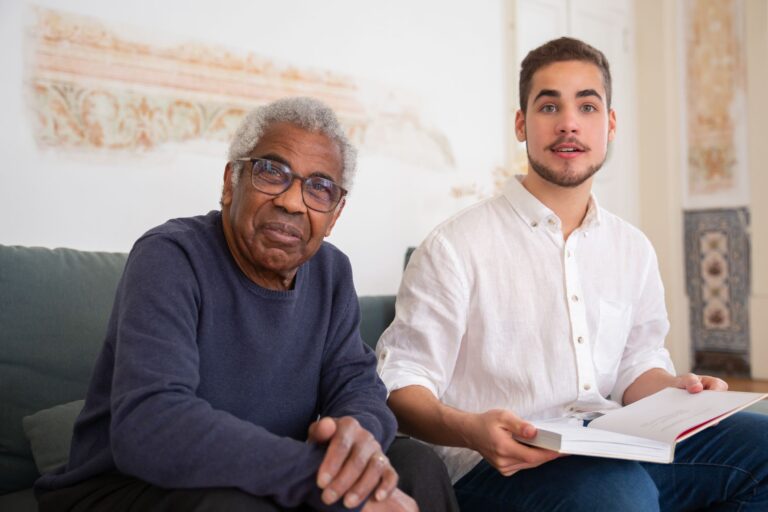
Early dementia detection across care settings means noticing memory and thinking changes in primary care, hospitals and follow-up visits, not only in specialty clinics. The 2026 National Institute on Aging summit and the Canadian National Institute on Ageing report agree that this cross-setting detection is uneven, and the resulting delays leave working caregivers without timely diagnosis and support.
For an employed caregiver, late detection has practical costs. It postpones treatment discussion, community supports, trial referral and workplace planning. It also shifts more hands-on care to families.
Medical information disclaimer: This article is for general educational purposes only and does not provide medical advice, diagnosis, or treatment. Always consult a physician or other qualified health professional about symptoms, medications, tests, or treatment decisions.
Table of Contents
- Where early detection breaks down
- Five service gaps that follow a missed diagnosis
- Why working caregivers feel these gaps first
- What to ask for when you raise a concern
Where early detection breaks down
Mild impairment often goes unrecognized in primary care. Short visits and competing demands limit time for evaluation. That limits referral for fuller testing, treatment, community supports and trials. The UCSF Division of Geriatrics reports that the U.S.
National Institute on Aging held its 2026 Dementia Care and Caregiving Research Summit virtually March 17-19, 2026, including a panel on progress in early detection across care settings by Anna Chodos UCSF summit summary. The focus on older adults across settings matters because many first concerns appear outside dementia specialty care. A missed early sign can look ordinary. A parent refills prescriptions late, misses bills or withdraws from driving. Without a clear detection path, families wait until a fall, hospitalization or crisis prompts action.
Five service gaps that follow a missed diagnosis
The National Institute on Ageing in Canada identifies five persistent gaps in its second report in a three-year series: diagnostic delays, primary-care capacity gaps, inconsistent post-diagnostic supports, poorly coordinated care, and barriers to equitable and culturally safe care Canadian dementia-care report. Each gap affects whether a family gets a clear next step after raising a concern. The scale of missed detection is large. That Canadian report estimates 772,000 Canadians live with dementia, while a global 61.7 percent undiagnosed rate suggests as many as 2 million Canadians may be affected.
The difference points to people living with symptoms without a diagnosis or plan. Post-diagnostic support is often the thinnest part. Families may leave with a label but no care coordinator, home support contact, education or follow-up schedule. Poor coordination then forces the working caregiver to carry records, repeat history and arrange services alone.
Why working caregivers feel these gaps first
Unpaid dementia care takes time during work hours. The USC Schaeffer Center estimates that in the U.S. in 2026, about 5.2 million people, often in prime working years, provided 6.8 billion hours of unpaid dementia care valued at 237 billion dollars within 818 billion dollars in total costs USC dementia-cost study. Those hours include appointments, supervision, meals, transport and crisis response. Most family caregivers also hold jobs.
About 63 million U.S. adults provide family care and 7 in 10 working-age caregivers are employed, with about half of employed caregivers reporting disruptions such as arriving late, leaving early or reduced hours. A delayed diagnosis extends the period of unpaid trial and error. The burden is concentrated in households. More than 12 million unpaid caregivers provided an estimated 19.6 billion hours of Alzheimer's and dementia care in 2025 valued at 446.3 billion dollars. Earlier detection cannot remove caregiving, but it can move help, benefits and workplace arrangements earlier.
What to ask for when you raise a concern
Bring one concrete change and one date. Name the observed change, when it started and what is no longer safe alone. Ask whether brief cognitive testing, medication review, hearing and vision check, depression and sleep review, and referral for fuller evaluation are appropriate. After any visit, request a written plan before leaving: Standard tests do not work equally well for every group.
Standard cognitive tests can miss early signs in Indigenous and other underrepresented groups, prompting a 19.5 million dollar NIA grant to the University of Minnesota Memory Keepers team to develop culturally adapted assessments. If test language, schooling, hearing or cultural context may affect results, say so and ask how it was considered. Canada's NIA sets four fixes: national dementia-care standards, enabling providers, more equitable care and common progress metrics. For families, the practical test is whether coordinated post-diagnostic support is available where they live. Keep asking for a named contact for the next change.
- working diagnosis or differential, and what would change it
- referrals placed, expected wait and who follows up
- community supports, education and caregiver resources
- date for review of results and symptoms
You Might Also Like
- Support for People Without Care Partners in the 2026 NIA Report: Service Gaps That Matter to Working Dementia Caregivers
- Strengths-Based Dementia Care in the 2026 NIA Report: Service Gaps That Matter to Working Dementia Caregivers
- Culturally Responsive Caregiver Support in the 2026 NIA Report: Service Gaps That Matter to Working Dementia Caregivers