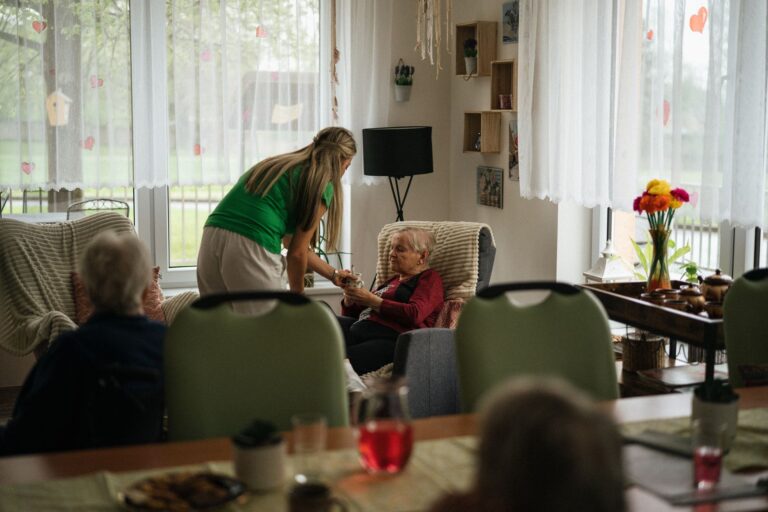
Food pocketing is holding food in the cheeks, under the tongue or on the gums without swallowing. Caregivers can lower risk with upright seating, small bites, short prompts such as "chew, then swallow," mouth checks and steady pacing. Pocketing often affects people with mid-to-late dementia, when memory loss and weaker mouth control disrupt chewing and swallowing. Hospital illness, new medicines and fatigue can make it worse just after discharge home.
Medical information disclaimer: This article is for general educational purposes only and does not provide medical advice, diagnosis, or treatment. Always consult a physician or other qualified health professional about symptoms, medications, tests, or treatment decisions.
Table of Contents
- Why pocketing happens in dementia
- Why a pocketed bite is unsafe
- What to say bite by bite
- How to set up safer meals after hospital
- When to call the care team
Why pocketing happens in dementia
Pocketing is an oral-phase swallowing problem. Weak or slow tongue movement fails to push food back to start a swallow. Newcastle Hospitals NHS Foundation Trust describes this pattern in its eating and drinking difficulties guidance. People with mid-to-late dementia face the highest risk.
Cognitive decline can impair recognition of food, hunger and the need to swallow. Brain changes also weaken coordination of chewing and swallowing muscles. A person may stare, chew very slowly, store food or seem to forget the next step. This is not stubborn behavior. It signals that the mouth and brain need more time and support.
Why a pocketed bite is unsafe
Food left in the mouth can slip into the airway after the meal. That event can cause choking or aspiration pneumonia. Aspiration pneumonia is a leading cause of death in frail people with dementia. Risk rises when bites come too fast.
A fresh spoonful can push loose food toward the throat before the last swallow finishes. Talking, drowsiness and lying back add danger. A clear mouth matters as much as a swallowed bite. Always confirm the last bite is gone before offering more. Stay alert for coughing, wet voice, extra effort or food found later.
What to say bite by bite
Keep words short, calm and consistent. Alzheimer's Society UK shares similar prompts in its ideas from a speech and language therapist.
Reduce competing noise and movement. Turn off the television, sit at eye level and keep the table clear. Let the person focus on chewing, swallowing and swallowing again.
- Offer one small spoonful at a time.
- Say "chew, then swallow" in a steady voice.
- Say "no talking while food is in your mouth."
- Ask for "one more swallow" before the next bite.
- Pause and wait rather than urging speed.
How to set up safer meals after hospital
Seat the person fully upright with the head slightly forward. Keep them upright for about 20–30 minutes after eating. Check that the cheeks, gums and tongue area are empty before moving, drinking or lying down. Keep exactly to the textures and fluid thickness listed on the discharge summary until reassessed.
Hospital stays often worsen swallowing, so do not advance foods because appetite looks better for one day. Bucks Healthcare NHS explains this home risk in its Swallowing Matters guide. Make each plate easier to manage. Serve small portions, soft moist foods at the prescribed level and a spoon that fits the mouth. Offer drinks only at the advised thickness and pace.
When to call the care team
Ask the GP, speech-language pathologist or physician promptly for coughing, gurgly voice, pocketing, weight loss or chest infections. They test swallowing stages and prescribe diet levels, postures and exercises. Bring the discharge summary, medicine list and recent examples.
Note which foods stick, how long meals take and any fever, cough or lost weight. Ask whether dry mouth, sedation or missed mouth care may add to the problem. Home tactics and softer foods do not cure progressive swallowing decline. Combine daily mouth checks, tooth and mouth care and medicine review with professional follow-up.