Food pocketing is holding food in the cheeks or mouth without swallowing. For a respite stay, fix the eating space and update the care plan to support each swallow. East Sussex Healthcare NHS Trust links it to forgetting the chew-swallow sequence and weaker oral coordination guidance on swallowing difficulties and dementia. The National Institute on Aging warns that poor chewing and swallowing in later Alzheimer's raise choking risk care in the last stages of Alzheimer's disease.
Medical information disclaimer: This article is for general educational purposes only and does not provide medical advice, diagnosis, or treatment. Always consult a physician or other qualified health professional about symptoms, medications, tests, or treatment decisions.
Table of Contents
- Why does pocketing turn dangerous?
- Which signs mean ask for swallowing help?
- How should the eating space change?
- What should the respite handover include?
Why does pocketing turn dangerous?
Dementia can split eating into unfinished steps. The person chews, pauses, then misses the swallow. Soft rice, minced foods, or bread can rest in the cheek unnoticed.
The next bite then pushes food onto stored food. That stack raises choking risk fast. The National Institute on Aging notes food entering the lungs can cause aspiration pneumonia that can lead to death. Spotting stored food early keeps a small delay from becoming an emergency.
Which signs mean ask for swallowing help?
Pocketing alone should prompt a closer watch. Somerset NHS Foundation Trust lists it with other referral signs for speech and language therapy.
Do not wait for weight loss or a chest infection. A referral brings a swallowing check and a clear food plan.
- pocketing or losing food
- persistent cough
- chest infections
- cannot start a swallow
- voice change
How should the eating space change?
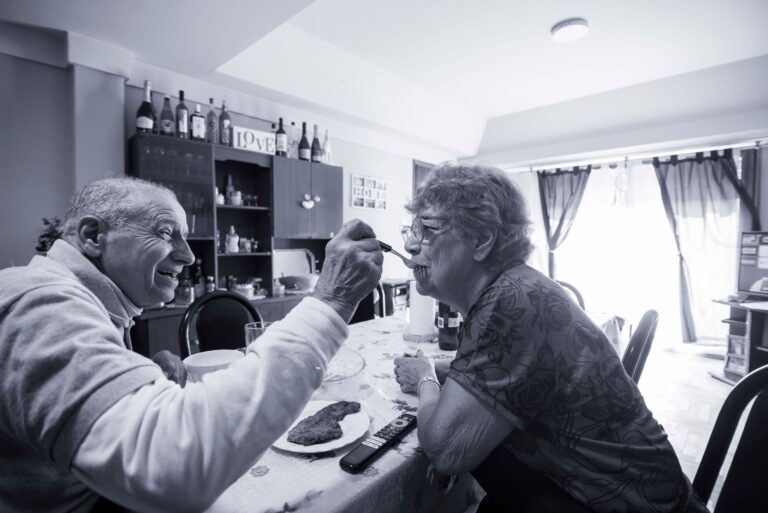
Cambridge University Hospitals NHS guidance describes a calm, well-lit, low-distraction table for dementia meals dietary information for carers of patients with dementia. The same guidance advises upright 90-degree seating, kept for 30 minutes after meals.
The Alzheimer's Association advises soft, moist, bite-size or ground foods and extra time. It warns against hard items such as nuts, popcorn, and raw carrots.
- calm, well-lit, low-distraction table
- upright 90-degree seating, kept 30 minutes after meals
- simple place setting with contrast plate
- easy-grip cup
What should the respite handover include?
Write swallow needs into every respite handover. Centers for Medicare and Medicaid Services GUIDE funds assessment, care planning, and up to $2,500 yearly respite through in-home, day-center, or facility providers. List seating, bite pace, texture, and who to call about swallowing. Offer one bite at a time and check the mouth is empty before the next bite.
Prompt chewing and swallowing, check for retained food, and support oral hygiene and dentures. Cambridge University Hospitals NHS guidance and Alzheimer's Society factsheet 511 describe these checks. A speech and language therapist assesses swallowing and advises the safest food texture and drink thickness. Chelsea and Westminster NHS and Marie Curie guidance warns that texture or fluid changes should be made only with professional advice end-of-life eating leaflet for dementia. Give each respite provider the current texture, thickness, seating, and mouth-check steps on one page.