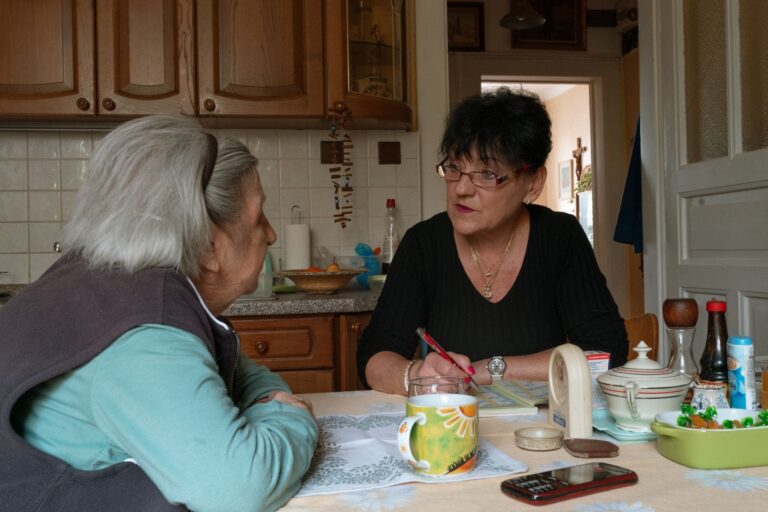
Food pocketing is holding chewed food in the cheeks or mouth without swallowing. Caregivers can use short cues like "Now chew" and "Try to swallow," give one small bite at a time, and wait for each swallow.
Right at Home Seattle Eastside calls it a common oral-phase swallowing sign in middle-to-late dementia, explained in its guide to appetite changes with dementia. Oral phase means the mouth stage of swallowing. The Alzheimer's Association notes swallowing problems can bring choking and weight loss even when the person still eats.
Medical information disclaimer: This article is for general educational purposes only and does not provide medical advice, diagnosis, or treatment. Always consult a physician or other qualified health professional about symptoms, medications, tests, or treatment decisions.
Table of Contents
- What does pocketing look like?
- What can you say during the bite?
- How do you set up a safer swallow?
- When should you call for help?
What does pocketing look like?
Look for full cheeks after chewing stops, food still visible after a pause, or food found during a mouth check. The person may keep eating while swallowing lags behind. Nursing guidance for at-risk patients stresses watching for this retained food.
Absence of cough does not prove safe swallowing. HelpDementia.com, citing the Massachusetts Department of Public Health dysphagia fact sheet, notes many people aspirate silently. Drooling, throat-clearing, wet voice, or food sticking also warrant medical review. Aspiration means food or liquid enters the airway.
What can you say during the bite?
Keep language short, calm, and one step at a time. Right at Home Seattle Eastside suggests prompts such as "Now chew" or "Try to swallow." Say the person's name first, then one cue, then pause.
Give one small bite at a time and wait for each swallow. Stay unhurried and keep distractions low. Repeat the same cue rather than adding new words.
- Say "Take one bite," then wait.
- Say "Now chew," then wait.
- Say "Try to swallow," then check.
How do you set up a safer swallow?
Seat the person fully upright with head slightly forward, as described in the Alzheimer's Association Food and Eating guidance. Gently correct backward head tilt forward. Keep the person upright through the meal.
Check the mouth after the meal to confirm food was swallowed. Nursing guidance for at-risk patients is to remove retained food to prevent later aspiration. Use SLP-directed positioning such as chin-down only after speech-language review. SLP means speech-language pathologist.
When should you call for help?
Pocketed food can later fall into the airway, especially when lying flat. HelpDementia.com reports repeated aspiration can cause aspiration pneumonia, a major decline risk in advanced dementia, in its summary of swallowing safety risks. Pneumonia from inhaled food is aspiration pneumonia.
For repeated pocketing, coughing, or choking, alert the physician promptly. East Sussex Healthcare NHS Trust Speech and Language Therapy advises speech-language and dietitian review for softer textures, bite-size pieces, or thickened liquids, in its swallowing difficulties and dementia page. Never force-feed.