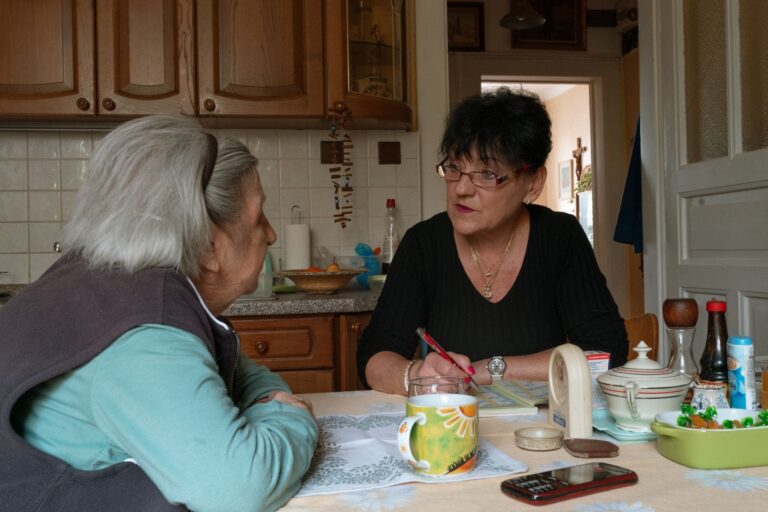
Food pocketing in dementia home care calls for a calmer dining space and a care plan built around upright seating, soft foods, and mouth checks. Food pocketing means holding chewed food in the cheeks or under the tongue for a long time without starting a swallow, according to Yoon Speech and Swallowing in its dementia eating and swallowing guide. Dementia disrupts attention, memory, food recognition and movement planning, and later weakens the swallow, according to Yoon Speech and Swallowing. That change makes a person forget to swallow or pull food and drink into the airway.
Medical information disclaimer: This article is for general educational purposes only and does not provide medical advice, diagnosis, or treatment. Always consult a physician or other qualified health professional about symptoms, medications, tests, or treatment decisions.
Table of Contents
- Why does pocketed food cause harm?
- How should the dining space change?
- How should seating and pacing change?
- What should the care plan include?
Why does pocketed food cause harm?
In middle- and late-stage Alzheimer's, swallowing problems can bring choking and weight loss. Aspirated food, liquid or saliva can cause aspiration pneumonia, according to the Alzheimer's Association in its food and eating guidance. Food held in the cheeks can slip toward the airway later, after the meal seems finished.
Pocketing is not stubbornness or refusal. It reflects lost focus and a lost sequence for chewing and swallowing. Rushing or repeated prompts rarely clear the mouth.
How should the dining space change?
Use a calm, well-lit, low-distraction dining space. Hometouch home-care guidance recommends turning off TV and radio, keeping familiar routines, and allowing extra unrushed time to eat in its dementia eating problems guide. Simplify what the person sees at the table.
Experts at SpeechPathology.com advise using placemats, contrast, lighting, and one food at a time in modifying the environment during mealtime. Keep the same seat, dishes, and mealtime routine. Give extra time so swallows can finish before the next bite.
- Place a mat to mark personal eating space
- Use high contrast between plate and mat or table
- Offer one food at a time under good diffuse light
How should seating and pacing change?
Seat the person fully upright near 90 degrees with the head slightly forward. The helper sits at eye level, according to Yoon Speech and Swallowing. That position supports attention, chewing, and a safer swallow.
Stay unrushed during the meal and upright for at least 30 minutes after eating. Watch the mouth and throat for held food rather than assuming a swallow happened. Pause between bites until the mouth looks empty.
What should the care plan include?
Cut food small and soft and avoid hard foods like raw carrots, according to the Alzheimer's Association and Yoon Speech and Swallowing. Check the mouth after meals for leftover food.
Use small bites that are easy to see and move. Get medical plus speech-therapy assessment when warning signs appear. Ask for medical plus speech-therapy assessment when coughing, wet voice, long meals, or chest infections appear.
- Coughing during or after meals
- Wet or gurgly voice
- Very long meals
- Chest infections