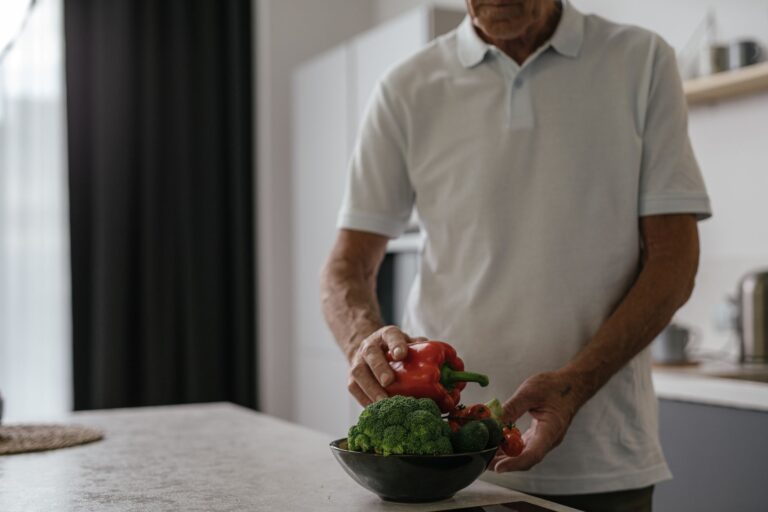
Caregivers can support dementia and heart health by serving less sodium, choosing fresh foods, and seasoning without salt. A heart-healthy diet is also a brain-healthy diet, built on vegetables, fruits, whole grains, low-fat dairy, and lean protein. Sodium is the mineral in salt that affects blood pressure. The American Heart Association advises adults to stay below 2,300 mg per day, about one teaspoon of salt, with under 1,500 mg as a better goal for many people with high blood pressure.
Medical information disclaimer: This article is for general educational purposes only and does not provide medical advice, diagnosis, or treatment. Always consult a physician or other qualified health professional about symptoms, medications, tests, or treatment decisions.
Table of Contents
- Why does sodium matter after 60?
- Where is hidden sodium?
- What does a lower-sodium day look like?
- How can you keep flavor with less salt?
Why does sodium matter after 60?
Older bodies grow more sensitive to salt. The National Institute on Aging and national kidney experts advise older adults to keep total sodium below 2,300 mg per day from packaged foods, cooking, and table salt. High blood pressure strains the heart and blood vessels that feed the brain.
Normal blood pressure is below 120/80 mm Hg, and risk rises above that level. Steady control helps daily energy, mobility, and long-term brain health. The Alzheimer's Association advises balanced meals with vegetables, fruits, whole grains, low-fat dairy, and lean protein while limiting saturated fat, cholesterol, sugar, and red meat. Diet alone is not proven to treat Alzheimer's symptoms, but steady eating patterns make care easier.
Where is hidden sodium?
According to the Food and Drug Administration, more than 70% of dietary sodium comes from packaged and prepared foods rather than salt added during cooking or at the table, so caregivers should target processed items first how the FDA explains sodium in your diet. Bread, soup, and deli meat can add large hidden doses. Federal disease-prevention experts list leading contributors as deli-meat sandwiches, soups, pizza, poultry dishes, savory snacks, pasta dishes, breads and rolls, and cheese.
That matters in dementia care because familiar foods may seem harmless. A sandwich with deli turkey, cheese, and bread can carry three salty parts at once. Soup from a can or restaurant bowl can do the same.
What does a lower-sodium day look like?
The National Heart, Lung, and Blood Institute describes the DASH eating plan as about 4-5 servings each of vegetables and fruit daily plus whole grains and low-fat dairy, capped at 2,300 mg sodium the NHLBI DASH eating plan. A 1,500 mg level can lower blood pressure further. A simple day might include oatmeal with fruit, a large vegetable salad with beans, and baked poultry with brown rice and greens. Milk or yogurt, unsalted nuts, and fresh fruit can fill gaps.
Water remains the main drink. Keep portions steady and repeat meals that work. People with dementia often eat better with routine, color contrast, and finger-friendly pieces. Save new recipes for calm moments, not rushed evenings.
How can you keep flavor with less salt?
Cook more meals at home and choose fresh foods over processed ones. The National Institute on Aging suggests seasoning with herbs, spices, garlic, lemon juice, or citrus peel instead of salt.
Small swaps add up across a week: The Food and Drug Administration says 5% Daily Value or less per serving is low in sodium and 20% or more is high, so comparing labels helps pick lower-sodium breads, soups, and deli meats the FDA interactive Nutrition Facts label guide. Start by swapping the highest-sodium staple in the kitchen, then fix the next one.
- Choose fresh poultry, fish, or beans instead of deli meat
- Pick plain rice, oats, or pasta and add your own herbs
- Buy no-salt-added soup or make a quick vegetable soup
- Rinse canned beans and compare bread labels before buying