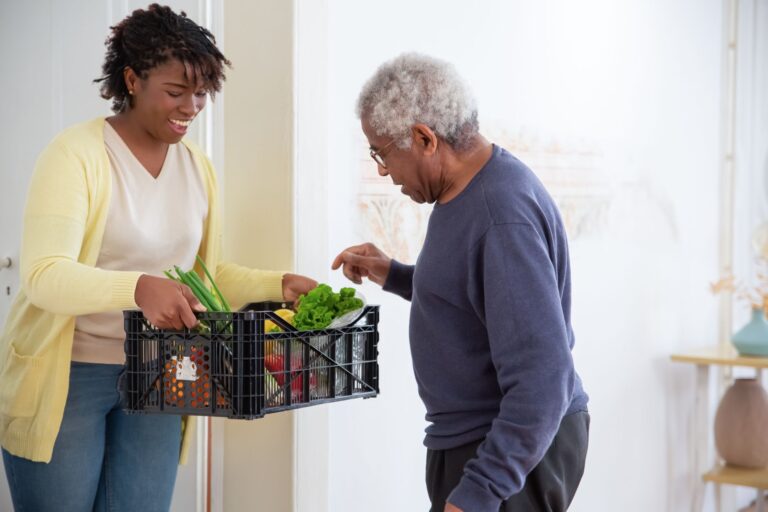
The most common mistake is waiting for a person with dementia to ask for a drink. Thirst fades with age and dementia removes the memory, planning and language that turn thirst into a cup of tea — so a carer who offers drinks only on request is rationing fluid without meaning to. The other frequent errors follow from that one: trusting a dry mouth or dark urine to tell you when to worry, missing a swallowing problem, counting only plain water, and leaving a cup on a side table where it is never seen. Each is fixable at home, and the evidence below shows which fixes matter most.
Medical information disclaimer: This article is for general educational purposes only and does not provide medical advice, diagnosis, or treatment. Always consult a physician or other qualified health professional about symptoms, medications, tests, or treatment decisions.
Table of Contents
- Why "he says he isn't thirsty" is not reassurance
- The bedside signs most carers rely on do not work
- The swallowing problem nobody tested for
- How much, and what counts
- Offering a drink so it actually gets drunk
- Frequently Asked Questions
Why "he says he isn't thirsty" is not reassurance
Thirst is a weaker signal in later life, independent of dementia. In a classic experiment reported by Phillips and colleagues in the New England Journal of Medicine, healthy men aged 67 to 75 went 24 hours without water, then reported significantly less thirst and drank less than young men who had lost the same proportion of body weight. Their hormonal response to dehydration was intact or heightened. The body knew; the sensation did not. Dementia adds its own layers.
The person may no longer recognise the cup, remember drinking an hour ago, or find the words to ask. Apathy, depression and fear of needing the toilet all reduce intake further. None of this shows up as a complaint. The scale of the problem is measurable. A systematic review in *Clinical Nutrition*, published online in June 2023, estimated that about a quarter of non-hospitalised older adults were dehydrated — 34% in long-term care against 19% living in the community. The authors rated the evidence quality low because the studies varied widely, so treat the figure as an order of magnitude, not a precise rate.
The bedside signs most carers rely on do not work
Families are routinely taught to check for a dry mouth, pinch the skin, or look at urine colour. A Cochrane review by Hooper and colleagues, published in April 2015, assessed 67 such bedside tests in people aged 65 and over and found none reliable on its own for detecting water-loss dehydration. Dry mouth, feeling thirsty, urine colour, urine volume, heart rate and fluid-intake records all miss people who are dehydrated and wrongly flag people who are not. The practical consequence is that you cannot run a daily spot-check and conclude everything is fine. Dry mouth has other causes — mouth-breathing, anticholinergic drugs, oxygen. Urine colour shifts with beetroot, B vitamins and some medicines.
So the guideline bodies invert the logic. The European Society for Clinical Nutrition and Metabolism's geriatrics guideline, 82 evidence-based recommendations published in *Clinical Nutrition* in 2019 with a practical update in 2022, states that every older person should be considered at risk of low-intake dehydration and actively encouraged to drink — not screened only once symptoms appear. For a home carer, that means a routine, not a watch for warning signs. The stakes justify the routine. A Nottingham cohort study of 32,980 medical admissions aged 65 and over, published in 2015, found that dehydration as the primary diagnosis carried 17% 30-day mortality and 44% one-year mortality, against 7% and 25% in those without it. Dehydration that developed in hospital roughly doubled the odds of death. Acute kidney injury occurred in 47.7% of dehydrated patients versus 15.9%, and median stay was eight days versus three.
The swallowing problem nobody tested for
Oropharyngeal dysphagia — unsafe or ineffective swallowing in the mouth and throat — is far more common in dementia than most families are told. A prospective study of 255 older patients with dementia, published in *Nutrients* in 2020, found it in 85.9%, and 82.7% of those affected needed their fluids thickened. Clinical screening at the bedside detects only 32–45% of cases, while instrumental testing detects 84–93%. Unsafe swallowing is routinely missed at home. The signs are quiet.
A cough or a wet, gurgly voice after sips, a chest infection that keeps returning, refusing drinks while still accepting food, or holding liquid in the mouth. Any of these is a reason to ask the GP for a speech and language therapy referral, not to push harder. But thickened fluids carry their own trap, and this is where good intentions backfire. Across two parallel reviews summarised in *Nutrients* in June 2022, nine of ten studies measuring intake found people on thickened fluids drank less than basal water requirements, and the one relevant randomised trial found dehydration significantly more common on thickened fluids. A 2025 meta-analysis found that adding a scheduled plain-water protocol significantly increased intake. If a thickener has been prescribed, the volume drunk must be tracked and discussed with the therapist — safety from aspiration does not come free.
How much, and what counts
The European Food Safety Authority sets adequate total water intake at 2.0 litres a day for women and 2.5 litres for men, at moderate temperature and activity. Crucially, that figure counts drinking water, all beverages and the moisture in food together. Food supplies roughly 20–30% of it, so a target expressed as "two litres from the cup" overstates what anyone needs to drink. This matters because unrealistic targets produce two bad outcomes: a carer who nags and meets refusal, or a carer who gives up.
Soup, yoghurt, melon, stewed fruit, jelly and milky puddings all contribute. So do hot drinks: Dementia UK tells carers that tea and coffee count toward daily fluid intake and advises offering a variety of hot and cold drinks, which directly contradicts the household rule that only plain water is real hydration. Adjust upward in hot weather, during a fever, with vomiting or diarrhoea, and on diuretics. If a clinician has set a fluid restriction for heart or kidney disease, that instruction overrides the general figure.
Offering a drink so it actually gets drunk
The last common mistake is mechanical. A full mug placed on a side table is, to someone with dementia, often not a drink at all — it is an object outside the field of attention. Carer guidance from the Royal Devon University Healthcare NHS Foundation Trust sets out a different approach, and the details are small but deliberate: Two more things help in practice.
Offer the drinks the person liked before the diagnosis, in a cup they recognise — a familiar china mug often works where an unfamiliar beaker does not. And never withhold fluid to manage incontinence; it concentrates the urine, irritates the bladder and tends to make urgency worse rather than better. If the person has become drowsy, newly confused beyond their usual baseline, or has stopped passing urine, that is a same-day call to the GP or 111 rather than a hydration plan — the Nottingham data shows how quickly dehydration in this age group turns into acute kidney injury.
- Offer small amounts frequently — half to three-quarters of a cup at a time — rather than a large glass to finish.
- Offer drinks through the day on a rhythm, instead of waiting to be asked.
- Say aloud what the drink is as you hand it over.
- Place the cup into the person's hand as a prompt, rather than leaving it beside them.
- Anchor drinks to events already in the day: waking, each meal, medication rounds, the return from a walk, a favourite television programme.
Frequently Asked Questions
Should I keep a fluid chart at home?
It is useful for spotting trends and for showing a GP, but do not treat it as a dehydration test. The Cochrane review found fluid-intake records among the bedside measures that miss dehydrated people and wrongly flag hydrated ones. Use it to check whether your routine is working, not to rule out a problem.
My relative refuses drinks completely. What now?
Rule out pain, mouth ulcers, ill-fitting dentures, thrush and a swallowing problem before treating it as behaviour. Persistent refusal of liquids while food is still accepted is a recognised dysphagia sign and warrants a speech and language therapy referral.
Does caffeine cancel out the fluid in tea and coffee?
No. Dementia UK counts tea and coffee toward daily fluid intake and recommends offering a variety of hot and cold drinks. For someone drinking too little overall, a cup they will actually finish beats a glass of water they will not.