Caregivers donate unused toys to a memory care facility by calling ahead and asking for the activities or life-enrichment director, describing exactly what the items are, and letting that staff member decide whether the unit can accept them. Nothing should be dropped at the front desk unannounced — a memory care unit has infection-control rules, limited resident storage, and a clinical position on childlike objects that decides the answer before the bag is opened.
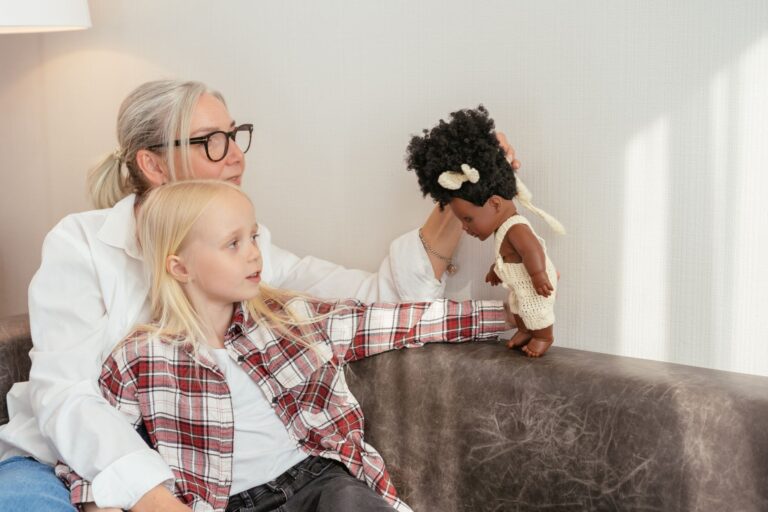
The most common donation of this kind is a therapeutic doll, and there is an established route for it. Pearl's Memory Babies, a Shepherdsville, Kentucky 501(c)(3), buys baby dolls, repackages each one with a diaper, hat and blanket, and delivers them free to memory care units; its site says care facilities nationwide are requesting them. Routing a donation through a program like that solves the two problems a personal drop-off creates: the facility has already agreed to receive the items, and the items arrive in a condition the unit can use.
Medical information disclaimer: This article is for general educational purposes only and does not provide medical advice, diagnosis, or treatment. Always consult a physician or other qualified health professional about symptoms, medications, tests, or treatment decisions.
Table of Contents
- Who to call, and what to say
- Why a facility can say no
- The dignity test your donation has to pass
- What the evidence on therapeutic dolls actually shows
- Donating for a relative at home
- The tax question
- Frequently Asked Questions
Who to call, and what to say
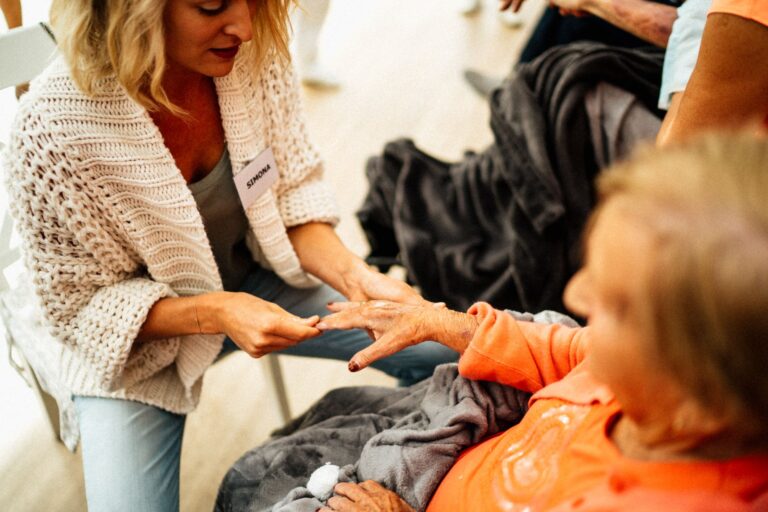
The person who decides is the activities director or life-enrichment coordinator — the staff member who plans resident programming and knows which residents respond to what. Administrators and receptionists usually route the question to them anyway, so asking for that title first saves a week of callbacks. At Glenwood Care and Rehabilitation, activities director Krystal Hanze found Pearl's Memory Babies on Facebook and contacted the nonprofit herself in October; the dolls arrived and the facility held a "baby shower" for residents. The donation worked because it started with programming staff, not a lobby handoff. Be specific on the phone.
Say what the items are, how many, whether they are new or used, what they are made of, and whether they can go through a washing machine. "I have twelve new plush rabbits, machine washable, still in packaging" is a question staff can answer in one sentence. "I have some toys" gets a polite no. Ask two follow-up questions before you pack anything: whether the unit wants items assigned to individual residents or kept as unit property, and when they can be delivered. A box left at reception on a weekend may sit unlogged until Monday, and some units will simply decline it rather than introduce an unscreened object onto the floor.
Why a facility can say no
A nursing home can lawfully refuse or remove a donated item. 42 CFR 483.10 gives residents the right to keep and use personal possessions "as space permits, unless to do so would infringe upon the rights or health and safety of other residents," and it requires the facility to take reasonable care protecting property from loss or theft. Both halves of that rule cut against bulk toy donations: space is finite, and an unassigned item nobody owns is an item nobody can protect. Infection control is the second constraint.
Guidance for memory units directs that shared equipment be cleaned and disinfected before and after each use, and CMS's dementia-care materials advise refraining from sharing items in these settings. A hard plastic toy that can be wiped down, or a plush item assigned to one resident and machine washed, fits that far better than a communal toy bin. The third reason is clinical judgment, and it is the one caregivers rarely anticipate. Some facilities take the position that childlike objects risk the dignity of adults with dementia, and they apply it to donated items as a matter of policy.
The dignity test your donation has to pass
The Alzheimer's Association, advising caregivers on activities for people in the middle to late stages, says to keep the project on an adult level and to avoid anything that might be demeaning or seem childlike. That is the screen a donated toy has to clear, and it rules out a large share of what sits unused in a family's closet. The objection has a published basis.
A 2013 review in the British Journal of Nursing found doll therapy use increasing despite limited empirical evidence of effectiveness, questioned its theoretical grounding, and called the practice morally questionable. A facility citing that view is not being obstructive; it is following a position in its own professional literature, and it is the main reason some units decline toys outright. Sort your items against that standard before you call:.
- Likely acceptable — therapeutic dolls supplied through a program the facility has agreed to, machine-washable plush, tactile items with no cartoon branding, large-piece puzzles and sorting activities framed as adult work.
- Likely declined — board games for young children, toys with sound effects or flashing lights, anything labelled for ages 3 and up, soft items that cannot be laundered.
- Always ask first — stuffed animals of any kind, since whether they read as comforting or infantilizing depends on the resident and the unit's policy.
What the evidence on therapeutic dolls actually shows
The case for donating dolls specifically is positive but thin. A 2017 systematic review in Complementary Therapies in Clinical Practice examined 12 published studies, mostly cohort and observational designs, and found doll therapy alleviated cognitive, behavioural and emotional symptoms and improved overall wellbeing in most cases — while calling for randomized controlled trials that had not been done. A scoping review from Queen's University Belfast, published in Nursing Reports on 1 October 2024, drew three themes from therapeutic doll use in care homes: reduced behavioral and psychological symptoms of dementia, increased communication, and reduced caregiver distress.
That third finding matters to families — the benefit is not only to the resident. For a caregiver, the practical reading is that the evidence supports offering a doll and does not support insisting on one. Observational studies can show that residents who use dolls do better without establishing that the doll caused it. Leave the decision with the staff who know the resident, and accept a no without pressing.
Donating for a relative at home
Pearl's Memory Babies also accepts an individual application form for a doll for a person with memory loss living at home. The organization states that its mission centers on residents in care facilities who have no family, so confirm eligibility on the form itself before applying rather than assuming a home-based relative qualifies.
If your relative is already in a facility and you want them to have a specific item, that is a different request from a donation. Ask for it to be recorded as the resident's personal property, labelled, and included in the care plan. An item logged to one person gets laundered on a schedule and travels with them if they move rooms; an item left loose on the floor does not.
The tax question
Most of these donations are not deductible, and the reasons are worth knowing before you ask for a receipt. IRS Publication 526 allows a deduction only for gifts to a qualified organization — so toys handed to a for-profit memory care operator, which most are, give you nothing to claim. A gift to a 501(c)(3) like Pearl's Memory Babies is a different matter.
Two further limits apply even when the recipient qualifies. Publication 526 bars a deduction for clothing or household items that are not in good used condition or better, and it requires a qualified appraisal filed with Form 8283 Section B for any single such item deducted above $500. A box of secondhand plush toys clears neither bar in practice: the condition rule disqualifies worn items, and nothing in a toy donation realistically reaches the appraisal threshold.
Frequently Asked Questions
Can I just drop the toys at the front desk?
No. Reception cannot authorize an item onto a memory care floor, and an unlogged box may sit for days or be declined outright. Call the activities director first.
Are used toys ever acceptable?
Sometimes, if they are intact, unbranded, and machine washable. But IRS Publication 526 bars a deduction for household items not in good used condition or better, and a facility applies a similar standard for different reasons.
What if the facility refuses the donation entirely?
Ask whether they would accept items through an established program instead. Pearl's Memory Babies delivers free dolls to units that request them, which removes the screening burden the facility was declining to take on.
Should I buy new instead of donating what I have?
If the goal is a therapeutic doll, yes — new items in sealed packaging avoid the infection-control and condition objections completely, and CMS guidance on refraining from shared items favors individually assigned pieces.