Consider live-in dementia care for your spouse when they cannot be left alone safely, need daily hands-on help, or caregiving harms your health. Live-in dementia care means a caregiver stays in your home around the clock to supervise, assist with daily tasks, and respond at night.
This option lets a couple stay together at home while adding constant coverage. It differs from hourly visits or daytime help. The signs below can help you judge when that level of support fits.
Medical information disclaimer: This article is for general educational purposes only and does not provide medical advice, diagnosis, or treatment. Always consult a physician or other qualified health professional about symptoms, medications, tests, or treatment decisions.
Table of Contents
- When does safety require someone always there?
- Does your spouse need hands-on help every day?
- How is caregiving affecting you?
- What practical step clarifies the decision?
When does safety require someone always there?
Many people with Alzheimer's disease wander away from home or a caregiver, so the National Institute on Aging advises never leaving a person with a wandering history unattended and considering a safe-return program wandering safety guidance. If your spouse tries doors at night, gets lost on familiar routes, or follows others outside, brief check-ins leave risky gaps. The National Institute on Aging also describes growing household risks that demand locked medicines, stove safeguards, door alarms, nightlights, and removal of hazards room by room.
One safeguard helps for a week, then another need appears. Constant presence matters when you cannot keep up with fixes. Watch for these shifts:.
- needing door alarms, locks, or night supervision to prevent exit
- unsafe stove, medication, cleaning-product, or stair use
- falls, burns, or getting lost that repeat despite changes
Does your spouse need hands-on help every day?
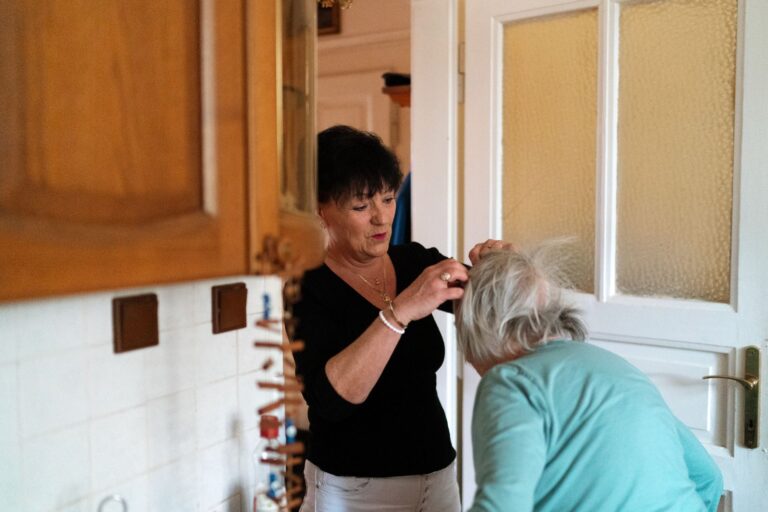
The National Institute on Aging says people with Alzheimer's often need direct help with bathing, hair-combing, tooth-brushing, dressing, and grooming as judgment, balance, and sequencing decline. You may need to guide each step, prevent slips, and choose safe clothing. When this help spans morning, evening, and night, part-time help runs short. Late-stage Alzheimer's usually requires intensive around-the-clock care, with difficulty eating and swallowing, need for walking assistance progressing to inability to walk, and full-time personal-care help, according to the Alzheimer's Association late-stage caregiving guide.
Meals take longer and need close watching. Walking, toileting, and transfers may need two hands or frequent aid. Live-in help fits when needs cluster across the day. A morning aide cannot cover midnight toileting or evening restlessness. Overnight wakefulness, incontinence, and refusal of care often tip the balance.
How is caregiving affecting you?
Family Caregiver Alliance says the right time for expanded or residential care is when a spouse's needs exceed what the partner can provide, harm the partner's physical or mental well-being, or compromise safety guidance on timing expanded care. Be honest about sleep, back or heart strain, anxiety, and missed medical care. Harm to you is a care signal, not a failure. This strain is common. The Alzheimer's Association reports 59% of dementia caregivers rate emotional stress as high or very high and 38% report physical stress 2025 caregiver health report.
Spouses face this stress in the same home, with few breaks. Live-in support can restore sleep and daytime relief. Consider your limits in plain terms. Can you lift safely without injury. Can you stay awake for night needs and function next day. If not, added hands are a health need.
What practical step clarifies the decision?
Ask what a typical 24 hours now requires. List supervision, meals, bathing, dressing, toileting, medicines, night waking, and time you spend worrying. If nearly every block needs you, live-in care matches the pattern. The National Institute on Aging recommends asking the doctor to order a home-safety evaluation and recommend a home-health agency, noting Medicare may cover the cost.
Bring your 24-hour list to that visit. Ask what tasks need a nurse, aide, or live-in caregiver. Use a short trial when possible. Set clear duties for nights, mornings, and wandering response. Keep the arrangement if safety holds, personal care stays calm, and you sleep and eat better.