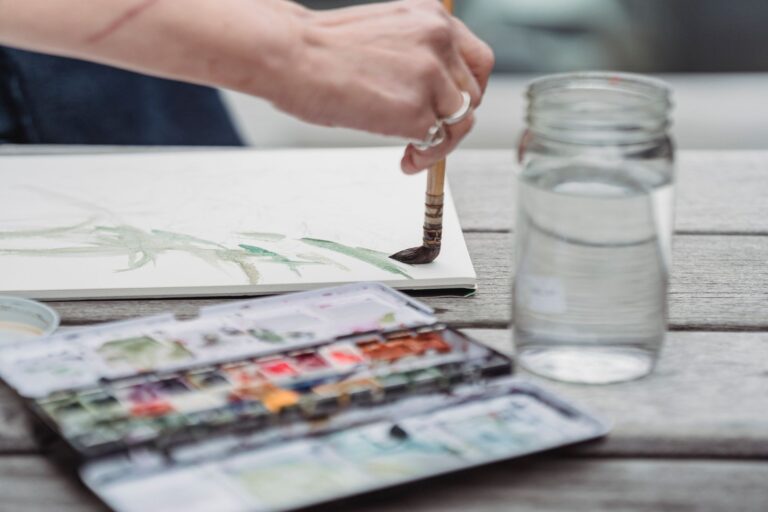
Watercolor painting for a low-energy dementia day is a brief, seated painting session with simple tools, close support, and no performance goal. You set out only safe, easy-grip supplies, then let the person paint freely while you handle water and cleanup.
On tired days, calm matters more than output. Painting activities such as watercolor have been reported to reduce anger and agitation while promoting positive thinking and emotional expression, according to an A Place for Mom review. Agitation here means restlessness, irritability, or distress that makes the day harder.
Medical information disclaimer: This article is for general educational purposes only and does not provide medical advice, diagnosis, or treatment. Always consult a physician or other qualified health professional about symptoms, medications, tests, or treatment decisions.
Table of Contents
- Keep it adult and strengths-based
- What helps and where are the limits?
- Choose safer supplies
- Set up for low energy
Keep it adult and strengths-based
The Alzheimer's Association advises caregivers planning art for middle-to-late-stage Alzheimer's to keep projects adult-level and avoid anything childlike or demeaning, as explained in the Alzheimer's Association art and music guidance. Offer real choices like color, paper size, or landscape versus abstract. Focus on remaining strengths rather than correcting the result.
Sit beside the person, not across. Comment on what works, such as strong color or steady strokes. Do not fix shapes, demonstrate the right way, or ask what it is.
What helps and where are the limits?
Researchers compared art therapies across cognition, daily activities, depression, anxiety, agitation and quality of life. The 2023 network meta-analysis included 39 randomized trials with 2,801 dementia participants, according to the Frontiers in Psychiatry analysis. That breadth helps set realistic expectations.
A later systematic review and meta-analysis found depression improved, but anxiety and agitation did not differ significantly, according to a PubMed-indexed systematic review. The authors called for large multicenter trials. Treat painting as comfort and engagement, not treatment for anxiety or agitation.
Choose safer supplies
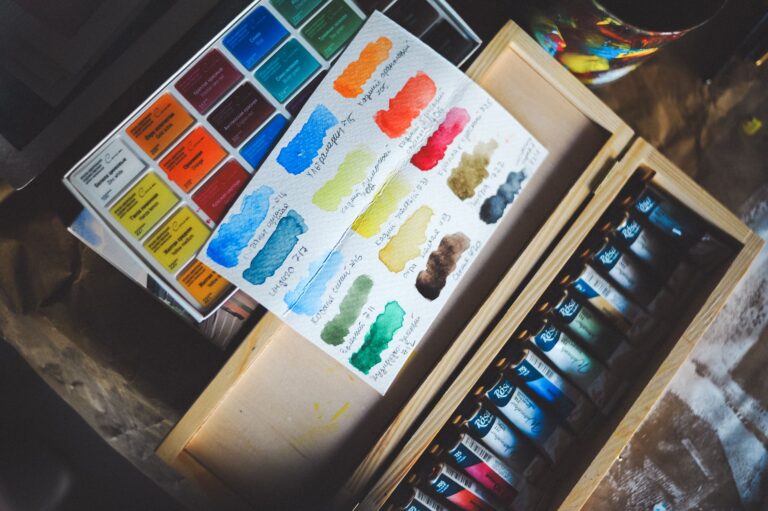
U.S. federal law LHAMA, the labeling law for art materials, requires toxicologist review for chronic hazards and a label stating conforms to ASTM D-4236, according to Green America summarizing CPSC and LHAMA rules. Look for warnings such as harmful if swallowed. Keep sharp tools off the table. Choose watercolors bearing the ACMI AP seal when possible, as described by the Art and Creative Materials Institute safety page.
The seal means toxicological evaluation found no ingredients in quantities toxic or injurious to humans, including vulnerable users. Store paints and rinse water out of reach when not in use. For low-energy setup, adaptive brushes help. Short thick handles, soft rubber grips and large brush heads reduce grip demand, according to Dick Blick Adaptive Art Supplies. No-drip and no-spill formats eliminate open paint cups and water dishes.
Set up for low energy
Keep the session to 10 to 20 minutes, seated at a steady table with good light. Pre-wet the palette and tape down paper so it does not slide. Stay close enough to steady the cup and change water.
Let the person hold, dab, or watch as energy allows. Praise effort, date the piece, and display it at eye level. Rinse brushes yourself after the session ends.
- Offer two or three colors, not a full set.
- Use thick paper and one large brush.
- Keep water in a no-spill cup and remove it between rinses.
- Stop at first sign of fatigue and save the work as is.