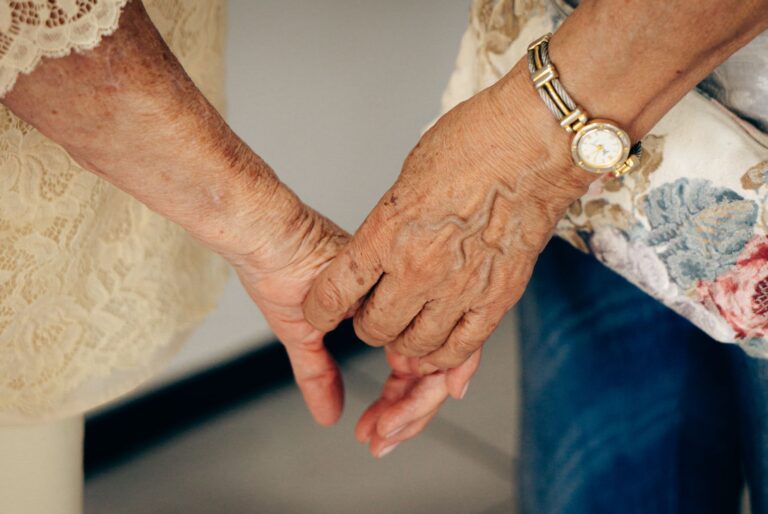
Aspiration pneumonia — a lung infection that starts when food, liquid or saliva slips into the lungs — is a major danger in advanced dementia. Prevention centers on careful hand feeding, upright meals and daily mouth care, not on feeding tubes. The National Institute on Aging explains that advanced dementia impairs chewing and swallowing, which lets food or saliva enter the lungs late-stage Alzheimer's caregiving guidance. That change turns each meal into a safety and comfort decision for families.
Medical information disclaimer: This article is for general educational purposes only and does not provide medical advice, diagnosis, or treatment. Always consult a physician or other qualified health professional about symptoms, medications, tests, or treatment decisions.
Table of Contents
- Why eating becomes unsafe
- Does a feeding tube prevent pneumonia?
- How can caregivers make each meal safer?
- Why does mouth care matter?
Why eating becomes unsafe
Chewing slows and the swallow reflex weakens as dementia advances. Coughs grow fainter, so small amounts of food, drink or saliva can enter the airway during or between meals.
Risk rises because the person cannot adjust posture, pace or bite size alone. Caregivers must therefore watch every bite, pause often and keep the person alert and upright.
Does a feeding tube prevent pneumonia?
No. Tubes do not stop saliva or reflux from entering the lungs, and they add their own burdens.
University of Hong Kong researchers found careful hand feeding had about 40% lower pneumonia risk than nasogastric tube feeding, with little survival difference HKU Medicine research summary. The Alzheimer's Association states that tube feeding has no medical benefit in advanced dementia and may cause harm, while careful hand feeding offers the highest-quality care Alzheimer's Association perspective. Families choosing comfort can focus on taste, touch and unhurried presence at meals.
How can caregivers make each meal safer?
Offer small bites, allow full swallows and keep conversation calm so attention stays on eating. Keep the person fully upright during the meal and for at least 30 minutes after.
- Sit the person upright with head slightly forward.
- Offer one small spoonful at a time and wait for a full swallow.
- Keep the mouth clear before the next bite.
- Stop and rest if coughing, throat clearing, wet voice or fatigue appears.
Why does mouth care matter?
Life Speech Services notes that poor oral hygiene raises aspiration pneumonia risk because mouth bacteria get inhaled oral hygiene and aspiration pneumonia overview. The risk runs highest when older adults need help with brushing and dentures.
Clean teeth, gums, tongue and dentures daily to lower the bacterial load. Brush twice daily, rinse dentures after meals and ask the care team to review mouth care at each visit.