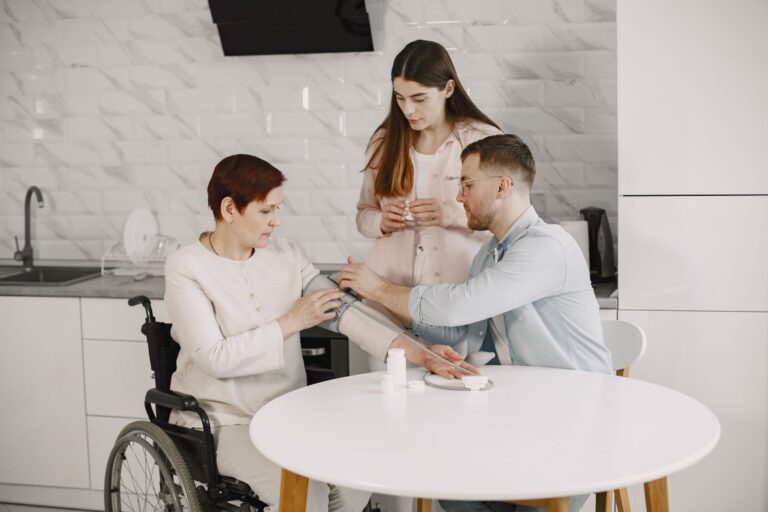
Yes/no questions and choice cards are simple communication tools that help people with moderate dementia express needs and preferences. Yes/no questions ask for a one-word answer, and choice cards let a person point to a picture, card, or real object instead of finding words. Moderate dementia often makes open questions, long sentences, and spoken lists hard to follow. Short questions and visible options reduce memory load and give the person a clear way to respond.
Medical information disclaimer: This article is for general educational purposes only and does not provide medical advice, diagnosis, or treatment. Always consult a physician or other qualified health professional about symptoms, medications, tests, or treatment decisions.
Table of Contents
- Why ask yes or no instead of open questions?
- How do you use choice cards?
- What other visual supports help conversations?
- What should you watch for with yes answers?
Why ask yes or no instead of open questions?
The U.S. National Institute on Aging advises caregivers to ask "Are you tired?" instead of "How do you feel?" for people with Alzheimer's, described in National Institute on Aging communication guidance. Israel's Ministry of Health gives similar advice to ask simple questions with clear "yes" or "no" answers, explained in Israel Ministry of Health dementia communication guidance.
One question at a time works best. Ask "Are you cold?", wait for the answer, then offer help. Avoid adding choices, reasons, or follow-up questions in the same sentence.
How do you use choice cards?
Leeds Community Healthcare NHS Trust advises offering only two or three visual choices, such as real objects or pictures, rather than listing choices aloud, described in Leeds Community Healthcare dementia support strategies. Caregiver resource Elli Cares notes that cards showing a cup of tea, toilet, bed, or coat let a person point to a need, and "tea or coffee?" with two cards is easier than an open question.
Replace the cards after the choice is made. Put the chosen card in view while you act, so the person can see that you understood.
- Hold up two cards, name each one, and ask the person to point.
- Use real objects when possible, such as two cups, two coats, or two snacks.
- Keep cards large, simple, and free of extra words or images.
What other visual supports help conversations?
Cambridge University Hospitals advises supporting speech with gestures, pictures, and real objects. The hospital also suggests making a life book with past photos, likes, and dislikes to discuss together.
The Alzheimer Society of Nova Scotia recommends labels, cue cards, picture books, and apps designed for people living with dementia and care partners. Labels on doors, drawers, and rooms can prompt action without repeated verbal reminders.
What should you watch for with yes answers?
A systematic review reported in the Journal of Applied Research in Intellectual Disabilities warns about acquiescence bias, where people may say "yes" regardless of content when they do not know the answer or questions are long and complex, summarized in systematic review on acquiescence bias. Short words, one idea per question, and time to answer lower this risk.
A study of 31 people at different dementia stages, archived by the University of Glasgow and published in Dementia, found the Talking Mats picture-symbol framework improved understanding, engagement, staying on track, and being understood versus usual conversation, with less repetition. If a "yes" seems uncertain, restate the question in reverse or ask the person to point to the matching card.