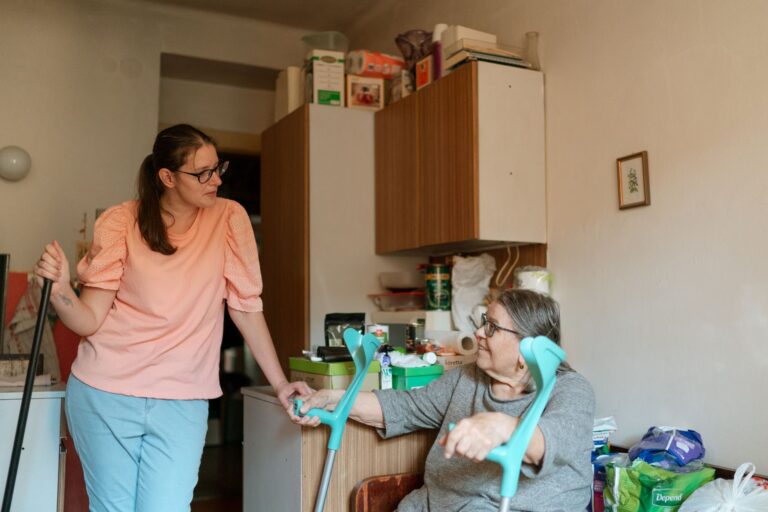
A communication board for dementia is a low-tech display with pictures for common words that lets a person show wants, needs, and feelings. Make one with basic needs, emotions, and yes/no answers in large high-contrast icons, then use it with one calm question at a time. The American Speech-Language-Hearing Association describes these displays as tools for people with limited or unreliable speech (communication boards overview). For dementia, the goal is comfort and daily choice, not memory testing.
Medical information disclaimer: This article is for general educational purposes only and does not provide medical advice, diagnosis, or treatment. Always consult a physician or other qualified health professional about symptoms, medications, tests, or treatment decisions.
Table of Contents
- What should the board include?
- How do you make it easy to see and touch?
- How do you use it during care?
- What if the person cannot point reliably?
- Should you personalize it, and what are the limits?
What should the board include?
Start with survival and comfort words. Assisting Hands Home Care NW Las Vegas advises covering basic needs, emotions, and yes/no or single-word replies first (elderly communication board guide). Group items by topic and use plain labels. Useful first groups are food, water, bathroom, pain, medicine, sleep, help, and family.
Add feel, like happy, sad, scared, tired, and frustrated. Add yes, no, stop, more, and finished. Add a small personal row with names, daily routine, and favorite comforts. Keep words short and pair each word with one clear picture.
How do you make it easy to see and touch?
Make each target about finger-width or larger. Use dark icons on a light background, wide spacing, and one idea per box. Keep the layout uncluttered and keep the board within sight and reach. Assisting Hands Home Care NW Las Vegas warns that crowded multi-page boards perform worse for new users.
Start with one page, then add pages only if the person uses the first page well. Laminate paper boards for spills and cleaning. Use matte finish to cut glare. Test pointing from the person's usual chair or bed position.
How do you use it during care?
Ask one simple question at a time. The National Institute on Aging recommends eye contact, a calm tone, one rephrase if needed, and extra response time without rushing (Alzheimer's communication tips).
Do not quiz or correct. Treat every clear point as communication, even if the choice seems unusual.
- Hold the board steady where the person can see and reach it.
- Point to two or three likely choices and ask, "Do you want water?"
- Wait at least 10 to 15 seconds before repeating.
- Confirm the choice aloud and act on it right away.
What if the person cannot point reliably?
Agree on one reliable yes signal first. Ohio State University Wexner Medical Center's patient-education board guide suggests a nod, blink, or thumbs up (nonverbal communication board instructions). Then point row by row and ask, "Is it in this row?" Move slowly across that row, item by item.
Confirm each final pick by repeating the word and watching for the yes signal again. Sit on the person's stronger side if one side moves better. Stop and rest if attention fades, then try one need again later.
Should you personalize it, and what are the limits?
Personalize with the person's own photos, names, daily schedule, and short autobiographical sentences. American Speech-Language-Hearing Association Learning Center guidance favors simple technology plus training family members to cue use. Nursing-home research also tested 12-page memory books with personal history, schedules, and problem-resolution pages to support conversation and choice-making.
Expect mixed results in moderate Alzheimer's. Fried-Oken and colleagues found personalized boards improved targeted words in one test with 30 adults, had no effect in another, and 1–2-word digitized voice output worsened conversation. Keep the main board silent, low-tech, and focused on present needs.