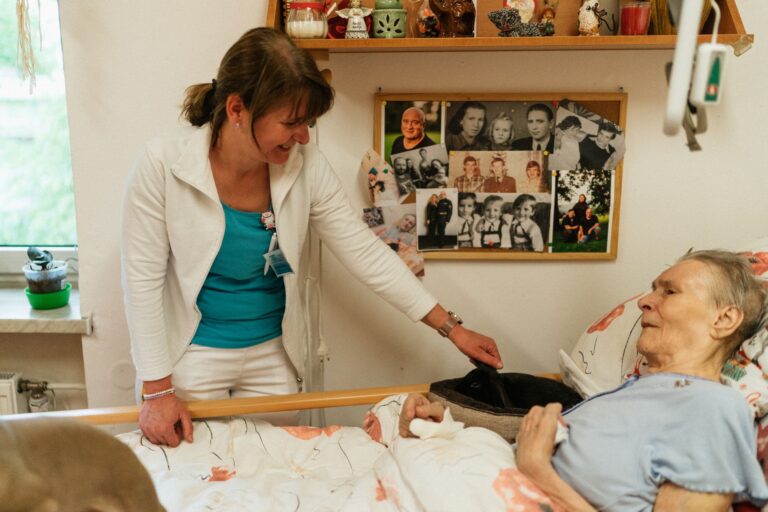
FAST Stage 6 is moderately severe dementia. You recognize it when a person can no longer dress, bathe, or use the toilet independently. FAST means Functional Assessment Staging, a scale that tracks loss of daily abilities. Healthline describes Stage 6 as significantly increased difficulty with dressing, bathing, and toileting independently in its FAST scale overview.
Medical information disclaimer: This article is for general educational purposes only and does not provide medical advice, diagnosis, or treatment. Always consult a physician or other qualified health professional about symptoms, medications, tests, or treatment decisions.
Table of Contents
- What daily tasks break down first?
- What do substages 6a through 6e mean?
- Which memory and behavior changes occur?
- What help should families arrange now?
What daily tasks break down first?
Dressing problems often appear first. A person may need cueing to choose clothes, put them on in order, or notice mistakes. Bathing becomes unsafe without help.
The person may struggle to set water temperature, wash fully, or stay willing to bathe. Toileting mechanics also slip. Forgetting to flush, wiping poorly, or mishandling tissue are common early signs in this stage.
What do substages 6a through 6e mean?
Clinicians divide Stage 6 into five steps that follow a usual order. The Alberta Health Services form lists improper dressing without cueing as 6a, such as layering day clothes over nightclothes or putting shoes on the wrong feet in its Functional Assessment Staging form. The same form lists inability to bathe properly without help as 6b, including trouble adjusting bath-water temperature and sometimes fear of bathing.
It lists inability to handle toileting mechanics as 6c, such as forgetting to flush or disposing of tissue improperly. Incontinence comes later in the sequence. The Fisher Center for Alzheimer's Research Foundation places occasional urinary incontinence at 6d, followed by fecal incontinence at 6e, in its clinical stages guide.
Which memory and behavior changes occur?
Memory loss reaches close relationships. A person may forget names of family members or friends, even after repeated contact. Personality and perception can shift.
Suspiciousness, agitation, delusions, hallucinations, wandering, and reversed day-night sleep are reported in this stage. These changes raise safety risks at home. Constant awareness matters more when confusion, restlessness, and nighttime wakefulness increase together.
What help should families arrange now?
Stage 6 requires substantial hands-on help and often constant supervision. Families commonly consider a part-time caregiver or residential care at this point.
Useful next steps include: Ask a clinician about support services and hospice-eligibility assessment, since FAST level informs that review. Duration is only an average, and Dementia Care Central notes wide variation by source, so plan around current needs rather than a fixed timeline.
- Set a daily routine for dressing, bathing, meals, toileting, and sleep.
- Simplify clothing, lay items out in order, and offer one calm cue at a time.
- Make bathing safer with warm preset water, grab bars, nonslip mats, and short sessions.
- Track incontinence, skin redness, falls, wandering, and nighttime waking for the care team.