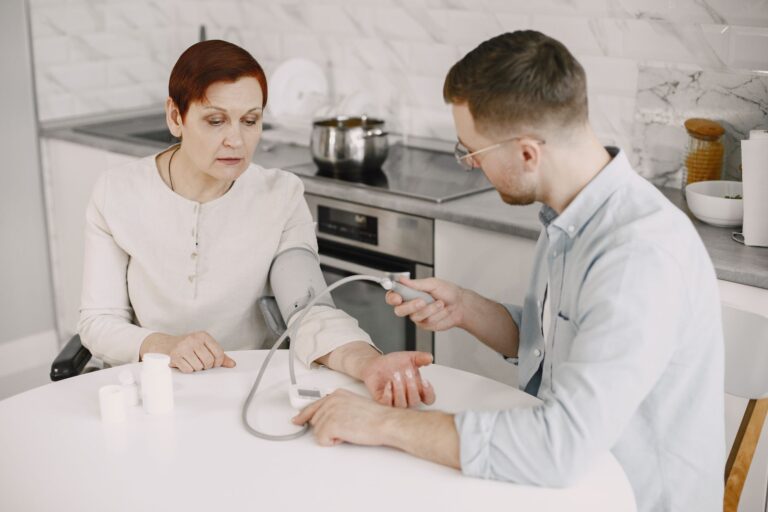
Medically frail exemptions let qualifying dementia patients keep full traditional Medicaid and avoid mandatory alternative benefits and work requirements. Medically frail is a federal Medicaid label for people with disabling, serious, or complex conditions that need ongoing care. For families, the label is practical rather than medical. It decides which benefit package applies and whether work rules apply for younger adults in the expansion group.
Medical information disclaimer: This article is for general educational purposes only and does not provide medical advice, diagnosis, or treatment. Always consult a physician or other qualified health professional about symptoms, medications, tests, or treatment decisions.
Official resources:
- Check eligibility on CMS’s official study page — Use this page to check the study’s participation requirements.
- Check eligibility on CMS’s official study page — Use this page to check the study’s participation requirements.
Table of Contents
- Who counts as medically frail?
- What does the exemption protect?
- How do dementia patients qualify for work-rule relief?
- What limits still apply?
Who counts as medically frail?
The federal rule covers at least several broad groups. It includes disabling mental disorders, chronic substance-use disorders, serious and complex medical conditions, physical and intellectual or developmental disabilities that impair daily activities, and disability findings based on Social Security standards, according to LawStack and its compilation of the federal medically frail definition.
A dementia diagnosis alone does not automatically confer the status. The state looks for the qualifying condition plus functional impact, medical documentation, or an existing disability determination.
- serious or complex condition documented by a clinician
- disability, blindness, or Social Security disability finding
- impairment in one or more activities of daily living
- cognitive impairment that limits self-care, safety, or compliance
What does the exemption protect?
For expansion-group adults, medically frail status excuses the person from mandatory enrollment in an Alternative Benefit Plan. The state must offer the full traditional Medicaid state-plan package instead, according to the National Disability Navigator Resource Collaborative and its explanation of frailty protections.
That difference can matter for chronic care. Full state-plan coverage can better preserve access to specialists, behavioral health care, medications, home supports, and long-term services that limited alternative plans may not include in the same form.
How do dementia patients qualify for work-rule relief?
Dementia patients can fit the work-requirement frailty exclusion through serious-or-complex-condition status, disability or blindness, or daily-activity impairment. CMS has pointed to cognitive impairment as a relevant example, according to Healthcare Brew and its reporting on recent CMS guidance for work-requirement exemptions.
Tiered guidance discussed in that reporting treats severe dementia as meeting frailty on diagnosis alone. Other cases need clearer proof of limits. Useful proof includes cognitive testing, safety incidents, supervision needs, missed medications, wandering, inability to manage money or transport, and help needed with bathing, dressing, eating, or toileting.
What limits still apply?
A newer CMS eligibility approach had added a second test: the condition must also significantly impair the ability to comply with work activities. On Oct. 29, 2026, a federal court in Massachusetts vacated that added test nationwide and barred its enforcement against the plaintiff states as beyond statutory authority, according to the American Medical Association and its summary of the court order.
The work-rule dispute also has a narrow scope. It concerns nonpregnant expansion-group adults without Medicare, so many people with advanced dementia remain outside it because they are 65 or older, have Medicare, receive SSI disability coverage, or use an institutional pathway. Those families must still meet financial rules and state functional tests. Bring cognitive records, daily-activity notes, medication lists, and disability letters to the Medicaid interview and ask for the frailty decision in writing.