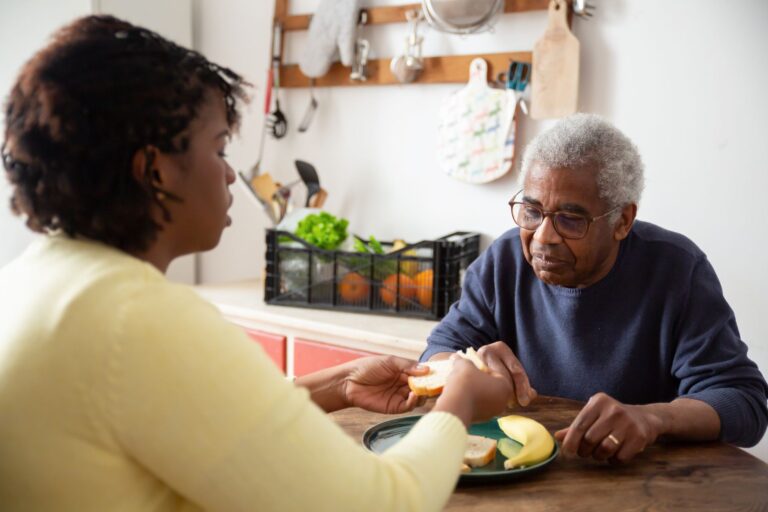
Consider meal delivery when a person with dementia starts missing meals, losing weight, or cooking unsafely and no family member lives close enough to help every day. Distance makes delivery worth starting earlier, before a missed shopping trip or stove mistake causes harm. Home-delivered meals are prepared meals brought to an older adult's home on a regular schedule. For far-away families, they can fill gaps in shopping, cooking, and daily checking.
Medical information disclaimer: This article is for general educational purposes only and does not provide medical advice, diagnosis, or treatment. Always consult a physician or other qualified health professional about symptoms, medications, tests, or treatment decisions.
Table of Contents
- Signs meals are no longer safe or steady
- What home-delivered meals provide
- Why distance moves delivery earlier
- How can far-away families check coverage and start?
Signs meals are no longer safe or steady
Poor nutrition in dementia may increase behavioral symptoms and cause weight loss. The Alzheimer's Association advises balanced vegetables, fruits, whole grains, low-fat dairy, and lean protein for caregivers managing daily meals.
In middle-to-late dementia, a person may feel overwhelmed by too many choices, forget to eat, or believe they already ate, according to the Alzheimer's Association in its eating and daily care tip sheet. These changes signal a need for simpler meals and supervision. Late dementia can also make stove and oven use unsafe when steps are forgotten or burners stay on, a point raised by a UAB geriatrician.
What home-delivered meals provide
Federally supported meals under the Older Americans Act serve adults 60 and older who are frail, homebound, or isolated, plus spouses of participants, as described by the California Department of Aging in its overview of the nutrition program. Meals meet Dietary Guidelines. That structure helps distant families replace uncertain cooking with steady, balanced food.
Research summarized by Meals on Wheels America found these meals reduced hunger and malnutrition while adding health, social-connection, and financial benefits for older adults and caregivers. A regular knock on the door also gives a brief wellness check. For dementia households, that contact can reveal spoiled food, confusion, or new needs.
Why distance moves delivery earlier
More than 51 million U.S. adults provide care to someone age 50 or older, reported by AARP and the National Alliance for Caregiving. Many cannot watch the fridge, notice skipped lunches, or check stove safety in person.
Phone calls often miss these details. Delivery does not replace a local caregiver, but it shortens the chain from shopping to eating. Simplified portions reduce choice overload. Scheduled arrival creates a reason for the person to eat now rather than later.
How can far-away families check coverage and start?
A hospital discharge is a common trigger. Among 368 food-insecure or malnourished adults 60 and older discharged from Duke hospitals, those who received two weeks of Meals on Wheels had 69% lower odds of 14-day readmission, according to Duke University School of Medicine in its report on delivered meals and readmissions.
Families should ask discharge staff about meal referrals before leaving the hospital. For payment, some Medicare Advantage plans cover short-term post-discharge meals or ongoing meals as a Special Supplemental Benefit for the Chronically Ill, while traditional Medicare generally does not, according to a Mom's Meals review of CMS guidance in its summary of health-plan meal benefits. Distant relatives can act from afar: Confirm the delivery address, door instructions, and a local backup contact before the first drop.
- Call the parent's Medicare Advantage plan and ask about post-discharge meals and chronic-illness meal benefits
- Contact the local Area Agency on Aging about eligibility, cost, and waitlists
- Ask about delivery days, storage and reheating steps, and who to call if meals pile up uneaten