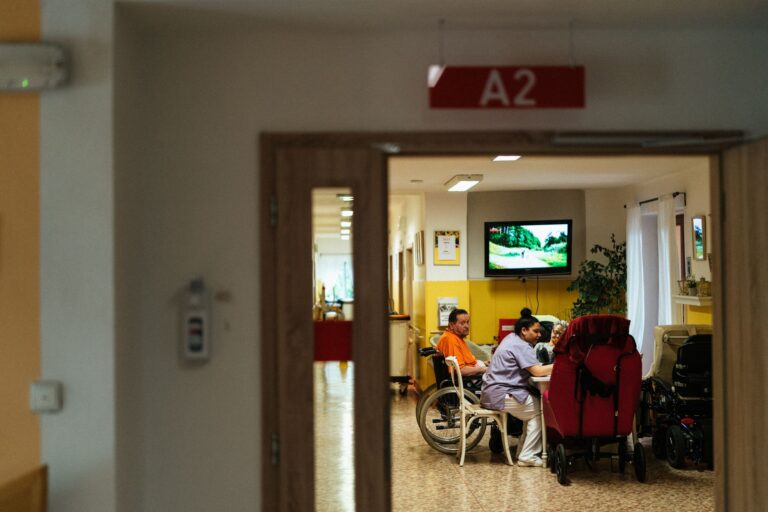
Fewer Medicaid enrollees will leave memory care facilities with less funding, lower occupancy revenue, and tighter state payment rates. Memory care is residential care with supervision, personal help, and health services for people with dementia.
The Congressional Budget Office projects 13.1 million fewer Medicaid enrollees in 2035 under the 2025 reconciliation act, P.L. 119-21, because of work requirements and more frequent redeterminations, according to Health Management Associates in its summary of the CBO baseline. That loss pairs with about $911 billion less in federal Medicaid spending over 2025-2034, according to KFF in its 2026 update on Medicaid projections.
Medical information disclaimer: This article is for general educational purposes only and does not provide medical advice, diagnosis, or treatment. Always consult a physician or other qualified health professional about symptoms, medications, tests, or treatment decisions.
Official resources:
- Register through Kff’s official page — Use this page to review requirements and register directly.
- Register through Healthmanagement’s official page — Use this page to review requirements and register directly.
Table of Contents
- Where does memory-care funding come from?
- Why do fewer enrollees reduce facility payments?
- Does the setting change what Medicaid pays?
- What should families watch and ask?
Where does memory-care funding come from?
Medicaid is the main payer for long-term residential care. It is the primary payer for about 63% of U.S. nursing-facility residents, about 1.2 million people, compared with 14% for Medicare and 23% for other or private pay, according to KFF in its analysis of nursing-facility characteristics.
Medicaid paid 44% of U.S. long-term institutional-care costs in 2023. Residents paid 37% out of pocket, while other payers covered 18%. When enrollment and federal spending fall, states have less money to distribute for these high-cost residents.
Why do fewer enrollees reduce facility payments?
Fewer enrollees means fewer paid resident days and less federal matching money. State Medicaid programs then face pressure to hold down daily rates, limit admissions, or slow waiver approvals.
Most projected enrollment losses affect ACA-expansion adults, not older adults who use long-term services directly. Memory-care operators still feel the cut because Medicaid nursing-facility rates already average below cost, so any rate freeze or reduction widens the shortfall.
Does the setting change what Medicaid pays?
Yes. The building license decides much of the benefit. Medicaid pays 100% of memory-care costs, including room, board, and health and personal-care services, only in licensed Medicaid-certified nursing facilities.
In assisted-living memory care, coverage varies by state waiver. Medicaid generally pays for care services but not room and board. Families in those settings must plan for rent, meals, and housing charges even when the person keeps Medicaid.
What should families watch and ask?
Millions with dementia use Medicaid to stay home longer and to enter nursing-home care as the disease progresses. Cuts threaten both paths, so early planning matters more when funds tighten.
Facing lower revenue and tighter rates, facilities may cut staffing, therapy, and activities, delay maintenance, or close. Federal minimum nursing-home staffing rules cannot be enforced until Sept. 30, 2034 under the 2025 law.
- Ask whether the nursing facility is Medicaid-certified today.
- Ask which waiver covers assisted-living memory-care services in your state.
- Ask what the monthly room-and-board charge is if Medicaid does not cover it.
- Ask about current staffing, activities, therapy access, and any planned closures or unit changes.