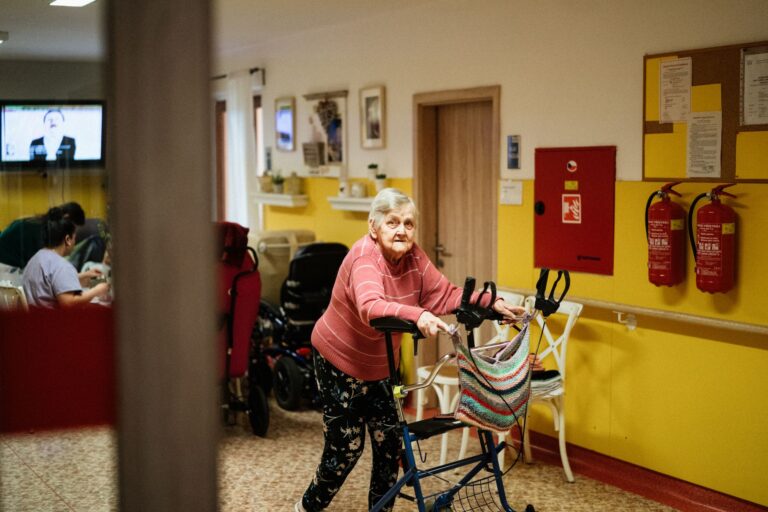
Yes, the delay worries many Alzheimer's caregivers. The nursing-home staffing rule was the first federal minimum for daily nursing hours, and its loss leaves dementia families with less assurance. Certified homes no longer face a uniform hours floor. Families must now judge each home on its own staffing record and daily needs.
Medical information disclaimer: This article is for general educational purposes only and does not provide medical advice, diagnosis, or treatment. Always consult a physician or other qualified health professional about symptoms, medications, tests, or treatment decisions.
Table of Contents
- What the rule required and why it ended
- Why does dementia care face higher stakes?
- What staffing protections still apply?
- How can families check staffing now?
What the rule required and why it ended
The May 10, 2024 final rule set 3.48 total nurse hours per resident day. That total included 0.55 RN hours and 2.45 nurse-aide hours, plus an onsite RN around the clock. According to the Federal Register via GPO, those figures appeared in the December 3, 2025 Federal Register notice. The U.S. District Court for the Northern District of Texas vacated the daily-hours and 24/7 RN mandates on April 7, 2025.
The court held that CMS exceeded statutory authority, with nationwide effect, as described in Dinsmore law analysis. Congress then barred CMS from implementing or enforcing those standards until after September 30, 2034. The bar appears in Public Law 119-21 Sec. 71111, signed July 4, 2025. CMS issued interim final rule CMS-3442-IFC on December 3, 2025 to repeal the numeric minimums, effective February 2, 2026.
Why does dementia care face higher stakes?
People with Alzheimer's need facility care more often and stay longer. According to the Alzheimer's Association AIM statement, they are nearly five times as likely to need skilled-nursing care and three times as likely to need home health care, while Medicaid is the only federal program covering late-stage nursing-home stays, as reported in the Alzheimer's Association AIM statement. The care workforce is already thin. About 800,000 additional direct-care workers will be needed between 2024 and 2034, and 55% of primary-care doctors report too few dementia specialists locally.
According to the Alzheimer's Association, those estimates come from the 2025 Facts and Figures report. For dementia, low staffing affects bathing, toileting, meals, repositioning, and close supervision. Missed help can raise fall risk, agitation, and pressure-injury risk. Families often notice those gaps first during evenings, weekends, and shift changes.
What staffing protections still apply?
The repeal restores the older federal baseline. Homes must still provide enough staff to meet residents' needs, keep an RN present eight consecutive hours daily, keep a licensed nurse always present, and post daily staffing data. According to MyMedicarePlans, those duties continue in the explainer on what still applies in 2026. "Sufficient staff" now turns on resident need, not a fixed number.
A home with many residents who need turning, feeding help, or wandering supervision needs more hands. No federal numeric-hours floor is now enforceable. State rules, survey inspections, and complaints still matter. A home can still face action when care falls short, even without a national hours count.
How can families check staffing now?
Start with public staffing signals before you tour. CMS Care Compare gives each home a staffing star rating. The posted daily sheet at the home shows actual RN, licensed-nurse, and aide hours for that day.
Bring a short list of daily needs for your person. Ask how the home assigns aides, handles call lights, and covers sick calls. Write down the posted RN, licensed-nurse, and aide hours before you leave the tour.
- Compare staffing stars across nearby homes
- Read the posted daily nurse-hours sheet at entry
- Ask who covers RN care at night and on weekends
- Ask how aides handle wandering, toileting, and meals
- Visit once in the evening or on a weekend