Indoor gardening for middle-stage dementia means growing safe herbs indoors with close supervision, simple supplies, and strict safety steps. Middle-stage dementia is the period when memory loss, confusion, and need for daily help increase, so tasks must stay short and single-step. A small sunny spot, basic pots and soil, and non-toxic plants make the activity workable at home. A 2014 Journal of Clinical Nursing scoping review of 16 studies found sensory gardens and horticultural activities may improve well-being and affect and reduce disruptive behavior, and the review summary names people with dementia as the focus.
Medical information disclaimer: This article is for general educational purposes only and does not provide medical advice, diagnosis, or treatment. Always consult a physician or other qualified health professional about symptoms, medications, tests, or treatment decisions.
Table of Contents
- Why try gardening now?
- Where should you put the garden?
- What supplies do you need?
- Which plants and tools stay safer?
- How do you keep each session calm and safe?
Why try gardening now?
The Alzheimer's Association lists gardening as a suitable shared activity during middle-stage dementia. Its Los Angeles chapter specifically suggests planting seeds together and starting an herb garden at home, according to the research packet. Gardening gives touch, smell, sight, and gentle movement in one seated activity.
Watering, sniffing mint, or pressing soil into a pot can fit short attention spans. Caregivers should simplify each session to one single-step task at a time, such as watering or potting flowers. Match the task to current abilities and interests, and stop before fatigue or frustration builds.
Where should you put the garden?
Most culinary herbs need strong light to stay compact and fragrant. University of Wyoming Extension says most culinary herbs need 6 hours of direct sun by a south window, or placement 6-12 inches from two 40-watt cool-white fluorescents for 14-16 hours daily, in the Extension herb guide. Pick a stable table near that light, with room for a chair and elbow space.
Keep the floor dry and clear, and keep cords from grow lights against the wall. Watch leaf shape, size, and scent for light problems. University of Wyoming Extension warns that insufficient light makes herbs thin, spindly, small-leaved, and less aromatic, so rotate pots and add supplemental light when growth stretches.
What supplies do you need?
Start with a small set that is easy to lift, clean, and store. Illinois Extension recommends well-drained potting soil in at least a 6-inch container with drainage holes, described in the Illinois Extension indoor-herb report.
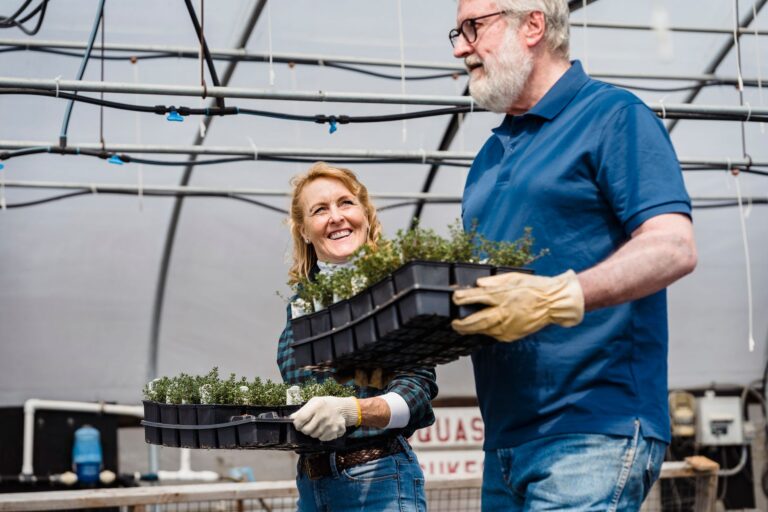
Wyoming Extension adds one herb per pot and lists basil, chives, cilantro, mint, oregano, parsley, and thyme as reliable indoors. One plant per pot prevents crowding and makes watering and care clearer.
- 6-inch or larger pots with drainage holes and saucers
- Well-drained indoor potting soil, not garden soil
- Small watering can with a gentle spout
- Plant labels and a marker
- Easy-grip trowel and tray to catch spills
Which plants and tools stay safer?
Choose only plants that are safe to touch and unlikely to be harmful if tasted. The Alzheimer's Society UK advises avoiding anything toxic to touch or eat and anything with thorns or prickles, in its gardening guidance for dementia. New York Botanical Garden warns that philodendron family and Araceae, poinsettia family, cactus, and tomato families pose toxicity, thorn, or irritation risks.
Its guide notes Dieffenbachia oxalates can severely swell the tongue and Euphorbia sap irritates skin. Use tools that reduce strain and slips. The Alzheimer's Society UK points to adapted long-handled or easy-grip tools such as an Easi-Grip trowel. Avoid sharp shears, knives, bamboo stakes, and breakable pots within reach.
How do you keep each session calm and safe?
Set out only what the current step needs. Offer one choice at a time, such as "water the basil" or "pat this soil," then guide hand-over-hand only if welcome. Keep garden chemicals, fertilizers, and sharp tools out of reach and put them away right after use.
Label every plant with its name, and remove fallen leaves that might be picked up and tasted. If a plant piece is eaten, call Poison Control at 1-800-222-1222, per National Capital Poison Center guidance. Save the plant label so responders know exactly what was involved.