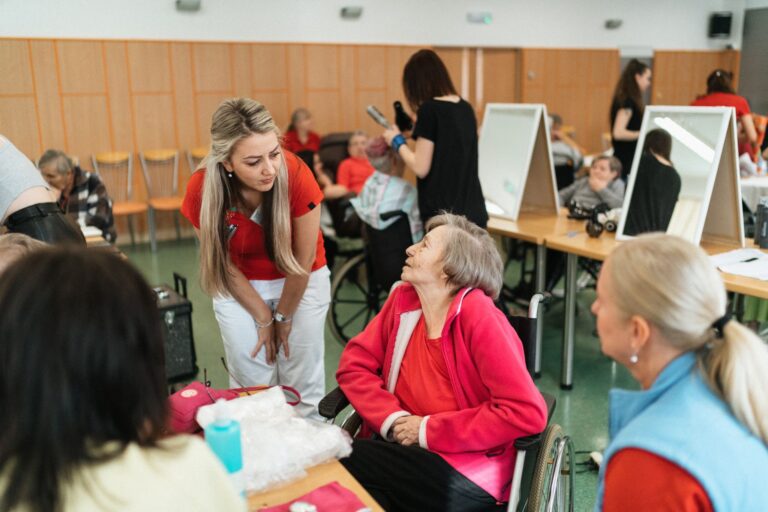
A read-aloud group is a small weekly gathering where a leader reads a poem, story, or book excerpt aloud and pauses for listeners to react and talk. Dementia caregivers can use the same format at home: read a short piece, pause often, and let conversation carry the session. Listening and talking are the core activity, not solo reading. The goal is shared attention, mood, and connection during the time together.
Medical information disclaimer: This article is for general educational purposes only and does not provide medical advice, diagnosis, or treatment. Always consult a physician or other qualified health professional about symptoms, medications, tests, or treatment decisions.
Table of Contents
- How do read-aloud groups work?
- What does the evidence show?
- How can caregivers run a session?
- What are the limits and supports?
How do read-aloud groups work?
Shared-reading groups meet weekly in small groups with a trained leader. According to The Reader, the leader reads aloud and pauses for response, so listening and discussion drive the meeting shared-reading model. A related model is TimeSlips for Alzheimer's and dementia.
A facilitator shows an evocative photograph and invites participants to invent a story together. Memory is not required because participants create rather than recall. Family Caregiver Alliance notes that TimeSlips restores the storyteller role and prompts caregiver interaction TimeSlips resource. Either format gives the person with dementia an active part.
What does the evidence show?
In a University of Liverpool pilot, 31 care-home residents with mild-to-moderate dementia joined reading-first or waiting-first groups over two three-month periods. Quality of life was measured by DEMQOL-Proxy and symptoms by the Neuropsychiatric Inventory Questionnaire. Compared with the waiting period, shared reading showed positive effects on quality of life.
The benefit appeared when reading began and persisted after weekly sessions ended. The university repository record presents this as support for reading groups as a practical psychosocial intervention pilot study record. The Reader's "Read to Care" program also reports better quality of life for people with dementia. It reports benefits for relatives and care workers through encouragement, shared attention, and easier conversation.
How can caregivers run a session?
Keep sessions short, calm, and predictable. Choose one poem, one short story, or a few pages. Read slowly in a quiet room.
Stop often to ask for reactions, memories, or preferences. Dementia-care providers recommend practical setup choices that reduce strain: End while attention is still good. Note what drew a smile, a comment, or more talk. Repeat that type of material next time.
- Read in short chunks and spread a longer book across weeks.
- Choose familiar authors, topics, songs, or life themes.
- Use large-print or illustrated pages to spark memories and lift mood.
- Let the person pass, listen only, or join late without pressure.
What are the limits and supports?
The Liverpool trial was small and did not control for confounding variables. It had too few baseline psychiatric symptoms to test effects on clinical dementia symptoms. Results address well-being rather than disease treatment.
Treat read-aloud time as one support among others. Federal caregiver guidance urges caregivers to join an online or in-person support group, seek respite help, and contact local Alzheimer's Disease Research Centers and community services. Use reading to supplement rest and support, and ask for help before exhaustion sets in.