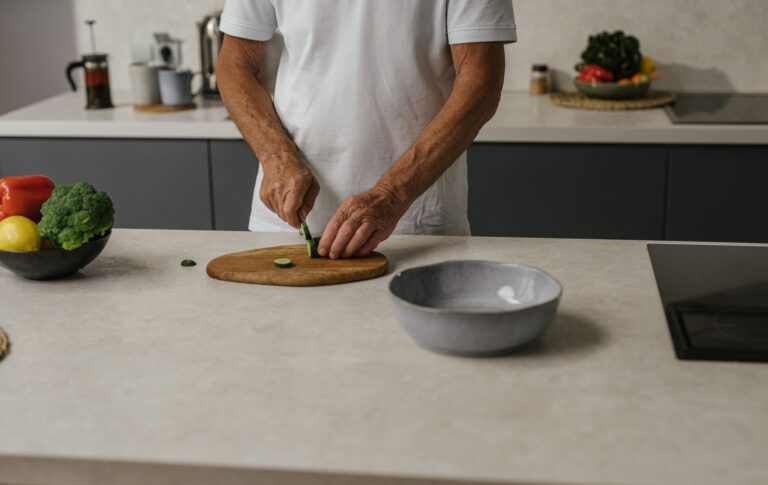
The most common barriers to following the MIND diet with limited mobility are difficulty shopping and cooking, high cost and spotty availability of key foods, and limited cooking skills, taste appeal, and social support. The MIND diet, a brain-health eating pattern that combines Mediterranean and DASH approaches, emphasizes leafy greens, berries, nuts, olive oil, fish, poultry, beans and whole grains while limiting red meat, butter, cheese, sweets and fried or fast food, according to the Rush University ranking explainer. That mix matters because limited mobility shrinks every step around food.
Trips to stores take more effort. Standing to chop and cook hurts. Heavy bags, tight budgets, and eating alone make change harder still.
Medical information disclaimer: This article is for general educational purposes only and does not provide medical advice, diagnosis, or treatment. Always consult a physician or other qualified health professional about symptoms, medications, tests, or treatment decisions.
Table of Contents
- What the MIND pattern requires day to day
- Why shopping and cooking break down first
- Why cost and store shelves get in the way
- Why knowledge, taste and household habits matter
- What the dementia-prevention evidence can and cannot promise
What the MIND pattern requires day to day
The pattern favors ten brain-healthy groups and limits five others. Readers choose greens and other vegetables, berries, nuts, olive oil, fish, poultry, beans and whole grains more often. They eat less red meat, butter and stick margarine, cheese, sweets, and fried or fast food. This structure is simple on paper but demands fresh shopping and home cooking.
Greens wilt fast. Berries spoil quickly. Fish costs more and needs prompt cooking. Without transport, help, or kitchen adaptations, those needs become missed meals.
Why shopping and cooking break down first
Among older adults with mobility disability, routine shopping, meal preparation and cooking reduce dietary quality and can worsen poor intake, muscle loss and further immobility. Tasks like carrying groceries, standing at a stove, and cleaning up take strength, balance and stamina. When pain or fatigue cuts those tasks short, quick processed foods fill the gap.
Small changes to the task can protect intake. Seated prep, pre-washed greens, frozen berries and fish, canned beans, and delivery can cut lifting and standing time. Asked-for help with heavy shopping, batch cooking, and kitchen layout often matters more than willpower.
Why cost and store shelves get in the way
Key MIND foods such as olive oil, berries and fish are high-cost or seasonally unavailable, while cheaper processed and fast foods are easier to obtain in some communities, according to the BMC Public Health comparison study. Price hits hardest when budgets are fixed. Season gaps hit hardest when stores stock little fresh produce.
Readers with limited mobility feel this double bind more sharply. Travel to a second store for a better price may not be possible. Delivery fees add cost. Choosing frozen berries, canned fish and beans, bulk whole grains, and store-brand olive oil can stretch the same pattern for less money.
Why knowledge, taste and household habits matter
Adoption is also hindered by limited nutrition knowledge, cooking skills, unappealing taste perceptions, low social support and cultural food preferences, not only by access. Many readers never learned to cook beans, greens or fish in these styles.
Others dislike the taste of olive oil, whole grains or berries. Family habits and solo meals can weaken follow-through. Practical fixes start with skill and flavor, not rules.
- Learn one simple method for greens, beans, fish and whole grains
- Season with herbs, lemon, garlic and olive oil for familiar taste
- Cook with or for another person to share effort and leftovers
What the dementia-prevention evidence can and cannot promise
Observational research links higher MIND-diet adherence to slower cognitive decline and fewer Alzheimer's brain-pathology signs. In contrast, the 3-year 2023 randomized trial in 604 overweight older adults with family dementia history and suboptimal diet found no significant gain in global cognition for MIND diet with calorie restriction versus control diet with calorie restriction, as reported by the Medical Dialogues trial summary.
That result does not erase the eating-quality reasons to act, but it sets limits. The trial enrolled mostly participants of European descent and at-risk overweight volunteers, so findings may not apply to all groups. For readers with limited mobility, researchers are now testing virtual group nutrition education plus home produce delivery and adapted teaching-kitchen demonstrations that address physical limits, taste changes and technology barriers, according to the VA trial description.